

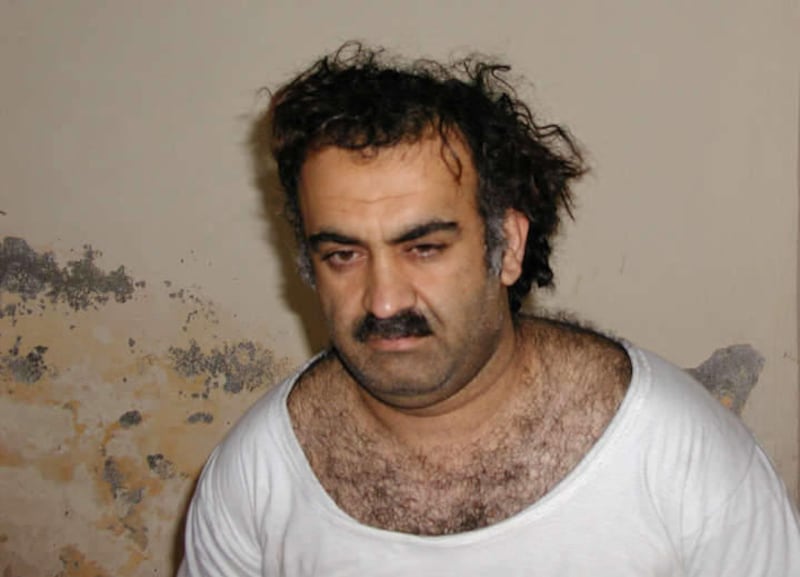

A military judge ruled Friday that confessions made to FBI agents by Khalid Shaikh Mohammed, the Pakistani militant accused of being the “mastermind” behind the 9/11 attacks, cannot be used against him in trial.
Lt. Col. Michael Schrama, the trial judge, ruled that the information obtained in interrogations at the U.S. Navy base in Guantánamo Bay, Cuba, in 2007 were not voluntary and were forced by methods of torture, making them unusable in trial.
The interrogation methods reportedly included 183 rounds of waterboarding. Mohammad was also subjected to sleep deprivation while in Pakistani custody, according to reports.
The judge also said that the prosecution did not tell Mohammed that he had a right to be silent or that anything he said could be used against him in court, The New York Times reported.
Frank Pellegrino, the retired FBI agent who interviewed Mohammed in 2007, told CBS News that he “couldn’t have told (Mohammed) in any more explicit a way that he did not have to talk to me.” Pellegrino said he believes Mohammed confessed to his role in the attacks voluntarily.
Mohammed’s lawyer, Gary Sowards, said the judge’s decision “serves as a civics lesson for why the government shouldn’t engage in such shameful conduct.”
Rear Adm. Aaron C. Rugh, the chief prosecutor, said his team would review the ruling and “make a decision on whether to appeal in the near future,” according to The New York Times.
The trial against the 9/11 defendants has been going on for decades
The case has now become one of the longest-running cases in the history of the military commission at Guantanamo Bay, and those anxious to see the trial come to a close — a group that includes family members of 9/11 victims — worry the judge’s ruling could extend the trial even longer.
The judge recently set a trial date of June 5, 2028, more than a year after the Jan. 11, 2027, date requested by the prosecution. The judge said in the ruling that the 2027 date is “incompatible” with the pretrial litigation still ahead.
“A realistic trial date must account for the hearing and resolution of pretrial evidentiary and compliance motions,” Schrama ruled.
Multiple defendants await trial for alleged involvement in the 9/11 attacks
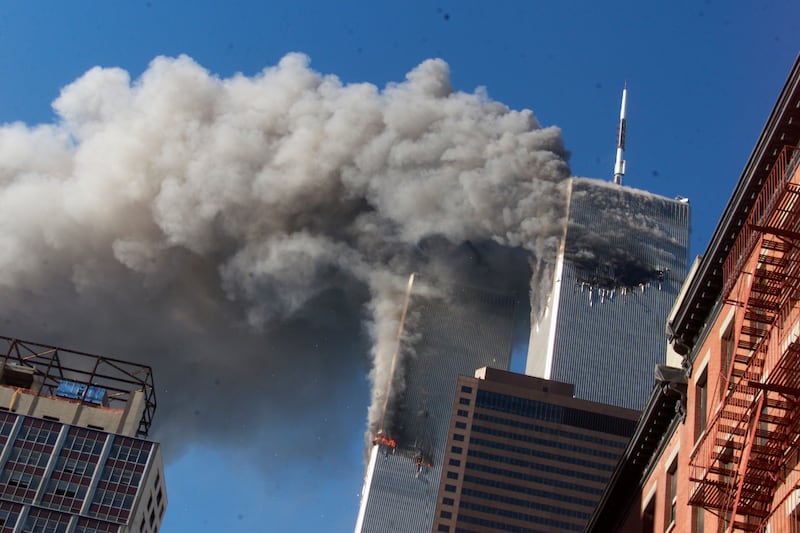
While Mohammed is accused of coming up with the plan in the 1990s, presenting it to Osama bin Laden and then helping to train the hijackers who carried it out, three other men are on trial for participation in the attacks: Walid bin Attash, Ammar al-Baluchi, Mustafa Ahmad al-Hawsawi.
The cases against all three men were nearly closed in 2024 after they agreed to plead guilty to avoid the death penalty. However, the public outcry that followed led officials from the Biden administration to cancel the deal. The government is pursuing a capital case.
Rather than being tried in front of a civilian court, the men face a military commission made of active-duty commissioned officers in the U.S. military. Schrama is the fifth military judge to be appointed since the defendants were arraigned by the 9/11 military commission in 2012, according to The Guardian.
While awaiting trial, Mohammed and his co-defendants are being held in the detention camp at the Guantánamo Bay Naval Base on the southeastern coast of Cuba.