
Utah defensive end Lance Holtzclaw is used to high-pressure situations. He plays in stadiums of 50,000-plus fans with millions of fans watching him on TV.
While he’s used to the attention being on him, Holtzclaw’s trip to the United States Senate was a different type of pressure.
Holtzclaw participated in a June Senate committee hearing on the “Protect College Sports Act,” a bipartisan bill introduced by Texas senator Ted Cruz and Washington senator Maria Cantwell that aims to overhaul college sports.
The 111-page bill, if passed, would grant the NCAA a limited antitrust exemption, something that professional sports leagues, like Major League Baseball, have. Under the law, it would not be “unlawful” for NCAA to enforce its eligibility rules and create transfer rules, which could bring a halt to the endless lawsuits the organization faces, and oftentimes loses.
The bill outlines a maximum of five years of eligibility without injury waivers or redshirt seasons — a rule that the NCAA is putting into action starting in fall 2027 — and codifies a one-time transfer rule.
Under the bill, players can transfer penalty-free one time, which is how the transfer portal worked until April 2024, when the U.S. Department of Justice reached a settlement with the NCAA that allowed unlimited player movement. Exceptions are built in for head coaches leaving, with players being allowed to transfer without sitting out following the departure of a head coach.
The bill would also codify into law the current revenue sharing cap — currently $21.3 million per year — which will be adjusted annually for inflation, and would require athletes to report NIL deals exceeding $600. The NCAA also must maintain a public database of anonymous NIL deals for “student athletes and their agents to estimate the fair market value for name, image, and likeness agreements.”
The bill would also require athletes’ agents to be registered and cap agent fees at 5%.
The “Protect College Sports Act” would also require schools to cover “the cost of all out-of-pocket medical expenses of the student athlete for health care coverage for any injury or disease incurred through participation in an intercollegiate sport” for five years after leaving school.
The current version of the bill could also potentially put a halt to — or at least significantly slow down — expansion by the Big Ten and SEC if passed without revisions. The two most powerful conferences currently oppose this section of the bill:
“It shall be unlawful under the antitrust laws, as defined in section 1(a), for any conference that reported more than $1,000,000,000 in revenue on its fiscal year 2025 tax return to merge or consolidate with, or to acquire the assets, media rights (including media rights of an institution), or membership of, another conference, if as a result of the transaction, the number of institutions that are members of the conference would be less than the membership requirements under section5(b)(1)(A).”
The only two conferences that made more than a billion in revenue were the SEC and Big Ten.
However, Matt Baker of The Athletic points out that the bill wouldn’t prevent SEC and Big Ten expansion at the end of a conference’s media rights deal, such as the Big 12’s, which expires in 2031. If the bill is looking likely to pass, the two conferences could also expand quickly before the new law goes into effect.
While the “Protect College Sports Act” advanced out of the Senate Committee, it still needs to come to the floor for a vote, something another college sports-focused bill, the SCORE Act, didn’t achieve.
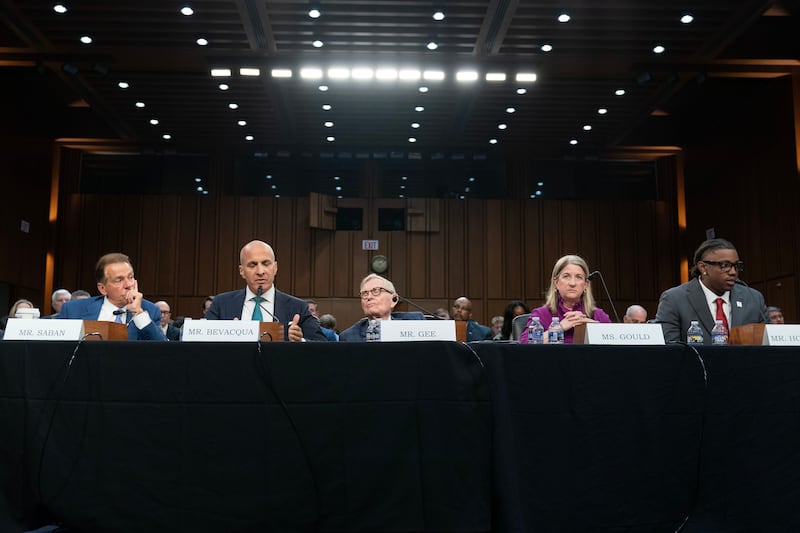
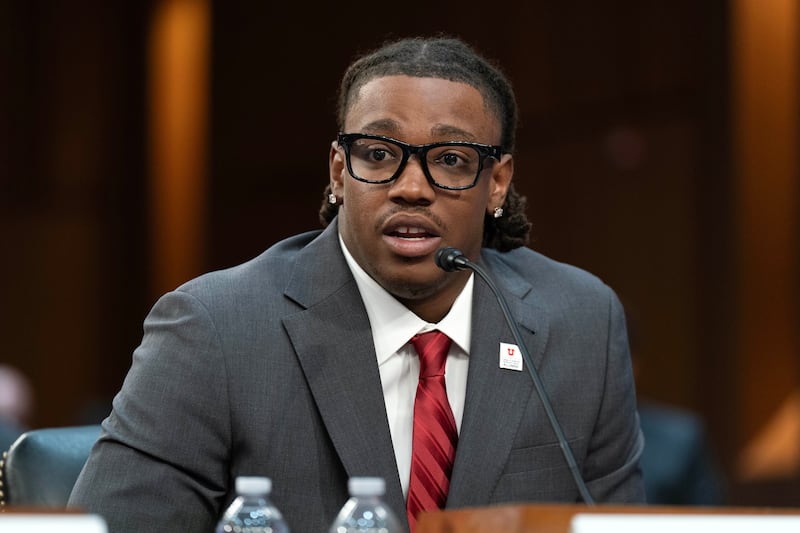
In early June, the Senate held a hearing for the “Protect College Sports Act,” featuring former Alabama coach Nick Saban, Notre Dame athletic director Pete Bevacqua, former West Virginia president Gordon Gee and Pac-12 commissioner Teresa Gould. Right there on the end of the table was Holtzclaw, wearing a red tie and a Utah pin.
“Nervous, not too much, but definitely a different type of nerves. I mean, I’ve never been in a courtroom and the first time I’m there is in the Senate. So I mean, that was kind of crazy for me,” Holtzclaw said.
“But I mean, at the end of the day, man, we do stuff like this all the time. I got bright stadium lights on me. I got cameras and I got a bunch of people in front of my face right now. So I mean, it’s kind of a similar type of situation, so it kind of gets you prepared for the nerves in that way.”
With the TV cameras and senators trained on him, he was aware of the magnitude of the moment, but he rose to the occasion.
“It gets smooth once you get going and then the vibe starts feeling a little bit better. Everybody that was up there, I mean, it’s scary sometimes for people to go there and you’re sitting in front of all these senators and all these members of Congress and everything like that and you’re like, ‘Oh my gosh.’ But they make it good.” Holtzclaw said.
In front of the Senate committee, Holtzclaw was the designated voice of student-athletes across the nation.
“I want to thank this committee for recognizing the importance of including student-athletes in conversations about the future of college sports. While I may not have the titles or experience of others testifying today, I bring a perspective that cannot be replicated: the perspective of a student-athlete living through these changes in real time,” Holtzclaw said in his statement to the committee.
Asked by Colorado senator John Hickenlooper if he felt like “greater transparency around NIL compensation would help athletes negotiate on a more level playing field,” Holtzclaw replied that it would help.
“Again, I take this back to educating our student-athletes and I think that’s really the forefront of what we need to do and that’s going to help us a lot,” Holtzclaw said.
“Student-athletes are going to be able to publicly be able to go out there and see different values and compare and contrast to see if what they’re getting and what their deals’ details are go along with what they think that they should be getting or what the fair market value is out there for themselves. So that just goes in and educates our student-athletes and gives them a public platform to be able to see that visually.”
Saban testified that there were college players paying agents as much as 20% of the value of a deal.
“Agents do encourage a lot of decisions for student-athletes that they have signed to their agency. And again, agents do get paid through what college athletes get paid. So them trying to influence the decisions of student-athletes will influence their pay,” Holtzclaw said.
Holtzclaw has seen the negative side of agents through his teammates, though he said that he has had a great experience with his agent.
“I think this goes back to the education piece of educating a lot of student-athletes on the fact that your agent works for you and that you don’t work for your agent. Your agent is supposed to be helping you,” Holtzclaw said.
“And again, those ridiculous amounts of money that’s being taken from a lot of these student -athletes is a disservice to the game. And I’ve had great experiences when it comes to me and an agent.
I’ve also seen the bad side of other teammates that I’ve had that have had to deal with bad agents and have said, ‘This agent hasn’t done anything for me. They’re taking too much money.’ … And there’s definitely an issue with anybody just being able to be an agent without those type of regulations. I agree that there should be that.”
Utah senator John Curtis asked Holtzclaw what benefit a “clear national framework” would provide for athletes.
“I think what it does is it creates standardization and it creates regulation and kind of keeps everybody in a set standpoint of what we can and cannot do,” Holtzclaw said.
“I feel like it makes things a little bit easier in some senses. The way I would look at it is to look at things in a situation of eliminating the gray area a lot of times. And that is a big part of things that we should do when we’re looking at a lot of people that don’t really have the knowledge always of what they can and cannot do and don’t really know the legal frameworks, everything all the time.”
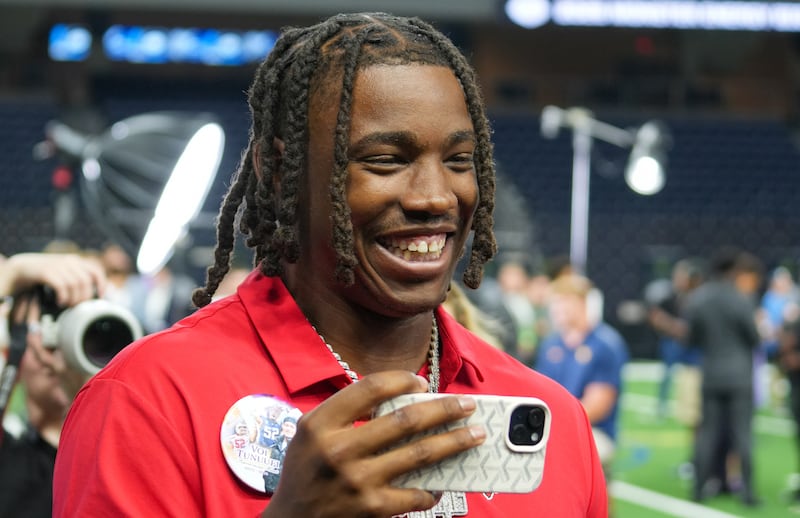
Reflecting on the experience while at Big 12 media days in Dallas, Holtzclaw said he was grateful that he could advocate for college athletes.
“I was so grateful for the opportunity to be able to just advocate for our people,” Holtzclaw said. “Everybody, all student-athletes across the board, they need a voice. They don’t get heard in those types of rooms and they’re making executive decisions and changing things around for people like me and other student-athletes around the country.”
“It’s like there’s no student-athlete in those conversations at all. We’re making a lot of decisions for people that are not even in these fields. So being that voice was super important for me and I was just super grateful for that opportunity to be able to speak on behalf of folks and help them get their voices heard.”
His teammates were glad that he represented them well in an important moment, too.
“Lance made for this. Lance made for talking. He’s made for speaking. His name is Showtime. He’s made for the bright lights, man. I’m so glad you did that, man, for real,” said linebacker Johnathan Hall.
“It’s funny how us guys work. I’d never say it in his face like ‘I’m proud of you,’ but I know I seriously am,” said quarterback Devon Dampier. “That’s such a huge step to go up there and the people that was up there and just for him to have the courage to speak his life and represent college football in that type of way, that’s a huge task to be asked of there.
“He went out there, did an amazing job. So I’m proud of Lance for doing what he did.”