


- A Deseret News/Hinckley Institute poll asked Utahns what concerns them about college sports.
- The survey found NIL and revenue sharing for athletes as the biggest issue.
- One sports business expert says fans will complain but continue to support their teams.
The landscape of college sports has changed dramatically in the past few years with athletes able to get paid and enter the transfer portal at will. Schools seem to turn over the roster every year as players jump around for more money or more playing time or both.
Sometimes it’s hard for fans to keep up with comings and goings and who’s getting what. Many lament the current state of affairs and critics of the evolving system long for the days when a scholarship and meal plan were enough to keep a player at a university for four years.
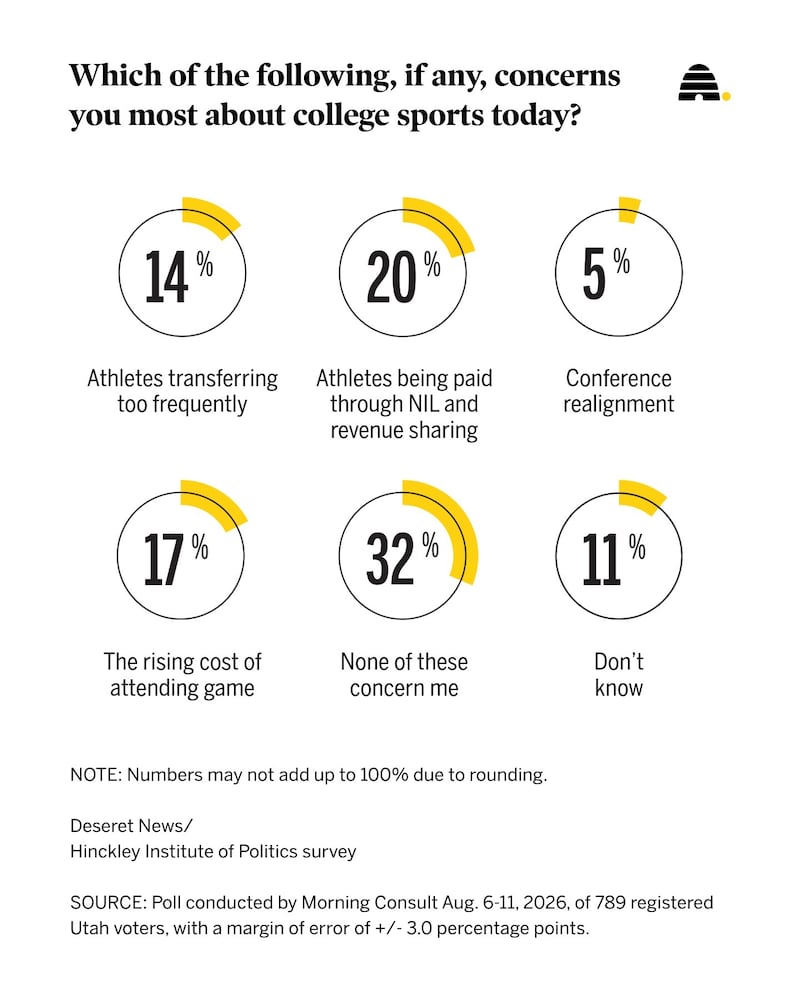
A new Deseret News/Hinckley Institute of Politics poll asked Utahns what concerns, if any, they have about college sports today. It presented several choices.
The survey found 20% concerned about athletes being paid through NIL and revenue sharing; 17% about the rising cost to attend games; 14% about athletes transferring too frequently and 5% about conference realignment. Another 11% said they didn’t know.

Nearly a third said none of those things concern them. The poll didn’t distinguish between respondents who aren’t concerned because they don’t follow sports and those who follow sports but simply aren’t bothered.
And despite 56% expressing some concern about an aspect of college sports, fans continue to fill stadiums and arenas, turn on their televisions, buy merchandise, bet on games and live and die with their favorite teams.
“Sports fans routinely believe that the sports sky, their sports sky, is falling. Many bemoan the ever-burgeoning commercialization, at least until the Big Game is ready to start,” David Carter, principal at The Sports Business Group in Los Angeles, said via email.
Age is a factor in how Utahns view college athletics.
For baby boomers, the biggest concern is NIL and revenue sharing. Gen Zers said players frequently transferring was the biggest issue. All ages were about the same when it comes to the rising cost of attending a game. Gen Xers expressed the least concern overall about those things.
How much are universities paying football players?
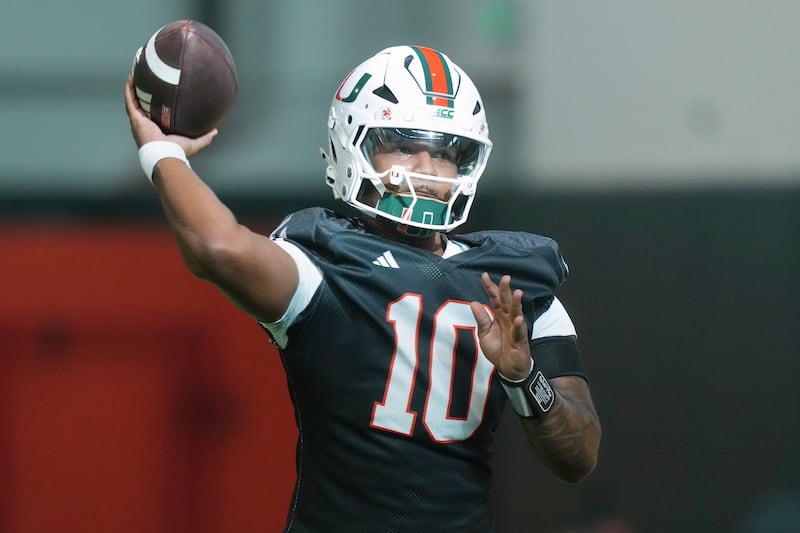
College athletes have been able to cash in on the commercial use of their name, image and likeness since 2021. Starting last year, universities were allowed to share revenue with players through direct payments. Schools in power conferences spend the majority of the approximately $21.3 million allowed under the revenue-sharing cap on football players.
ESPN surveyed more than a dozen college football general managers and front office staffers as well as a dozen agents earlier this month to get an idea of what starters at Power 4 schools make. It came up with a range by position:
- Quarterbacks: $1 million—$3 million
- Running backs: $300,000—$800,000
- Wide receivers: $400,000—$1 million
- Tight ends: $300,000—$600,000
- Offensive tackles: $600,000—$1.2 million
- Edge rushers: $500,000—$1.2 million
- Defensive tackles: $500,000—$1 million
- Linebackers: $300,000—$700,000
- Cornerbacks: $400,000—$900,000
- Safeties: $300,000—$900,000
- Kickers: $50,000—$200,000
- Punters: $50,000—$150,000
- Long snappers: $10,000—$50,000
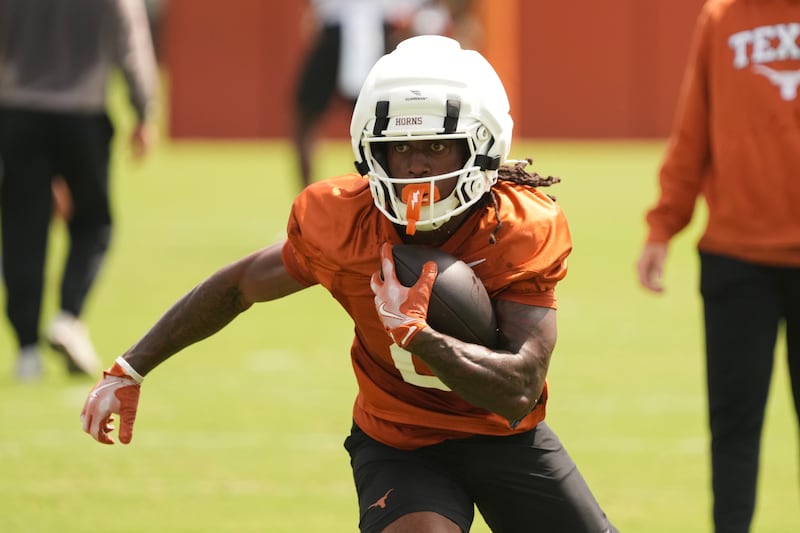
On the high end, it would cost $23.9 million — which exceeds the revenue-sharing cap — for just those 25 starters. It doesn’t account for a full roster of 85 scholarship players. On the low end of range it would cost $10.2 million, leaving money for backups and other sports.
How much football players are actually getting paid, though, is murky.
Per ESPN, “College GMs are debating positional roster value every day while navigating a marketplace with no transparency and lots of skepticism about the numbers that get reported. Their head coaches are increasingly concerned about where this is all heading.”
One of those coaches is Kyle Whittingham, who stepped down at Utah last December and now heads Michigan.
“I can tell you right now, with NIL rising 20%, 30%, 40% a year, it’s not sustainable if we stay on the path we’re on right now,” he told ESPN.

Is revenue sharing good for college sports?
The Deseret News/Hinckley Institute poll also asked Utahns whether revenue sharing would strengthen or weaken college sports over time.
The survey found that 39% believe it will greatly or somewhat strengthen college sports, while 29% believe it will greatly or somewhat weaken it. Another 10% said it will have little effect. Nearly a quarter said they don’t know.
“The real question to me isn’t whether or not (more) revenue sharing is ‘good or bad’ for college sports going forward, but whether fans will continue to consume more of it overall. And that seems to be the case as the supply of college sports continues nearly unabated,” Carter said.
“Fans may indicate a distaste for revenue sharing since it continues to lead college sports to the professional model, but ultimately most either look the other way or are not upset enough to turn off their TVs or forego the tailgate party, especially when their team is playing.”
So far, that appears to be how it’s playing out. Fans might grumble but they’re not tuning out.
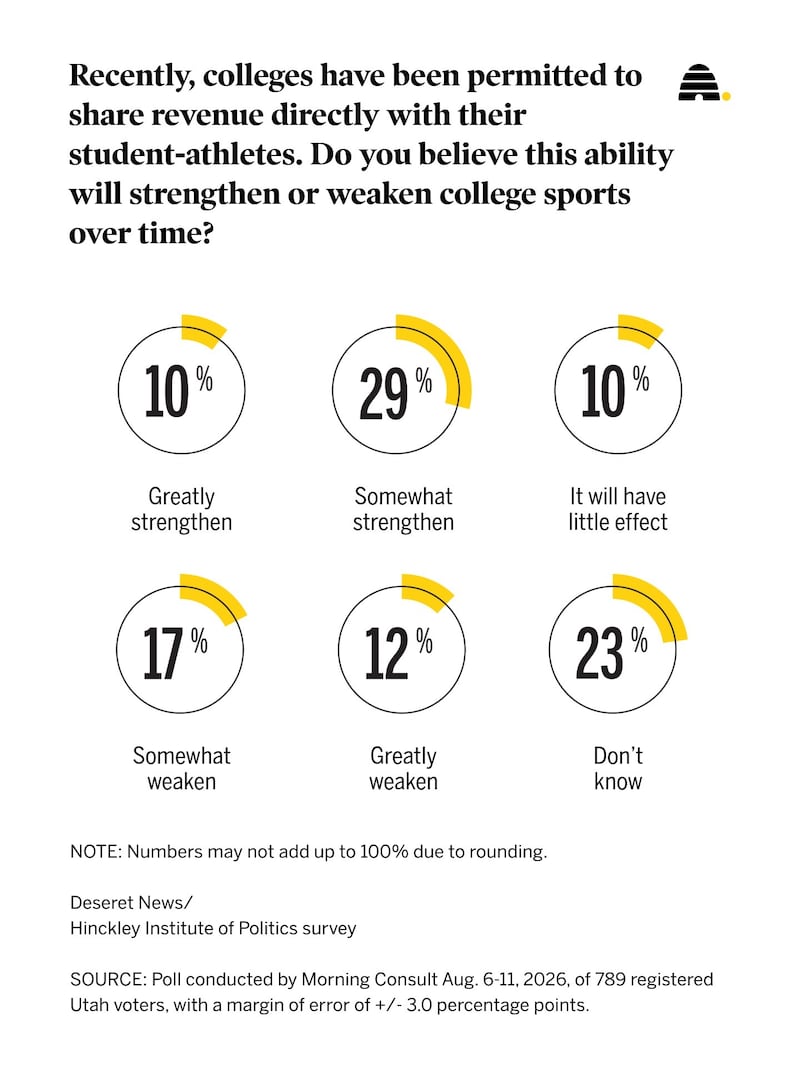
The Deseret News/Hinckley Institute poll found younger people were more likely to approve of universities paying athletes than older people.
Nearly half of Gen Zers and millennials said revenue sharing would greatly or somewhat strengthen college sports compared to about a third or less of Gen Xers and baby boomers. About 2 in 10 Gen Zers and millennials believe it will weaken college sports compared to 4 in 10 Gen Xers and baby boomers.