



- The Theodore Roosevelt Presidential Library opens July 4 in Medora, North Dakota.
- It's one of few noncontroversial semiquincentennial celebrations, supported by both America 250 and Freedom 205.
- The sustainable and immersive construction, grounds and exhibits highlight citizenship, leadership and conservation.
Fourth of July fireworks, water fights during small town parades and the shrieks of sparkler-wielding children make it hard for anyone who speaks softly to be heard on any old Independence Day.
For the politicians planning this year’s semiquincentennial, though, little effort was made to speak softly from the federal government’s pulpit. For a historical moment that could have been pure celebration, several events were reduced to partisan hackery.
Yet, from within that cacophony, those who steward Theodore Roosevelt’s legacy found a way to “speak softly” and “carry a big stick” — just like the 26th president himself — on the 250th anniversary of the adoption of the Declaration of Independence.
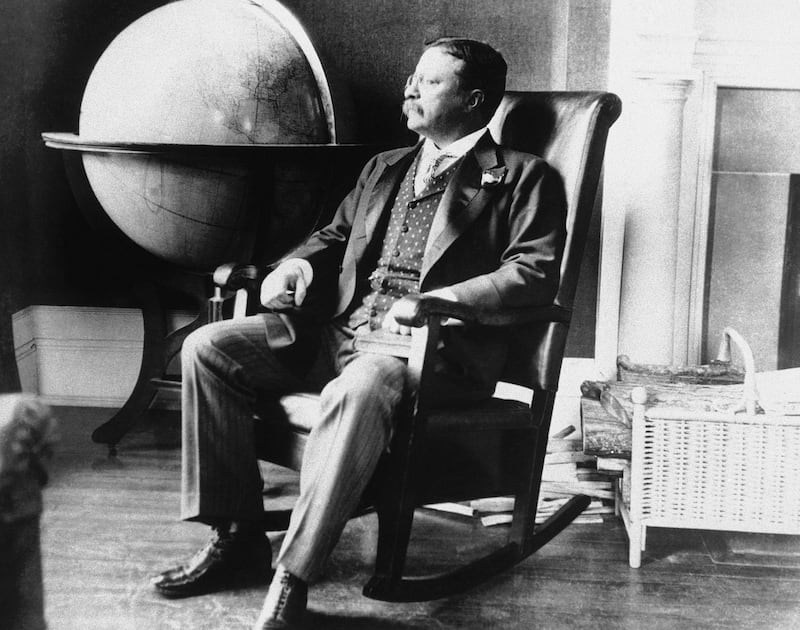
The Theodore Roosevelt Presidential Library opens July 4 in an out-of-the-way place called Medora, deep in the North Dakota Badlands. The town has a population of about 130 but will be home for both a national celebration of the milestone birthday — President Donald Trump is speaking the day before official events kick off — as well as an enduring one focused on the influence and vision of the American president simply known as TR.
As other events unravelled into political squabbles and morphed into rallies along the way, the opening has not headlined national news. But it remains one of the year’s marquee events for both Congress’ America 250 initiative and Freedom 250, the public-private partnership program led by the White House.
In doing so, the $400 million-plus dollar project demonstrates how to honor the ideals of the United States with the understated, confident swagger of the library’s namesake.
Foundation of American greatness

Ed O’Keefe, CEO of the Theodore Roosevelt Presidential Library, a former media executive and author of "The Loves of Theodore Roosevelt‚" chalks up Roosevelt’s appeal to his leadership and the values he championed.
“It’s remarkable to me how Theodore Roosevelt brings people of very different perspectives together,“ O’Keefe said sitting in the library’s meeting room overlooking the 93-acre property under an endless expanse of cotton clouds dotting a bright blue sky.
“Theodore Roosevelt brings together Republicans, Democrats, independents, young, old, diverse, you name it. Everyone seems to agree that he got it right.”
To continue the analogy, the “big stick” is the library itself. Even without America’s birthday, the opening is worthy of its own occasion. The architecture is awe-inducing, yet diverts attention toward the natural splendor of the region. The exhibits weave TR’s life of civic leadership into a personal journey for visitors that’s inspirational, yet playful.
“We wanted to build a presidential library where kids would be dragging their parents to it,” Doug Burgum, the secretary of the Interior and former governor of North Dakota who helped make the library a reality, said in an interview with Deseret News.
For Burgum, the library represents years of teamwork and collaboration across various stakeholders and investors — both public and private — to bring the vision to life.
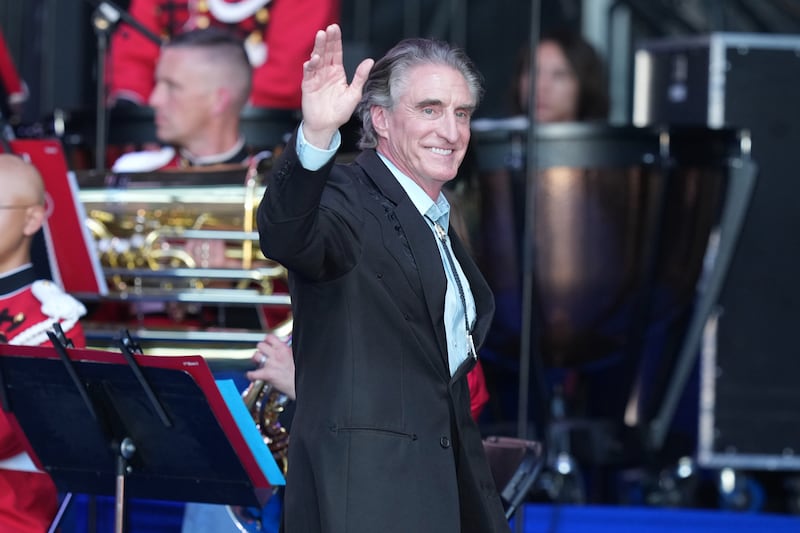
“This is a celebration of risk-taking and innovation, and that’s always been the source of American greatness, and TR laid the foundation for American greatness,” Burgum said.
“So, I think that the library, its design, its architecture, its sustainability — I mean, all the things about the physical building — but its placement overlooking a national park named after him ... there’s a beautiful synergy that’s occurring here. And layers, layers of lessons to occur.”
During a time of political division, the library and its opening offer a rare chance for Americans of differing persuasions to get excited about the country’s history. More importantly, by adopting the civic mindset of “the man in the arena” championed by Roosevelt, it charts a path for that same wide cross-section of citizens to find fresh excitement for where it’s going.
“The library — TR’s — should be an inspiration to every American," Burgum said.
Western roots

Theodore Roosevelt often said he never would’ve been president if it weren’t for his time in the West. Born an asthmatic child into a wealthy New York family, his connection to the frontier and nature was an unlikely one due, in part, to personal tragedy.
On Feb. 12, 1844, Roosevelt’s wife had just given birth to his daughter, Alice. As a New York state assemblyman, he was in Albany at the time working at the state legislature. But after receiving two urgent telegrams, he rushed back to New York City.
Not long after returning, his mother died of typhoid fever. Just a few hours later in the same house, Roosevelt’s wife suffered complications from an undiagnosed kidney disease and also died.
In his diary for Feb. 14, he drew a large “X” and wrote that “the light has gone out of my life.” He was 25 years old.
Roosevelt asked his sister to care for Alice and, by not seeking reelection, he effectively quit public service. Four months later, he stepped off the train in Medora, North Dakota.
“So, he decided to head West and basically threw himself into nature and through a combination of all the things that he went through out there ... he went from this sickly youthful Easterner to the rough-and-tumble cowboy who was the Rough Rider who transformed himself and then transformed the nation,” Burgum said. “And along the way, develop(ed) a conservation ethic which really changed how we think about ourselves as a nation.”
A living testament to conservation

Where Roosevelt stepped off that train is about a two-hour drive along I-94 west from Bismarck, North Dakota’s capital. Going west, it’s 25 miles to the Montana border, but nearly four hours to Billings. Across the highway is the Theodore Roosevelt National Park, which includes his original Elkhorn Ranch. Despite being remote and less popular than some other parks, it still welcomed about 730,000 visitors last year.
The campus is situated on top of a butte overlooking the site of that old train station. It sits on land the U.S. Forest Service sold to the library’s nonprofit foundation, which Congress approved in 2022. Designed by Snøhetta — a Norwegian landscape and architecture firm — the presidential library is, as they describe it, “more than a building.”
Glimpses can be seen from a few places nearby — the interstate or the national park — but it blends into the landscape. Unless you’re looking for it, it’s easy to miss. That’s intentional. But it’s a striking sight once it comes into view.
With a sloping, contoured shape, integrated flora, use of natural materials and colors, the nearly 100,000 square-foot, state-of-the-art museum gently rises out of the northern edge of the bluff. The roof is a walkable garden of native plants and so it appears as if the land pushed itself 38-feet up into the air to create space for the visitors coming to learn from the life of Roosevelt in the land that forged him.
From beginning to end, the project prioritizes conservation and sustainability. Its design ambition adheres to a more stringent sustainable designation than LEEDs called the “Living Building Challenge.” The library sums up part of the gargantuan effort to achieve it — which can’t be done until it’s been in operation for 12 consecutive months — as the “four zeros.”
The building is powered by geothermal and solar power capable of producing surplus energy for the grid. Through the rooftop gardens and closed filtration system, it produces its own potable and waste water. Other than a backup diesel generator, the property produces zero carbon emissions. Lastly, through the use of compostables and onsite recycling, it’s attempting to achieve zero waste, too.
Beyond the main building, the immersive experience extends around a 30-acre grassland that was restored with hundreds of thousands of indigenous plants. Over several years, the library partnered with local universities to gather and sow native seeds.
In a nod to federal, multiple-use land, local ranchers will eventually use those acres for cattle grazing. For now, the property and buildings are both growing — literally — to become part and parcel of the prairie they’re preserving.
While walking the ADA compliant half-mile path circling the bluff spaced with vistas and further exhibits, Jean Carrol, director of facilities, grounds, and sustainability, said that, “we talk as if the library is the landscape.”
“This is such an important — what I would say almost an equally important — part to the project as the building.”
Visitors approaching from the parking lot will be drawn toward those expansive outdoor spaces — particularly for a walk onto the roof — as much as they are pulled into the library. Giving both mutual priority is deliberate and commensurate with Roosevelt’s values.
“Of all the questions which can come before this nation, short of the actual preservation of its existence in a great war, there is none which compares in importance with the great central task of leaving this land even a better land for our descendants than it is for us,” Roosevelt said in his “New Nationalism” speech in 1910, about a year and a half after he left office.
Roosevelt preserved more than 230 million acres for the benefit of future generations, cementing his love of the natural world as his primary legacy. He’s often referred to as the father of American conservation.
“(The library) is a living testament to 100 years in the future of conservation and sustainability,” O’Keefe said. “Everything we’ve done from the architecture to the land to the native plants to our sustainability ambitions have been about celebrating Theodore Roosevelt’s conservation legacy but also challenging you to get in the arena and make a commitment to our natural world.”
The man in the arena

The library’s ability to transcend and satisfy both sides of today’s inherent political tensions is a direct result of Roosevelt himself. For many, he may be just another subject relegated to the history books or for Hollywood to caricature, but the man still garners broad appeal, and for good reason.
For visitors to the library, the interactive exhibits follow the course of his life, asking participants to engage with the ideas he too grappled with.
“‘Museum’ and ‘library’ are probably the two worst words to use to describe it, because it’s actually a call to adventure,” O’Keefe said. “What we do is use Theodore Roosevelt’s life and story as a way to bring you into the adventure. You are the hero of this story. We use these tales of TR’s adventures and existence to teach you about curiosity and wonder and kindness and resilience and beauty and struggle.”
Donning wristbands called Trailblazer compasses, visitors pass through individual rooms dedicated to his childhood in New York, to his homestead in Medora, Sagamore Hill, campsites in Africa and, of course, the White House. At his desk, an AI version of Roosevelt leveraging his prolific writing, speeches and correspondents waits for trailblazers to step up. Visitors will have a chance to speak with this artificial TR.
O’Keefe jokes that the most boring part of his life was the presidency, “because he’s contained,” but that period emphasizes why he is the favorite president of folks as far apart as Mitt Romney and Elizabeth Warren.
Considered the first “modern president,” Roosevelt served from 1901-1909 and is enshrined on Mount Rushmore in neighboring South Dakota. In his time, he was known for his “conservative progressivism.”
On foreign policy, he pushed for a quiet form of American dominance — speaking softly with a big stick, again — that helped him become the first American to win the Nobel Peace prize. At home, he sought a “Square Deal” for regular folk, and so he busted up corporate monopolies and put in place consumer protection laws.

After conservation, however, his other primary legacy was his call to arms for people to participate in governance. In a speech titled “Citizenship in a Republic,” delivered at the Sorbonne in Paris a year after his presidency ended, Roosevelt defined his understanding of civics and responsibility as “the man in the arena.”
“It is not the critic who counts; not the man who points out how the strong man stumbles ... The credit belongs to the man who is actually in the arena ... who errs, who comes short again and again, because there is no effort without error and shortcoming,” Roosevelt said. “Who at the best knows in the end the triumph of high achievement, and who at the worst, if he fails, at least fails while daring greatly, so that his place shall never be with those cold and timid souls who neither know victory nor defeat.”
The speech lines the walls of one exhibit, reminding visitors that TR’s notion of civics required personal responsibility as well as individual action and accountability. The meritocratic approach is agnostic to whom it’s applied and recognizably American.
“If you’re going to be a participant and an active citizen in this democratic experiment, it doesn’t matter your race, your religion, your creed, your background,” O’Keefe said. “None of that matters to Theodore Roosevelt as long as you are in the arena. You are participating and trying.”
What are the planned festivities?
Prior to the official opening events, Trump is visiting and will be speaking at a nearby amphitheater, though not on the library grounds.
The opening events will take place July 2-4. The town will be active with musical performances, a plethora of shows and exhibits. The town’s famous and long-running “Medora Musical” will be on stage each day, as well as other performances that leverage the Broadway talent in town for the musical’s summer run.
The ramp up also includes a plethora of new logistics to accommodate the thousands of people expected to descend on the tiny town. It’s so small in fact, that its bank and post office are built into what appears to be an old John Ford set.
But planners don’t yet know how many folks will come. Though, when the national park was dedicated in 1949, some 40,000 people came. But that was an era without social media and large public relations apparatuses fueling interest.
For each of the three nights, rather than fireworks in a drought-riddled West, the night sky will be lit up with 1,776 drones telling a choreographed version of TR’s life story.
The event’s culminate with a grand ribbon cutting of sorts at 10:27am — the numbers representing Roosevelt’s Oct. 27 birthdate — on July 4. There will be speeches from dignitaries, congressional leaders, elected officials from North Dakota and the secretary of the Interior, at which point the library will officially be open to the public.
The next 250 years
“I thought Roosevelt was inspiring from when I was a kid. You think about the power of nature and the power of one individual and how they can transform a city, a state, a country or the world ...,” Burgum said. “While we have the national park ... we weren’t doing enough to celebrate the inspiring impact that he’s had and the role model he was for conservation, for citizenship and for leadership.”
Like Burgum, O’Keefe is from North Dakota, which is a state that claims TR as its own. After a successful media career — including producing Anthony Bourdain’s “Part’s Unknown” — O’Keefe was writing a book about the women in Roosevelt’s life when he encountered the opportunity to help develop the library. For him, it is another chance to tell an important story.
“Why does the Theodore Roosevelt Presidential Library need and deserve to exist in the world? What is it going to bring that doesn’t already exist?” O’Keefe mused. “To me, it was about leadership, citizenship and, foremost, conservation. That if we could use this person from the past to better inform the present and collectively make better citizens, conservationists and leaders, then it wasn’t just about memorializing Theodore Roosevelt, it was about the future.”
That sense of the future is built into the sustainability of the whole campus and the myriad lessons one can take from Roosevelt’s life. Though he is this Mount Rushmore figure, he’s also someone whose story most people can relate to.
“We all in life will face hard times, we will lose people we love, we will not get that job that we wanted, we will have a health crisis — either of our own, or from someone close to us," O’Keefe said. “And Theodore Roosevelt did too. But what he did was go out in nature and try to find the will and the reserve to keep going. And that’s the lesson we want all of the families — and kids in particular — who come here to see and experience and to understand. To better equip them for adventures to come in their own lives.”
O’Keefe pointed out that Roosevelt was president of the United States at America’s 125th birthday, putting him right in the middle of the birth of the nation and where it will be on July 4, 2026. He said that the lens of Roosevelt will help Americans imagine the next 250 years.
“It is going to require leaders, citizens, conservationists,” O’Keefe said. “It is going to require the optimism and pragmatic realism that TR brought to the American century over these next centuries.”
Which is why the team designed the library with children in mind.
“I hope there’s some little kid who never thought perhaps of being president of the United States, and they’re inspired by TR’s story, and they imagine themselves in these experiences,” O’Keefe said. “They feel courage. They feel wonder. They feel excitement. They feel resilience and struggle. Maybe they’ll be inspired to be the next Theodore Roosevelt.”