

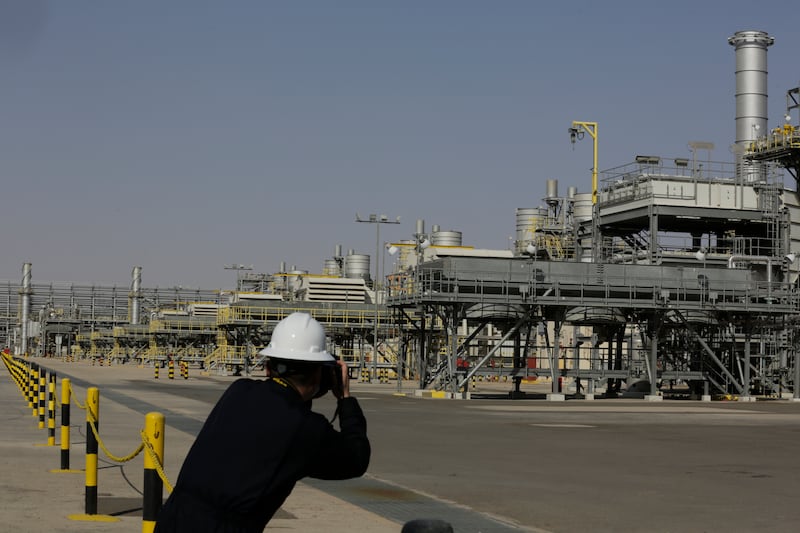

- The United Arab Emirates announced plans Tuesday to leave the OPEC oil cartel on May 1.
- UAE says it intends to boost petroleum export volumes in the near future.
- U.S. gas prices hit their highest level since start of the Iran war.
Amid a global petroleum industry thrown into bedlam by the ongoing Iran war, the United Arab Emirates, the third-largest exporter in the OPEC cartel of oil-producing countries, announced Tuesday plans to leave the group next month.
The decision comes as the Strait of Hormuz, a critical shipping passage through which 20% of the world’s oil exports travel on the way to global markets, remains closed and negotiations to end the war are stalled as a fragile ceasefire agreement remains in place. The shipping blockage has helped drive consumer gas prices to the highest level in four years and driven up U.S. inflation.
UAE officials wrote in a statement that the decision “reflects the UAE’s long-term strategic and economic vision and evolving energy profile, including accelerated investment in domestic energy production, and reinforces its commitment to a responsible, reliable, and forward-looking role in global energy markets.”
Industry analysts note the UAE, an OPEC member for over five decades, has pushed back on OPEC quotas in recent years and butted heads with the group’s largest oil exporter and de facto leader, Saudi Arabia.
“The world needs more energy. The world needs more resources, and UAE wanted to be unconstrained by any groups,” the country’s energy minister, Suhail Al Mazrouei, said in an interview with the New York Times.
How will UAE exit from OPEC impact oil prices?
The UAE’s statement also signaled the country’s intent to boost oil production, a move that could bring some consumer price relief, though the timeline of those production increases remains unclear.
“Following its exit, the UAE will continue to act responsibly, bringing additional production to market in a gradual and measured manner, aligned with demand and market conditions,” the statement read.
The continued closure of the Strait of Hormuz and broader uncertainty surrounding the direction of the Iran war helped push wholesale oil futures past the $100 a barrel Tuesday as U.S. gas prices reached their highest level since the U.S. and Israel launched attacks on Iran in late February.
The average price for a gallon of regular across the U.S. hit $4.18 on Tuesday, according to tracking by AAA, the highest rate since April 2022. Tuesday’s rate is 18 cents per gallon higher than a week ago and over $1 per gallon more expensive than this time last year.
Utahns continue to pay more than most of the rest of the nation with a gallon of regular going for an average of $4.28 per gallon across the state. Utah gas prices rose 12 cents per gallon since Monday and are up $1.01 compared to a year ago, per AAA data.
In a Monday blog post, Patrick De Haan, head of petroleum analysis at GasBuddy, wrote that consumers can expect to see even higher prices at the pump in the coming days.
“Oil prices have been climbing again as markets react to renewed geopolitical tensions and the cancellation of talks between the U.S. and Iran,” De Haan wrote. “As a result, gasoline prices are set to rise further this week, with diesel expected to follow. Many inland states —including those in the Great Lakes and Plains — could see average gas prices climb to their highest levels since 2022, while price-cycling markets may also experience another round of hikes in the next few days.”