

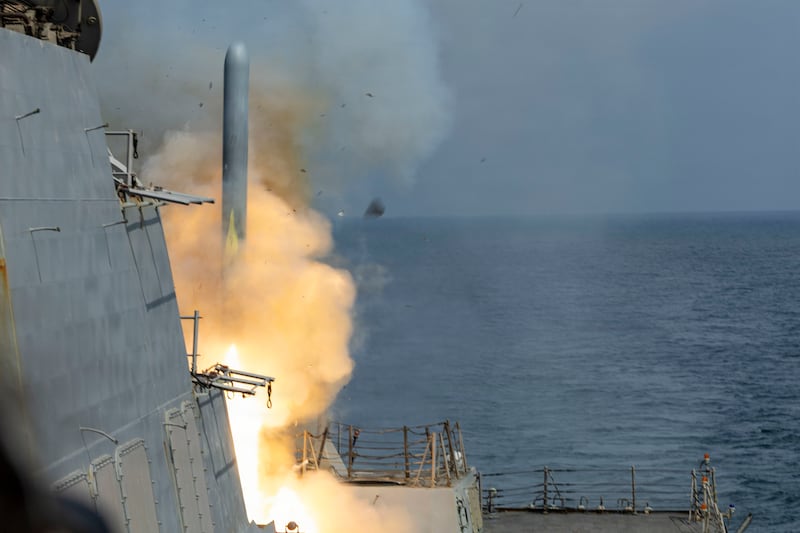

Secretary of Defense Pete Hegseth, other Pentagon officials, and Secretary of Agriculture Brooke Rollins answered questions from members of Congress on the Appropriations Committee on Tuesday, but the bottom line was a big number.
Hegseth, responding to Illinois Sen. Dick Durbin about costs of the war in Iran, said, “The estimate we have of today is $37.5 billion.”
The pricetag has come from the cost of deploying service members abroad, high-cost munitions, and repairing damage to U.S. military bases, according to the progressive public policy institute Center for American Progress.
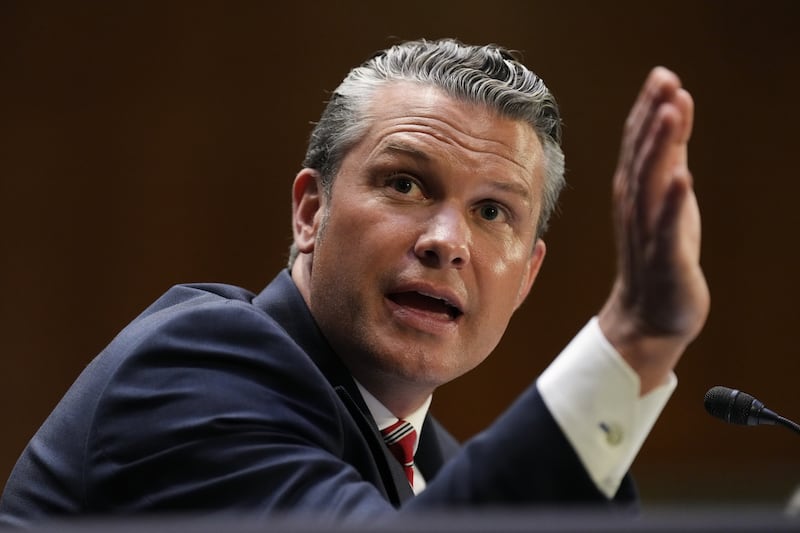
At the hearing, U.S. Chairman of the Joint Chiefs of Staff Dan Caine defended the Pentagon’s request to Congress for $67 billion in increased funding. The increased funding would have the primary aim of restocking depleted munitions. This request is in addition to the pending $1.5 trillion budget requested by the Defense Department.
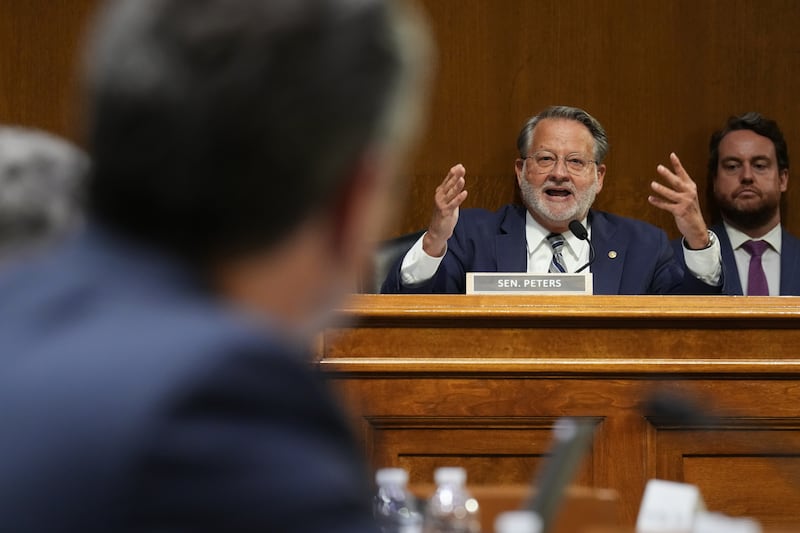
Sen. Patty Murray, D-Wash., a critic of the war, said, “The president is threatening escalation and war crimes, and suggesting this could be another forever war.”
Congress has yet to fulfill a request to increase funding for the war with Iran.
How the money has been spent
Clarifying what the $37.5 billion figure meant, Durbin, D-Ill., asked, “And that represents the cost of the war through what period of time?”
Hegseth said the number accounts for money spent “through now for certain aspects of it, but also … other anticipated costs through Sept. 30.”
In a closed-door briefing in March, officials from the Department of Defense estimated that the cost of the first six days of the war exceeded $11.3 billion, NBC reported.
The New York Times reported that the U.S. has traditionally relied on effective but expensive solutions. Cheap drones used by Iran in the war have come at a high cost for the U.S. as the interceptors used to bring them down can cost millions apiece.
Ship-based anti-missile defenses, The New York Times report continued, can cost as much as 120 times more than the Iranian drones they are targeting.
The military has also spent this money on repairing the U.S. bases that have been hit by Iran. The cost of fuel, service member deployments and salary, and other costs have contributed to the high cost of the war, the CAP reported.
Hegseth said in the hearing that he is not looking for “unlimited bombs,” but rather for “the right bombs at the right time.”
“Without these funds,” said Hegseth, “we face critical shortfalls that threaten our ability to also simply pay our service members, rapidly replenish equipment and munitions, and sustain vital operations without disruption.”
Congressional Republicans passed a $95 billion spending bill Wednesday that includes additional defense spending, although those funds still haven’t been fully allocated and the bill still has to clear the Senate.