

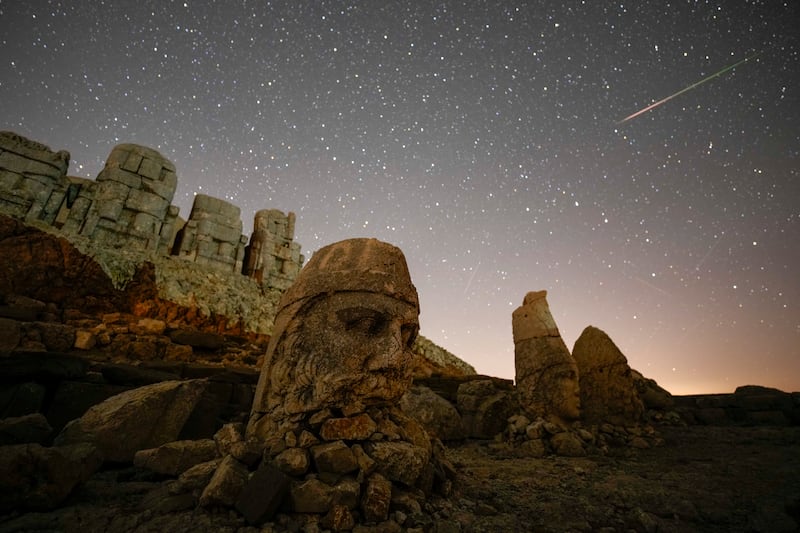

- A planetary alignment, an active meteor shower and a solar eclipse will be viewable Aug. 12
- Thanks to a new moon, peak Perseids meteor activity should occur in optimum viewing conditions.
- A partial solar eclipse will be viewable in 20 states on Aug. 12.
A slate of extraterrestrial phenomena including planet alignment, a solar eclipse and the peak of the summer’s most active meteor shower is set to converge on Aug. 12, making it one of the best opportunities this summer to enjoy a celestial spectacle.
In the early morning hours Wednesday, six planets including Jupiter, Mercury, Mars, Uranus, Saturn and Neptune, will align, though not all of them will be visible to the naked eye.
According to a report from Star Walk, Mars and Saturn will be the easiest planets to see and will appear low, just above the horizon early Wednesday. Mercury will be the next easiest planet to see and will also be positioned near the horizon. Jupiter will be the hardest planet to see with the naked eye and will appear even closer to the horizon than Mercury. Uranus may be visible using binoculars and observing Neptune will require a telescope.
Star Walk notes that while the main date of the alignment is Aug. 12, the best practical viewing time depends on your location. In some cities, the best morning may fall on Aug. 11, 12 or 13 because Mercury and Jupiter rise very close to sunrise. Early morning on Aug. 12 will provide the optimum viewing opportunities for Utah stargazers.
The annual Perseids meteor event will be at its peak on the night of Aug. 12 -13 and this year’s display will be boosted by a darker night sky thanks to its alignment with the new moon phase.
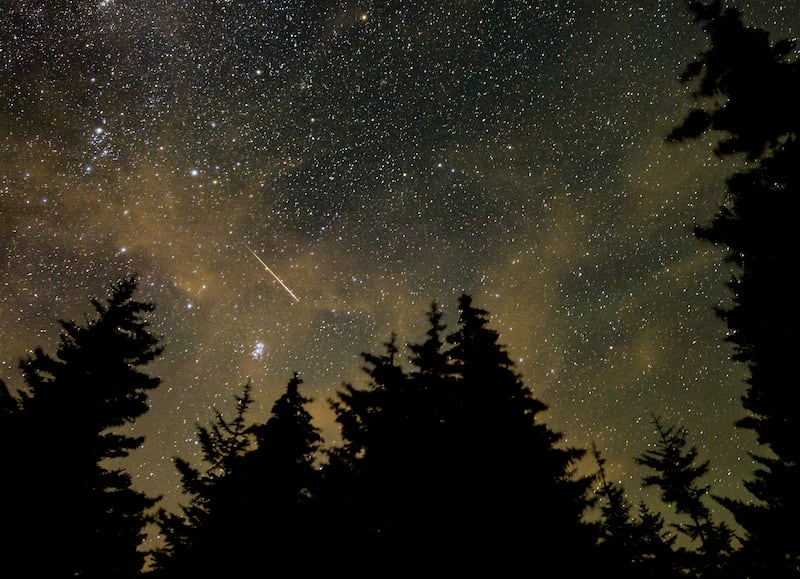
The Perseids are particles released from comet 109P/Swift-Tuttle during its returns to the inner solar system, according to the American Meteor Society. The best viewing in the Northern Hemisphere for this year’s peak activity will occur after midnight and is at its best just before dawn.
A typical Perseids meteoroid (which is what they’re called while in space) moves at 133,200 mph when it hits Earth’s atmosphere (and then it is called a meteor), according to Space.com. Most of the Perseids are tiny, about the size of a sand grain. Almost none of the fragments hit the ground, but if one does, it’s called a meteorite.
With swift and bright meteors, Perseids frequently leave long “wakes” of light and color behind them as they streak through Earth’s atmosphere. And they are one of the most plentiful showers with about 50 to 100 meteors seen per hour.
Where to see solar eclipse
The most dramatic astronomical event on Aug. 12 will, unfortunately, only be fully viewable in a handful of locations but can be enjoyed remotely thanks to live streaming by NASA, the European Space Agency and others.
The path of totality for Wednesday’s solar eclipse includes parts of Greenland, Iceland and Spain but a partial eclipse will be viewable from 20 states, with the biggest partial shadow of the moon best seen from the northeast region of the U.S. around midafternoon that day, per a report from Space.com. The next opportunity to view a total solar eclipse from the contiguous states will occur on Aug. 22, 2044.