

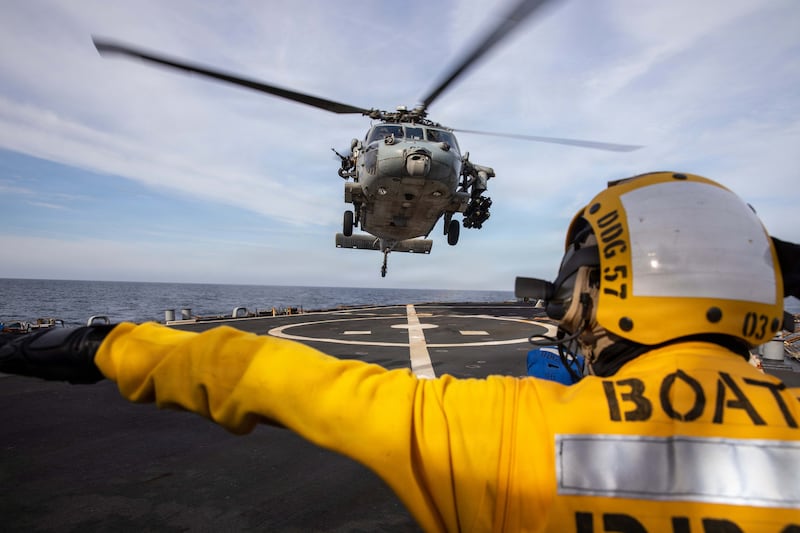

- Department of Navy has launched "Epic Vigilance" — an initiative designed to boost cybersecurity across American military communities.
- Troops and their families were advised to remove any social media posts connecting them to the military.
- The public online portraits and biographies of many Navy command leaderships are also being removed to bolster security.
Operation Epic Fury — the military code name given to the ongoing war with Iran — has prompted a new U.S. Navy moniker: Epic Vigilance.
American sailors, Marines and their families, along with Navy assets, have faced “an evolving threat landscape,” according to a recent Department of the Navy notice to the maritime force community. (The U.S. Marine Corps is an independent branch of the U.S. Armed Forces, but operates under the Department of the Navy.)
Cyberthreats targeting those in and out of uniform are reminders that the traditional wartime homefront has been being redefined. It’s increasingly vulnerable because of the global reach of social media and other digital technology.
“The security of our (troops) and their families remains the Navy’s absolute priority. In today’s modern security landscape, adversaries increasingly aggregate publicly available data to track, profile, and target our personnel,” according to the Navy Department.
In the most recent directive, Acting Secretary of the Navy Hung Cao noted that U.S. military installations and personnel remain “under increased vigilance” due to recent drone encounters, suspicious activities, cyber threats and violence.
In response to emerging threats, the Navy Department is implementing “Epic Vigilance” — a Navy Department-wide security initiative to detect, deter and mitigate threats to department installations and personnel.
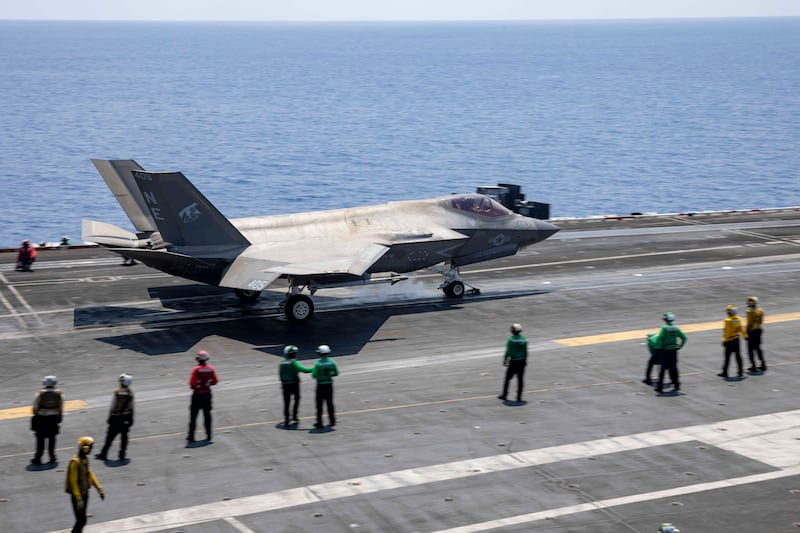
“In the current global security climate, adversaries and hostile actors are executing a coordinated, multidomain campaign against the DON enterprise,” noted the message.
“Recent incidents across the globe demonstrate a clear growth in adversary tactics, techniques, and procedures. These are not isolated events; they are part of a deliberate effort to gather intelligence, test our defenses, disrupt our operations, and intimidate our force.”
The message to the Navy/Marine Corps community identified several types of threats being utilized by enemy cyberattackers:
- Direct threats and harassment targeting sailors, Marines and the families via social media — including doxing, or the publishing of personal information.
- Drone surveillance of Navy warships, flight lines and other infrastructure that demonstrates increasing capacity to evade detection.
- Ground-level surveillance and suspicious activity near Navy installations and service communities.
- Attempted physical attacks at access control points — indicating adversaries’ willingness “to move from threatening words to direct action.”
- And coordinated “harassment campaigns” to test security responses and “personnel endurance” at a wide variety of locations.
A call to action for troops and their families
Every American sailor and Marine — and their family members — are key players in Epic Vigilance, according to the Navy Department message. So a fortified “personal and family security posture” is in order.
The message directed all in the Navy/Marine Corps community to:
- Immediately review all social media accounts, including those of family members, for publicly available personal information. “Set profiles to private. Remove any information that could identify your connection to the DON or reveal patterns of life. Adversaries are actively mining this data.”
- Report suspicious activity. “Don’t rationalize suspicious activity. Trust your instincts, a seemingly minor observation may be a critical component to identify and mitigate threats. Force protection is everyone’s responsibility.”
- Maintain situational awareness. “Be attentive to observed changes and anomalies in your daily activities at work, at home, and while in your communities.”
The Department of Navy directive goes on to encourage sailors, Marines and their families to report activities that could be possible surveillance, such as individuals lingering around and filming military areas.
And quickly alert Navy officials of any suspicious cyberactivity such as threatening or suspicious emails or upon discovering imposter social media accounts of sailors or Marines.
The message also advises all in the Navy community to be watchful of “lone actors” who may view Navy personnel and their families as “targets of opportunity”. Navy personnel and their families should also maintain “low profiles at large-scale events.”
Removing bios of Navy/Marine leaders from public websites
Implementing Epic Vigilance comes weeks after a similar department announcement that all Navy command websites led by officers of the rank of O-9 or below should remove the portraits and bios of command leadership.
An O-9 in the Navy is a three-star vice admiral.
“By creating an unnecessary spotlight and surge of online interest, routine command triad biographies inadvertently expose our people to elevated risk,” the message noted.
Commands led by Navy officers of the rank of O-10, or Admiral, will maintain official leadership biographies on their command’s public websites.
Meanwhile, internal nonpublic websites can continue to post leadership biographies and portraits for official use.