

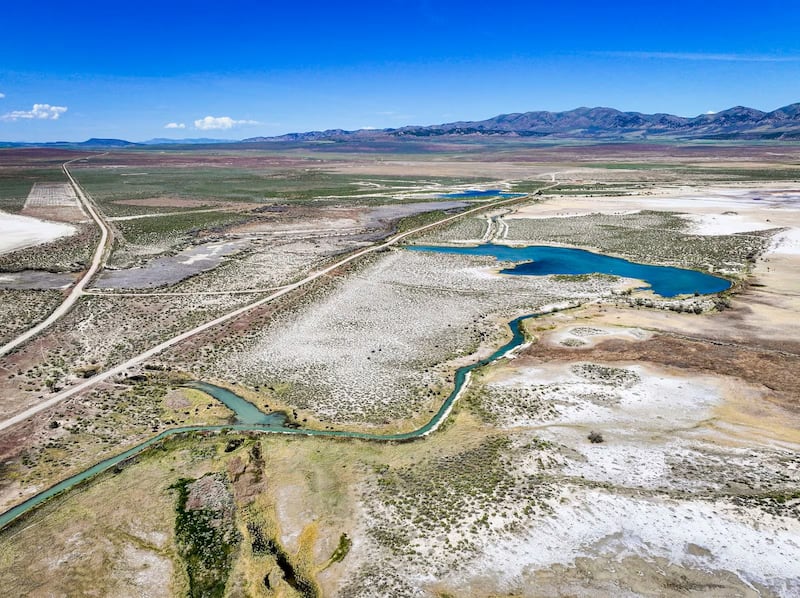
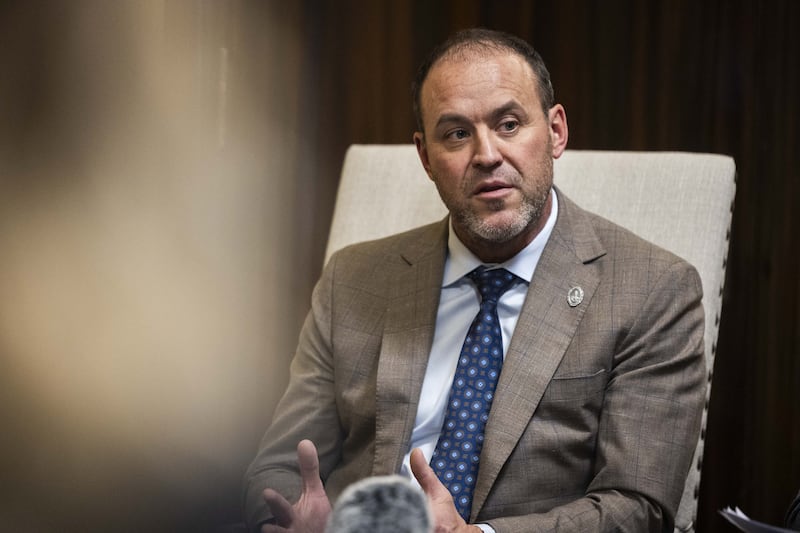
After a state legislative panel voted last week to study the impact of data centers on natural resources, Utah House Speaker Mike Schultz said he thinks Box Elder County voters should get to weigh in on the future of a large proposed data center.
Box Elder County’s three-member commission voted earlier this month to advance the data center proposal, kicking off a flurry of opposition. Within days, multiple referendums were filed seeking to overturn the commission’s decision.
The county clerk’s office has 20 days from May 8 to review whether the referendums can move forward, meaning a decision is expected later this week.
“I believe the people of Box Elder County should be the ones that make this decision, so I do support there being a referendum,” Schultz, R-Hooper, told KSL Tuesday.
If the referendums are allowed to proceed, organizers would need to collect signatures to put the question on the ballot and give voters an opportunity to weigh in on the project’s future.
The Utah Natural Resources, Agriculture and Environment Interim Committee voted last Wednesday to add the data center study to a list of proposed topics to study over the summer that could help guide legislation for the next general legislative session that begins in early 2027. Rep. Doug Owens, D-Millcreek, suggested adding the data center study to a list that already includes looking at water issues, emergency preparedness and the development of rare earth resources.
“We’ve obviously seen that in the news lately,” he said, adding he thinks there are questions about potential impacts to wildlife, air quality, noise and water availability. “It seems like maybe we want to gather some information: latest cooling techniques, how to minimize water usage, and so forth. It seems like just a timely and useful topic.”
Owens said he was particularly interested in understanding the potential impacts on wildlife and examining “how to minimize those impacts where they’re deleterious.”
As the Box Elder County data center has become a controversial political topic, Schultz said the legislative study will give voters better information about the impacts and said he is “super supportive” of the study.
“Let’s understand what the actual impacts are and then make a decision,” he said. “But right now, nobody knows the impacts, including the developer, which is a little bit frustrating. ... Let’s get these studies done and the information out there, and let the voters in Box Elder County make the decision.”
Lawmakers didn’t refer to the controversial Stratos Project Area by name during last week’s hearing, but alluded to the massive data center project in Box Elder County, which has been the subject of intense public scrutiny since it was made public last month. Backed by Kevin O’Leary, the Canadian businessman known as Mr. Wonderful on the reality television series “Shark Tank,” the data center project is planned to span some 40,000 acres and eventually include energy sources totaling between 7.5 and 9 gigawatts of power.
Utah’s Military Installation Development Authority approved guidelines for project development and a tax-incentive plan last month, and the Box Elder County Commission passed two resolutions allowing it to advance on May 4.
Backers of the project say it is a national security issue and will help the United States compete with China to develop advanced artificial intelligence.
But opponents worry about the potential environmental impact of the data center and have raised fears that it could consume water as the state faces another drought.
The committee’s approval of the study wasn’t necessarily surprising, given that Schultz said last week he is supportive of independent studies to examine the data center’s impact on water availability. The speaker owns more than 25,000 acres of ranch land near the data center site and said the proposal is “not beneficial to me or to my property.”
Schultz said he believes there is a need to build more data centers, but said there should be “good guardrails” around the process.
“We can’t just say no data centers at all,” he said, “but we want to make sure we’re putting them in the right locations, the right areas and the right size, and that we know what ... the impacts are so that we can mitigate them to the best we can.”
State Sen. Scott Sandall, R-Tremonton, who represents all of Box Elder County, joined calls for a legislative study into the issue, saying there is a “lot of speculation” around the impacts of the data center on water that he is “not sure” is factual.
“I welcome any of the facts around what data centers do and don’t do,” he said. “I think it would be well if we brought our own experts in and learned as a Legislature what the facts are and really vet into that.”
And while the Stratos project is the most scrutinized project in the state, there are already dozens of smaller data centers in Utah with more plans proposed in Iron and Juab counties, among others.
“I think it needs to be studied,” said Rep. Carl Albrecht, R-Richfield. “It affects the whole state, and we need to take a good, hard look at it.”
It remains unclear what the study will look like or what legislation will result from it.
It’s not the first time state lawmakers have addressed the impact of AI data centers. The Legislature recently approved a new law requiring operators of large data centers to regularly provide the government with information about water use and efforts made to reduce consumption. The law took effect on May 6.