


This article was first published in the On the Hill newsletter. Sign up to receive the newsletter in your inbox on Friday mornings here.
It’s the age-old question: To keep the filibuster intact, or to get rid of it altogether?
It’s a debate that has never been solved. Players switch sides depending on which party is in control, and it’s usually up to a few members of the majority to tamp down the efforts from within their own caucus.
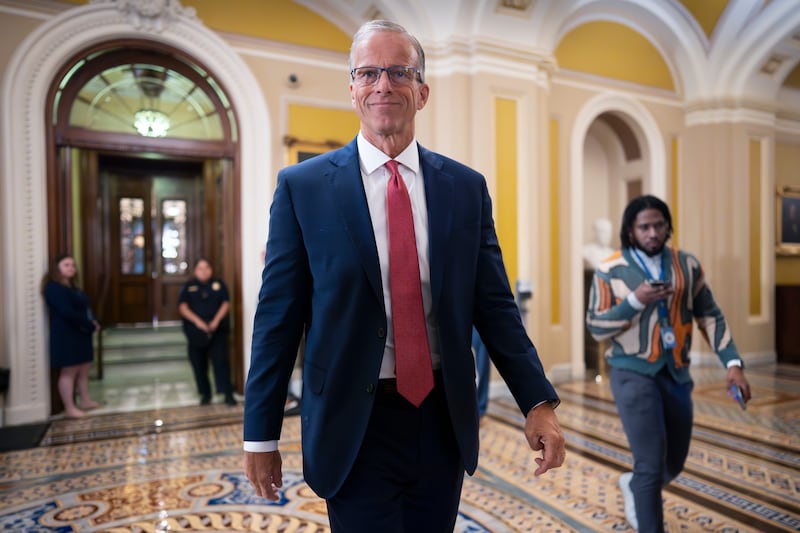
And the debate is still raging on right now, even as Senate Majority Leader John Thune, R-S.D., repeatedly says there is not enough support to get rid of the filibuster and he won’t go through the charade of putting it up for a vote.
But the back-and-forth is still there. And it was on full display this week among Senate Republicans.
Utah Sen. John Curtis wrote an op-ed last week defending the filibuster. As he puts it, it’s a necessary tool to maintain order in the Senate. Without it, individual senators don’t have a voice and bipartisanship would essentially be dead.
“This tradition contributed to the Senate’s reputation as the world’s greatest deliberative body,” he wrote in The Wall Street Journal. “Not because senators speak longer, but because no one can be easily ignored. The structure forces engagement. It requires listening.”

It’s not necessarily a novel opinion. Several senators on both sides of the aisle feel the exact same way.
But my eyebrows raised when I saw another op-ed this week, also in The Wall Street Journal, from GOP Sen. Rick Scott responding directly to Curtis.
“Sen. John Curtis, my colleague from Utah, proves reasonable in defending Senate norms and procedure in his op-ed,” Scott wrote. “However, Americans should understand how abuse of the filibuster has killed real debate, negotiation and results. Keeping the status quo can’t solve this crisis.”
Scott, like other Republican senators such as Mike Lee, argue the filibuster has actually stifled debate in the Senate. Under current rules, a senator doesn’t have to physically debate against something to stall it.
Instead, you just need 60 votes to “invoke cloture,” which is just fancy Senate talk for “end debate.” That 60-vote threshold is actually what these senators — in both parties, just depends on who is vocal about it at the moment — get frustrated with.
Why? Because unless you have a supermajority, it requires buy-in from both parties. So you need a bipartisan deal to get anything done.
That’s why you have Republicans pushing to terminate the filibuster and go back to physical debate filibuster rules. Lee’s push for this has mainly been focused on the SAVE America Act, which has been stalled for months due to a lack of Democratic support.
“We should nuke the filibuster to pass the SAVE America Act,” Lee said in a recent social media post. “If we don’t have the votes to nuke the filibuster, we should put the SAVE America Act on the floor and debate it until it passes, requiring filibustering senators to speak and making clear that if they stop speaking, we can “call the question” and pass it with a simple majority.”
Republicans aren’t the only ones who have called for the end to the filibuster. When Democrats controlled the Senate, they ran into the same issue: an inability to pass partisan legislation because of Republicans in the minority who could block it.
Back in 2022, Democrats tried the same “talking filibuster” gambit that Lee has been pushing in recent months. They wanted to eliminate the 60-vote threshold — but that plan was stopped by Democratic Sens. Kyrsten Sinema and Joe Manchin.
Now, most Democrats are silent on the issue of changing filibuster rules if they win back the majority in 2026 — or even 2028. Except for progressive candidates like Abdul El-Sayed in Michigan who has been vocal about abolishing it.
But Democrats will likely still have a few party members who oppose those efforts from within.
Pennsylvania Sen. John Fetterman, for example, has said Democrats were wrong to want to get rid of it in the past. That stance is a switch from his previous comments on the issue. He even supported abolishing the filibuster during his 2022 campaign.
But Fetterman wrote in an op-ed earlier this year that he was wrong — and so were other members of his party.
“Upon reflection, the pursuit of those short-term wins clouded the bigger picture and lasting impact of a Senate without the filibuster — a Senate that ignored the voices of the minority and everyday people,” he wrote. “We cannot become a smaller version of the House of Representatives.”
Ding ding ding — that sounds exactly like Curtis’ argument. That argument being: The House and Senate are different, and they should stay that way.
More from Curtis on that, who served in the House for seven years before coming to the Senate: “In the House, I didn’t have a single meaningful opportunity to influence major legislation. In the Senate, and as a freshman, I found myself in the thick of every major piece of legislation.”
For now, don’t expect any changes. But also don’t expect the debate to go away — it’s a fight that will be revived for years and years to come.
Stories Driving the Week
- Curtis’ green light: Utah Sen. John Curtis will vote to confirm Todd Blanche as attorney general when he comes up for a vote in the Senate, slightly easing the Trump administration nominee’s so far rocky path to confirmation. I scooped Curtis’ decision as he was being closely watched this week.
- MAGA vs. Utah? Utah Sen. John Curtis hit a nerve on Monday with the introduction of a bipartisan bill seeking major reforms to one of the most sensitive issues in American politics: the legal immigration system. His proposal to create a state-led migrant visa program prompted objections by a swarm of personalities on the political right, Brigham Tomco reports.
- Reflecting pool drama: President Donald Trump on Saturday sharply criticized U.S. Attorney Jeanine Pirro’s assessment that damage to the Lincoln Memorial Reflecting Pool was the result of shoddy construction and not the work of vandals, as he claims.
What Utah House members are doing during the August recess
If you’ve been following my reporting this week, you know that the Senate is (literally) inching toward its scheduled August recess. We are still unsure when that scheduled break will begin.
The House, meanwhile, left on its August recess two weeks ago. But there’s still a lot of confusion and misunderstanding about what the recess period is meant to be and what lawmakers do.
If you’re chronically online like yours truly, there are several complaints that it’s a paid vacation for lawmakers while nothing gets done in Washington. But that’s not the complete story.
Yes, they are gone from the U.S. Capitol and federal agenda items are at a standstill. But lawmakers are back home talking with constituents, having the conversations that inform their priorities when they are back in Washington.
Some even tell me they get more done when they are home than when they are here simply because of the legislative delays and drama that happens so often. So I decided to check in with members of Utah’s House delegation to see what they’re up to during their recess period.
Rep. Blake Moore, who represents the 1st District in northern Utah, has been booked with constituent meetings, celebrating at the Raspberry Days Festival at Bear Lake, attending town halls, and catching up with his family.
He’s also been making the rounds to get people involved with Trump Accounts, the newly created savings accounts for children born between Jan. 1, 2025, and Dec. 31, 2028.
“Congressman Moore has been giving presentations to local chambers of commerce on how employers can get involved in Trump Accounts,” a spokesperson told me. “He has been excited to share how these accounts provide financial opportunity for employees and their families, boost retention, and provide incentives. He even has a slide show, in true former-consultant fashion!”
Rep. Mike Kennedy in the 3rd District has also been getting some face time in with his constituents and has plans to take tours of Housing Connect, an affordable housing agency in Salt Lake County, and the Air Traffic Control tower.
“This month, I’m spending my time in the Third District meeting face-to-face with local business owners, going on tours of local facilities, listening to community members, and learning directly from the people who make our communities thrive so I can better serve you in Washington,” Kennedy told me in a statement.
And finally, in Utah’s 4th District, Rep. Burgess Owens has kept an active social media presence documenting his travels, which include visits with the West Jordan High School football team, local businesses like Cakes by Edith in Riverton, and awarding veteran Richard Bockhaus with the Purple Heart after being wounded in the Vietnam War.
“One of my favorite parts of this job is getting to travel the Fourth District and spend time with families, business owners, students, and local officials,” Owens said. “Time and again, I’ve heard how the Working Families Tax Cuts Act has eased the burden on families and businesses and opened new doors for young people through school choice and Trump Accounts. That’s why I’ve spent so much time in Washington trying to get government out of the way and let people build a great life for themselves and their kids.”
Quick Hits
From the Hill: Senate panel votes to hold Anthony Fauci in contempt after refusing to answer questions on COVID-19. … As flames ravage the West, Congress finds rare bipartisan ground on wildfire prevention. … Special counsel who obtained Sen. Mike Lee’s texts as part of Jan. 6 probe invited to testify before Senate.
From the White House: Utah military family advocates respond to Trump’s executive order. … Armed man arrested at Trump’s California golf club days before president’s arrival. … Markwayne Mullin tells governors DHS isn’t looking for a fight — it’s looking for partners.
From the courts: Jan. 6 rioters’ class action lawsuit faces dismissal bid from Trump administration. … Days before New York assisted-suicide law takes effect, judge shields Catholic providers. … Six months after Nancy Guthrie’s abduction, police release ransom notes in search of a break.