

Some have long viewed religious studies in Utah either as the purview of Latter-day Saint scholars at Brigham Young University or as a narrow specialty of interest only to aspiring clergy.
Yet as one of Utah State University's newest academic programs, religious studies is attracting broad interest from students, according to a Buddhist scholar who has watched the program grow from the ground up.
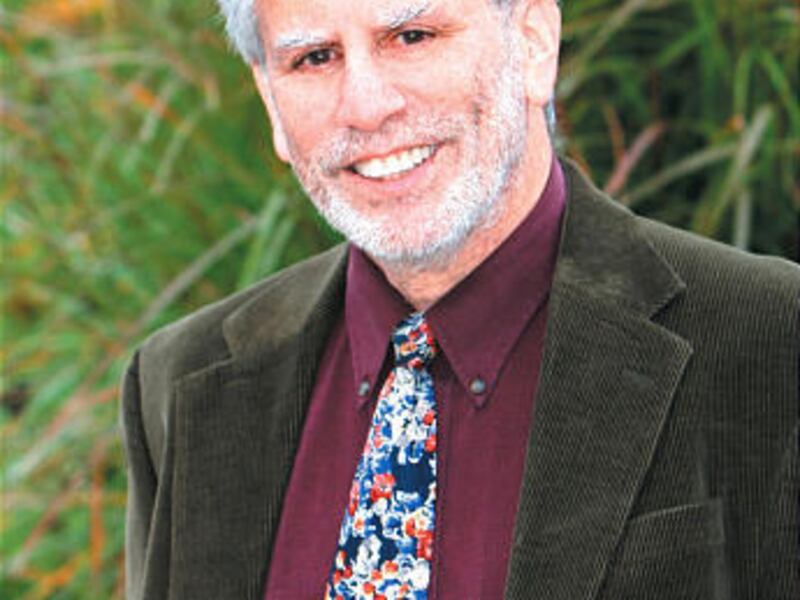
Charles Prebish, recently named director of religious studies at USU, said the demand for courses within the new department is "overwhelming. Every one is filled to capacity and beyond, and there are waiting lists for every course we've taught." Courses normally enroll about 40 students each.
The school is the first university in Utah to offer a bachelor's degree in religious studies, after the program was approved in 2005 and opened its doors to students in fall semester 2006. The school also offers a minor in religious studies, as does Utah Valley State College.
Patrick Williams with the USU public relations office said a total of eight students have declared religious studies as their major — three full majors and five secondary majors (for students with a double-major). Additionally, three students have formally declared it as their minor course of study.
Prebish, a Buddhist studies scholar who taught at Pennsylvania State University for more than 35 years, said the numbers are significant, particularly when "you're starting from scratch. In my time at Penn State, I don't think we ever had more than 35 or 40 majors" at any one time in a program that had been established for decades.
Classes approved as part of the program include Introduction to Religious Studies, a course on methodologies for studying religion; the history and sociology of religion; Introduction to Buddhism; Introduction to Hinduism and a seminar on Buddhism in the West, he said.
A course on the history and culture of Mormonism is in the process of being certified as a religious studies course (it's now part of the history department), as is a seminar on the biography of Joseph Smith and a course on the history of American religions.
Several courses now taught in other departments are related to religious studies and are electives that students can choose to take as part of their 36 credits within the major.
As students continue to seek out the program, Prebish said, USU administrators are looking to "grow the faculty so we can cover the core of five major religious traditions. Phil Barlow now holds the endowed chair in Mormon studies, we have my chair in Buddhist studies, and we're looking to fund chairs in Hindu, Islamic and Jewish studies as well," he said.
A request has been submitted to the university for another position in one of the three remaining areas, but Prebish doesn't know whether it will be approved. If not funded directly through the university, Prebish said the department would look to secure private endowment money.
"We realize $2 million endowments don't grow on trees, but we're prepared to beat the bushes and use our contacts. We've already made inroads to funding a chair in Catholic studies, and we're looking to do so in Jewish studies," he said.
Already looking to that end, Prebish said he's trying to arrange a meeting with Jewish community members in Salt Lake City and Park City to see if there is potential funding available.
"It won't hurt that I come from a Jewish background, and I'm not averse to doing what I have to do to try to bring (the funding) in," he said. He'd like to see a chair in Islamic studies as well, he said.
The program has attracted a number of endowments, including an initial $1.5 million gift from the Charles and Annaley Redd Foundation, which established the university's first chair in religious studies. That was followed by the Leonard J. Arrington Chair in Mormon History and Culture, sponsored by more than 45 donors. In addition, a $600,000 gift from the Tanner Charitable Trust has provided the program with an endowment for purchasing library materials.
Because the program is so new, Prebish said it's fair to say students are not yet choosing USU for the religious studies program in particular.
"But there is a great thirst for access (to religious studies courses) among students already here," he said. "Most students are LDS Church members with a strong intellectual and cultural commitment. They're delighted to know there's a program here where they can learn about their own tradition in more detail and other traditions as well."
Shortly after Prebish came to USU in January 2007, a young philosophy student approached him after the first session of a class on Buddhism and said, "I can't tell you how glad I am we finally have this at USU." He's found that sentiment is "typical of the kind of reaction we're getting in our classes."
Some students are so enthused they've organized a club, which puts together programs throughout the year to draw interested students. "They've done it all on their own. I'm seeing more interest on the part of students here than I had at Penn State. We had a series of weeklong programs for religious diversity week, including one night where faculty members were presenting workshops on religious texts from their own tradition.
"I think this is a case of people really appreciating something they've never had before."
Though the program has started small, if there is enough financial support Prebish said he can imagine a time when religious studies at USU will become a draw for students in competition with other established programs across the country.
That possibility is part of what drew Prebish to Utah when he was within a semester of retiring at Penn State, he said. "I was coaxed here. I perceived on the part of USU and (history department chairman) Norm Jones (who initially pushed the program) that they wanted to do something new and unique. To be a part of that is exciting."
To date, he's not been disappointed, he said. "In terms of students, the very best I've had here are as good as the best students anywhere. You could take half a dozen of the really top-notch students here and put them at Harvard and they'd be top-notch there."
"In that respect, I'm delighted with the quality of many and the inquisitiveness of almost all the students," despite the fact that many of them "have really complicated lives so they're not spending as much time on studies as they would like. We have people working full time and going to school full time."
Prebish said he has great appreciation for top administrators, who he believes have "a real vision for making USU a world-class university. They're directing us down a really fruitful path. I couldn't imagine better working conditions."
The program already has graduated its first major, 26-year-old Trevor Alvord from Ogden, in May 2007. Alvord chose USU because of the folklore and religious studies programs, telling officials, "I think religious studies will be the best thing that has happened to Utah State in a long time. The community here is so passionate about religion, and this will add an academic level to it."
E-mail: carrie@desnews.com