

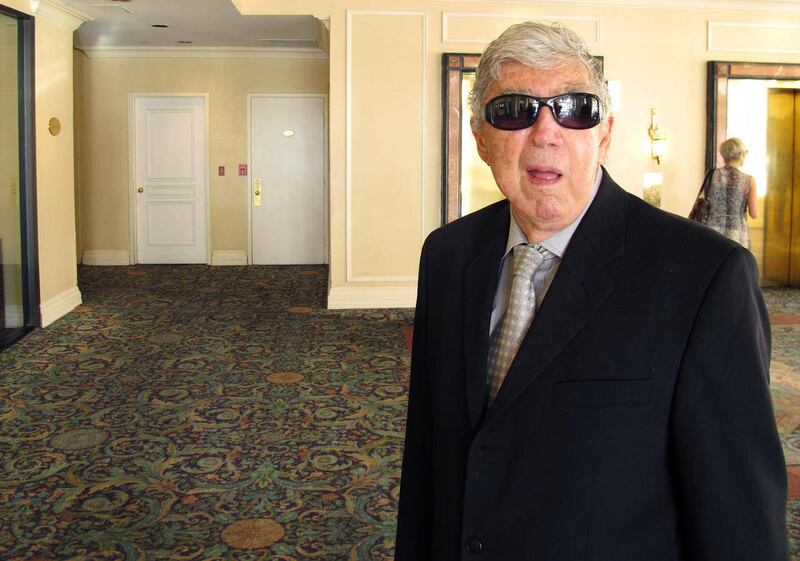
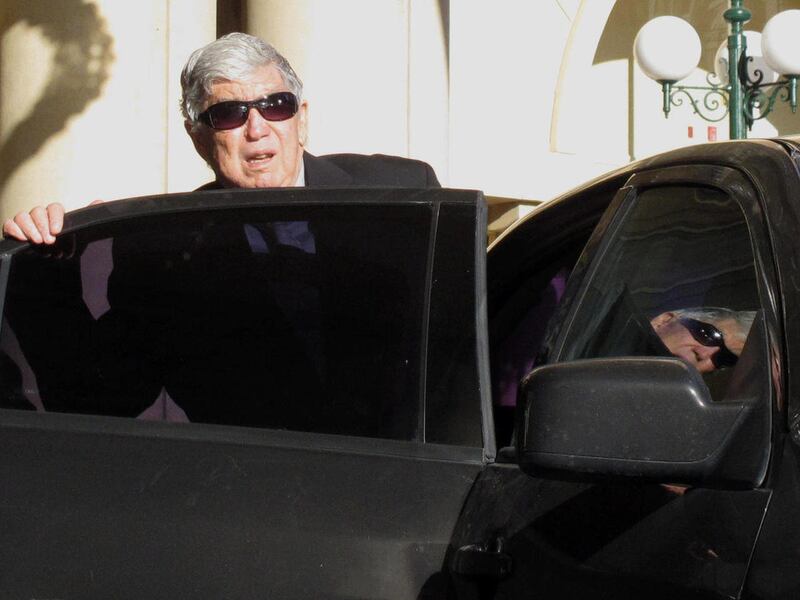
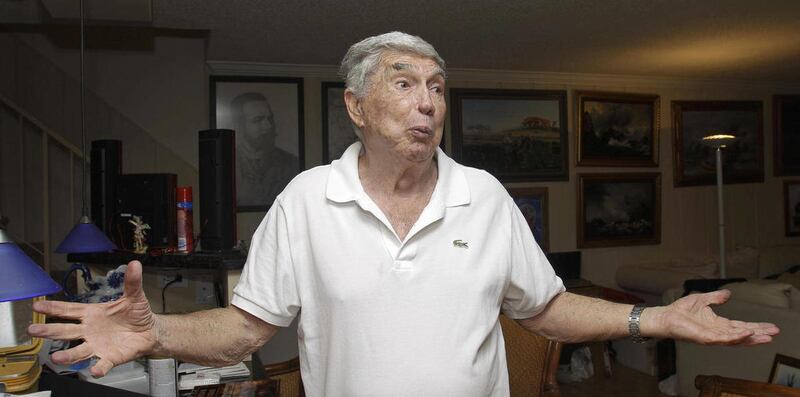
EL PASO, Texas — An elderly Cuban former CIA operative accused of lying during a U.S. immigration hearing was acquitted on all charges Friday, with jurors taking just three hours to reach a verdict after enduring 13 weeks of often-delayed testimony.
The abrupt decision ends four years of attempts by the U.S. government to convict 83-year-old Luis Posada Carriles, and means he no longer has to face the prospect of spending the final years of his life in prison, at least in the United States.
For decades, Posada worked to destabilize communist governments throughout Latin America and was often supported by Washington. He is Public Enemy No. 1 in his homeland, even considered ex-President Fidel Castro's nemesis. In Havana, the government had no immediate comment to his being cleared across-the-board.
After hearing he had been acquitted on all 11 counts of perjury, obstruction and immigration fraud, the white-haired Posada grinned widely then hugged his three attorneys simultaneously. Two of the attorneys broke out in tears.
Across the aisle, a trio of federal prosecutors who painstakingly built their case by calling 23 witnesses over 11 weeks, sat dejectedly.
"Anytime a jury has a case, there's no telling what they might do. But we respect the jury's decision," Assistant U.S. Attorney Timothy Reardon said moments afterward. He declined further comment.
U.S. Marshalls escorted jurors out the back of the courthouse and put them in a van, ensuring they did not speak to reporters.
Posada, who has slurred his words since being shot in the face and losing part of his tongue during a 1990 assassination attempt in Guatemala, joked softly with his defense team, then left the courthouse a free man.
Asked if he worried the case might have gone the other way, he said "of course" — especially Thursday night with jurors preparing to deliberate.
Posada sneaked into the U.S. in 2005 and sought political asylum, and later U.S. citizenship, for which he went through immigration hearings in El Paso.
Prosecutors alleged that he lied while under oath during those proceedings about how he made it into the country and by denying he masterminded a series of hotel bombings in Cuba in 1997 that killed an Italian tourist and wounded 12 other people.
Posada said in a 1998 interview with The New York Times that he planned the attacks, but later recanted that. During the trial, jurors heard more than two hours of recordings from those interviews, but apparently were not swayed by them.
The defense, which called just eight witnesses over eight days, maintained Posada should have been allowed to retire a hero in Miami, where he had been living since his 2007 release from an immigration detention center, for his service to the country during the cold war.
Posada participated in the doomed Bay of Pigs invasion, served as a 2nd Lieutenant in the U.S. Army and was a CIA operative until 1976. He then moved to Venezuela and served as head of that country's intelligence service.
Also in 1976, he was arrested for planning the bombing of a Cuban airliner that killed 73 people. Posada was acquitted by a military tribunal, but escaped from prison while still facing a civilian trial.
He helped the U.S. funnel support to Nicaraguan Contra rebels in the 1980s, and, in 2000, was arrested in Panama amid a plot to kill Castro during a summit there. He was pardoned by Panama's president in 2004 and turned up in the U.S. the following March.
Cuba and Venezuela would like to try Posada for the 1997 hotel bombings or the downing of the 1976 airliner, but a U.S. immigration judge has previously ruled that he can't be sent to either country, for fear he could be tortured.
Jose Pertierra, the Washington-based lawyer representing Venezuela in its case against Posada sat through every day of the trial and was crestfallen after the verdict.
"The theater was worth more than the evidence in this case. The evidence was strong. We heard the voice of Luis Posada saying he was the mastermind of the bombings," Pertierra said. He said Venezuela will renew its efforts to have Posada extradited to face 73 counts of first-degree murder.
Pepe Hernandez, who heads the Cuban American National Foundation in Miami and who trained with Posada ahead of the Bay of Pigs invasion, applauded the verdict.
"The U.S. government had a very scant case. Obviously, it didn't have any evidence beyond that of Ann Louise Bardach," Hernandez said, referring to the reporter who interviewed Posada for the Times.
The U.S. tried to convict Posada in El Paso of the seven perjury and immigration fraud charges in 2007, but U.S. District Judge Kathleen Cardone threw that case out, chastising the government for using an immigration hearing to build a criminal case against Posada.
When that ruling was overturned on appeal, prosecutors added four new charges, including those alleging obstruction of justice.