



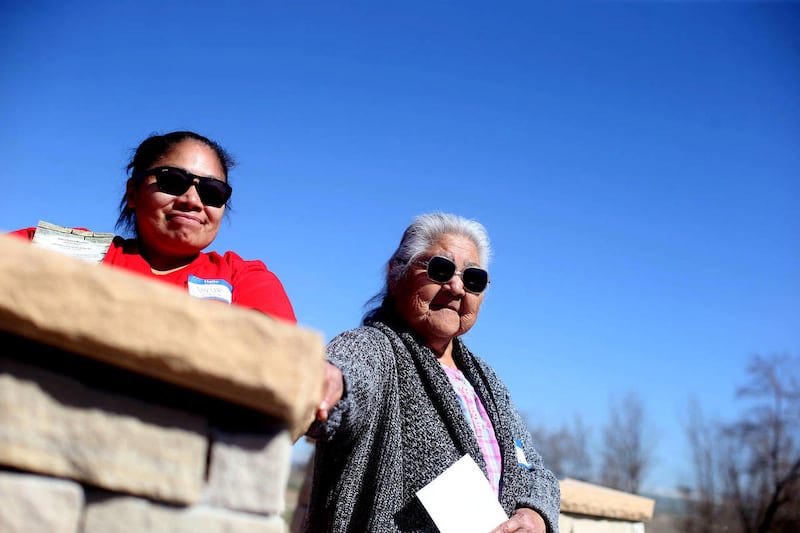

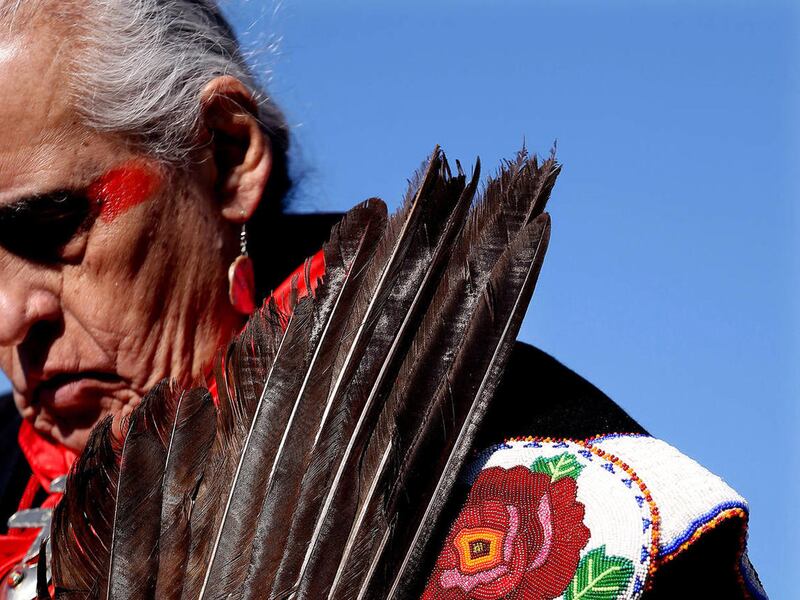


DRAPER — Utah's Native American heritage was recognized Friday with the dedication of a permanent memorial that pays homage to the tribes who once called the land home.
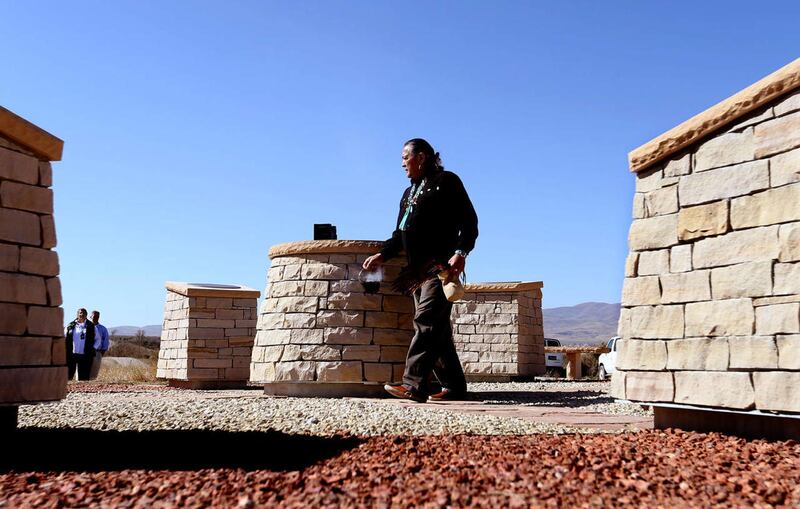
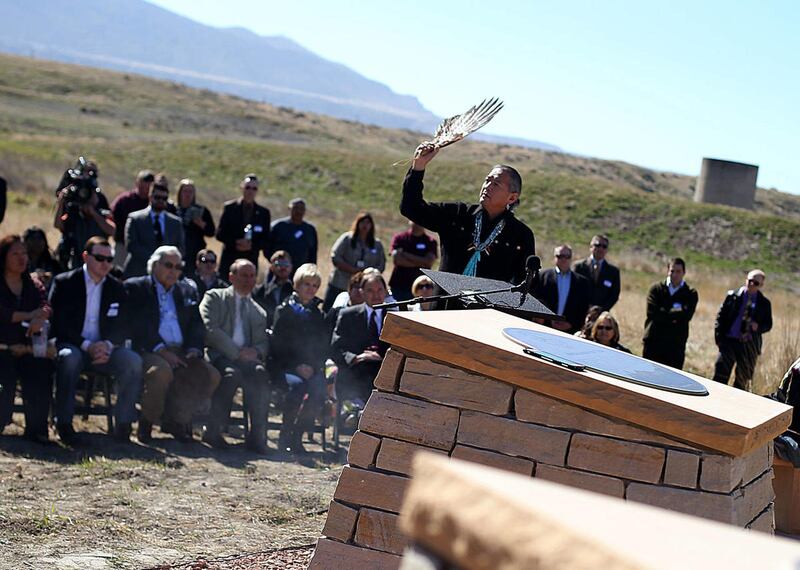
State officials and Utah tribal leaders officially dedicated the Galena Sundial monument in a ceremony filled with reverence for the people who first settled in the area. Located near 13400 South in Draper along the Jordan River Parkway Trail, the site is part of the Galena Soo’nkahni Preserve, a 250-acre site designed to protect wetlands as well as wildlife and conserve the area’s cultural heritage.
Stone tools and weapons, corn and animal bones dating as far back as the Archaic Period — 800 B.C. to 480 B.C. — have been discovered in the area. Galena Soo’nkahni is Shoshone for “many dwellings.”
The Utah Transit Authority committed to mitigate any impacts to the site’s cultural resources, including construction of a monument honoring tribes that had previously inhabited the areas in years past.
“We roamed this area,” said Jason Walker, chairman of the Northwestern Band of Shoshone Nation. He called the location a good place for outreach to help others learn about the tribes that lived there.
The site was created over the past two years in partnership with the state’s eight Native American tribes and the Utah Division of Indian Affairs, according to UTA. The monument, which acts as a natural sundial, is part of UTA’s ongoing efforts to conserve and recognize cultural landmarks near rail lines and bus routes, said Michael Allegra, the company's president and CEO.
“The project is a symbol of what can be achieved when we come together in a spirit of partnership,” Allegra said. "The monument is a lasting reminder of the Native American people who once inhabited the land between the Draper FrontRunner Station and the Jordan River."
The land serves as a preserve for archeological conservation values and is sacred to the state’s Native American tribes and is permanently protected by a conservation easement held by Utah Open Lands, he said. The land is owned by the Utah Division of Forestry, Fire and State Lands.
Each of the eight pedestals on the outside of the sundial faces in the direction most associated with the tribe it depicts and has a plaque with information on that tribe, Walker explained, while the center pedestal features the history of the preserve. The eight Utah tribes include the Confederated Tribes of the Goshute Reservation, the Navajo Nation, the Northwestern Band of the Shoshone Nation, the Paiute Indian Tribe of Utah, the San Juan Southern Paiute Tribe, the Ute Indian Tribe, the Ute Mountain Ute Tribe and the Skull Valley Band of Goshute.
“We used rock from the area and local designers to create the monument so it would retain the right look and feel for this site,” Allegra said. “The kiosk will provide information on Utah’s Native American tribes to the countless people who use the Jordan River Trail every day.”
Shirley Silversmith, director of the state Office of Indian Affairs, said the monument will ensure that the spirits of those who walked the land will live on forever.
“We don’t want them to be forgotten,” she said. “We have to have a way to remember that our ancestors lived here.”
Gov. Gary Herbert noted that the shrine and surrounding preserve will serve as evidence to the idea that people can come together in good faith to find shared solutions and pay tribute to the lasting legacy of the state’s native people.
"This monument will stand as an enduring testament to the proud heritage of Utah’s tribes," Herbert said.
Email: jlee@deseretnews.com, Twitter: JasenLee1