

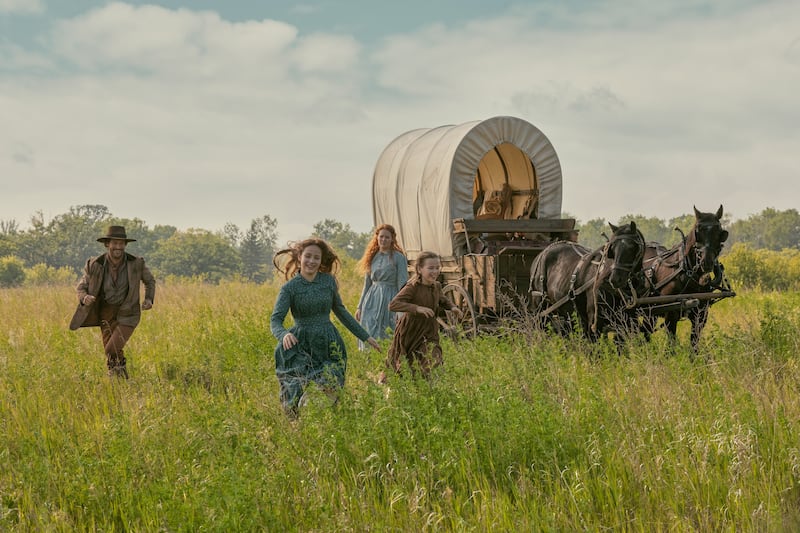

In the first episode of Netflix’s “Little House on the Prairie,” a young Laura Ingalls Wilder (Alice Halsey) finds a Native American-made doll deposited along the riverbank near the Kansas prairie where her family is settling.
Laura, who left behind most of her treasures during the long journey from Wisconsin, takes an immediate liking to the handmade doll. She carefully tends to it, stitching up tears and adding buttons and bows.
When she meets the doll’s owner, a Native American girl her age named Good Eagle (Wren Zhawenim Gotts), the encounter begins with suspicion. Good Eagle accuses Laura of stealing the doll, but her father, William Mitchell (Meegwun Fairbrother), reminds her not to jump to conclusions. Instead, he tells her to thank Laura for returning what she lost.
Later, Laura returns home excited about her burgeoning friendship. She tells Caroline (Crosby Fitzgerald) about meeting Good Eagle, but her mother is hesitant about welcoming their new Osage neighbors. Charles, however, sees the encounter differently — he is also eager to meet them.
By the end of the eight-episode series, Laura and Good Eagle have become best friends.
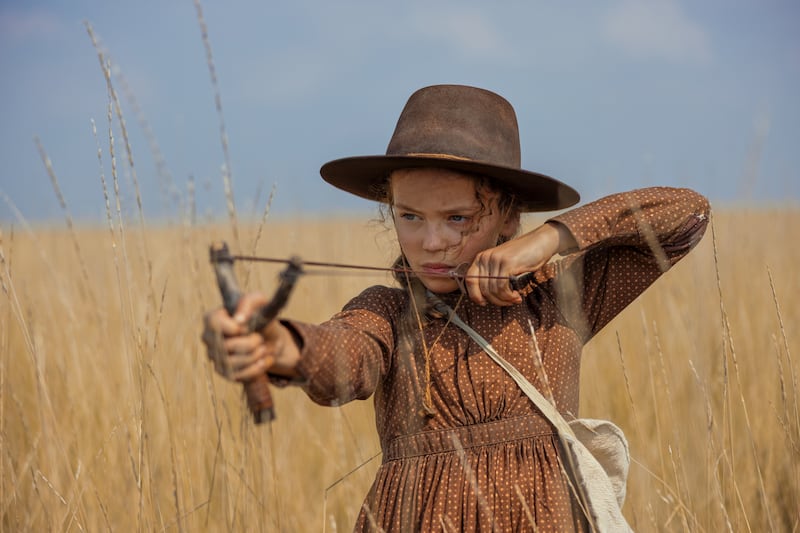
It’s a strikingly different version of the prairie than the one audiences will remember from the books or Michael Landon’s beloved 1970s television series.
Landon’s adaptation largely sidestepped the presence of Native American people in the Ingalls family’s story. And Wilder’s books have been put under scrutiny in recent years because of their depictions of Native American and Black people, raising questions about how America’s favorite frontier stories should be remembered — and retold.
But for Rebecca Sonnenshine, showrunner, writer and producer of Netflix’s “Little House on the Prairie,” the answer is not to avoid that complicated history — it is to explore it. She believes audiences are ready to look more closely at the relationship between white settlers and Native people, and the realities of the westward expansion.
“The time we’re living in gives us the opportunity to explore the story in a more expansive way that maybe we couldn’t do before,” Sonnenshine said. “With actors who are Indigenous actors, to explore the Osage element of the story, to explore some of the greater historical contexts of the story.”
Sonnenshine said her goal is not to discard the story loved for generations, but to expand the frame around it.
Still, the truth about the frontier is more complicated and nuanced than any single telling. Wilder’s books captured the memories and perspectives of one family, while Netflix’s version expands the story to include other perspectives. Neither version alone tells the whole story, and the reality likely lies somewhere between the two.
Exploring complexity and allowing characters to grow
Sonnenshine says her more nuanced adaptation of the prairie is “really not to point fingers,” but to examine the complexity of the period. It explores the realities of Western settlement and the consequences that followed.
“It’s taken a long time for us to kind of come to terms with what happened then and what these people did at that time — which was to force people out of the land that they lived on,” Sonnenshine said.
She continued, “There’s no way to change what happened. But acknowledging it and also trying to do better moving forward and trying to maybe make amends for some of the things that happened in the past, that’s a good thing.”
The Netflix adaptation opens at the beginning of the Ingalls family’s prairie journey, starting with the third book in Wilder’s series as the Ingalls leave the Wisconsin woods behind.
It shares the book’s patient attention to details of life on the frontier, but eventually expands beyond Wilder’s pages — “There’s a whole chapter about making a door ... that’s not exactly a story,” said Sonnenshine.
By the third and fourth episodes, the series finds its rhythm with new characters and other expanded storylines to supplement moments from the books. Much of that expansion comes through the Ingalls parents, whose perspectives are given room to develop.
Caroline, who is initially hesitant about befriending their Osage neighbors, gradually builds a relationship with the Mitchell family. By the end of the series, she is teaching their daughter Good Eagle alongside her own girls.
“We want to be as generous as we can with our characters and give them the chance to grow and learn and have more expansive thoughts,” Sonnenshine said. “Especially our adult characters, I would say this is kind of a coming-of-age story for them.”
“Whatever ideas they came to the prairie with, we’re giving them a chance to get to know people that they wouldn’t have known before, which broadens their perspective,” she continued. “We allow them to grow and change and sort of see other perspectives and maybe change their minds about things, which is something that I think we’re all capable of.”
Keeping the ‘spirit’ of the books at the center
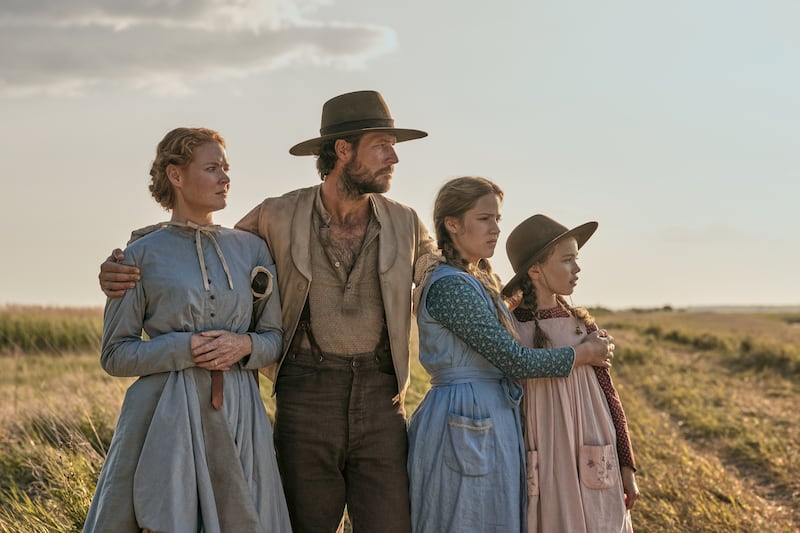
Netflix’s “Little House” series is not in a category of its own. It will face the challenge of competing with a story shaped by decades of affection — from the beloved Landon series to Wilder’s original book series.
Audiences already have big feelings about “Little House,” particularly the 1970s series, setting the new adaptation up for intense scrutiny.
As audiences inevitably compare the two, Sonnenshine makes an important distinction: Netflix’s “Little House on the Prairie” is a new adaptation of Wilder’s books, not a reboot of Landon’s series.
Still, she believes that beneath the expanded storylines and historical context, audiences will recognize the same “spirit” that has defined “Little House” for generations.
“Laura Ingalls Wilder had this spirit about her ... about family and community and resilience that this series definitely has,” Sonnenshine said.
“It definitely has a lot of the same feelings that the original series had, which is about really deep love between parents and children ... and love and generosity towards the people that they know in their lives,” she continued. “All those things remain true about our show. It’s just a different show.”
Sonnenshine added that the Netflix adaptation makes space for “all the iconic moments” readers love from Wilder’s books, while trying to capture the feeling while reading them.
She hopes audiences will take away their own spirit of resilience.
“You’re not always in control of what life brings you, whether it’s Mother Nature, whether it’s the government, whether it’s other people,” she said. “You have to be resilient and adaptable.”
She continued, “As long as you have a touchstone of family and love and hope, you can move forward no matter what.”