


This article was first published in the State of Faith newsletter. Sign up to receive the newsletter in your inbox each Monday night.
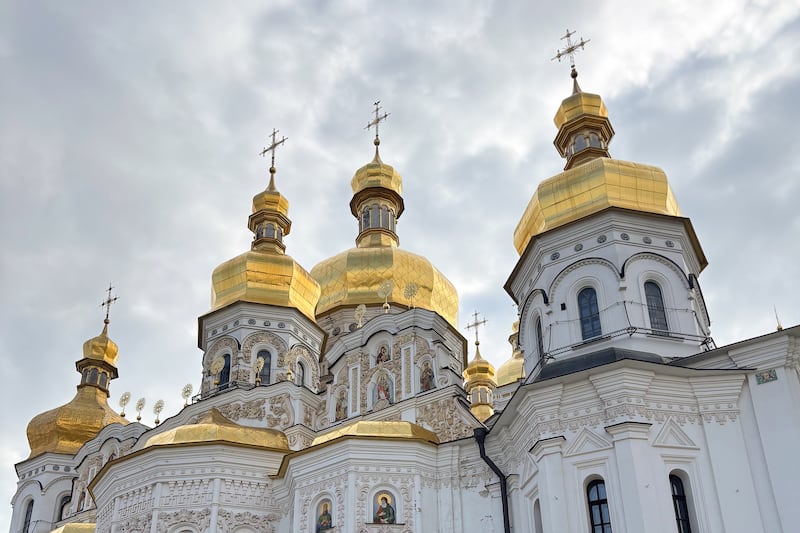
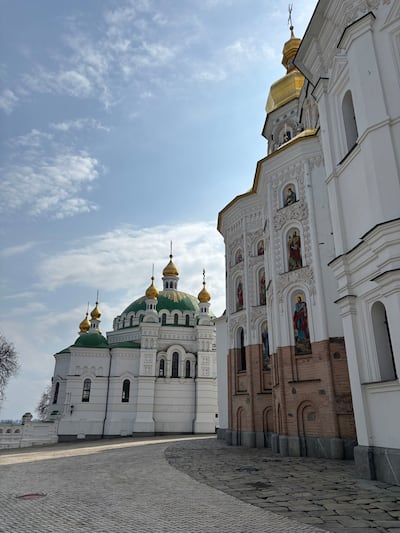
In March, I walked the sprawling grounds of the Kyiv-Pechersk Lavra, an 11th-century monastery and a UNESCO World Heritage site in Kyiv, Ukraine. There was a semblance of peace during the day, the feeling that by night would shift to fear and anxiety.
The Lavra officials told me they worried about the site during the war, but ultimately felt fortunate that it was largely spared in attacks, aside from minor damage — a blown-out window, doors damaged by a blast wave, less visible microcracks in the walls of a gallery leading into Lavra’s famous underground caves.
Last night, I watched Lavra engulfed in flames. A Russian drone struck the Dormition Cathedral, Lavra’s centerpiece church, which dates back to the 11th century and has undergone a series of destructions and restorations over the centuries. The strike was part of a larger attack, with missiles and hundreds of drones targeting Kyiv and killing at least five people.
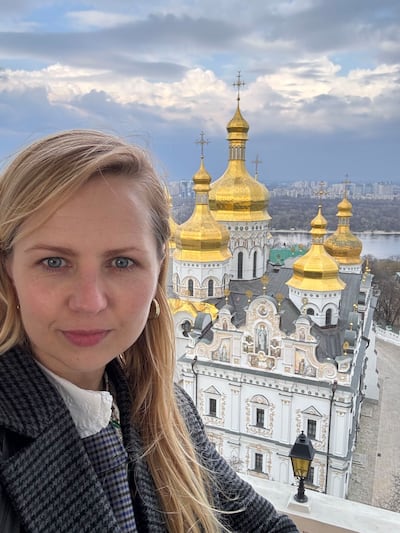
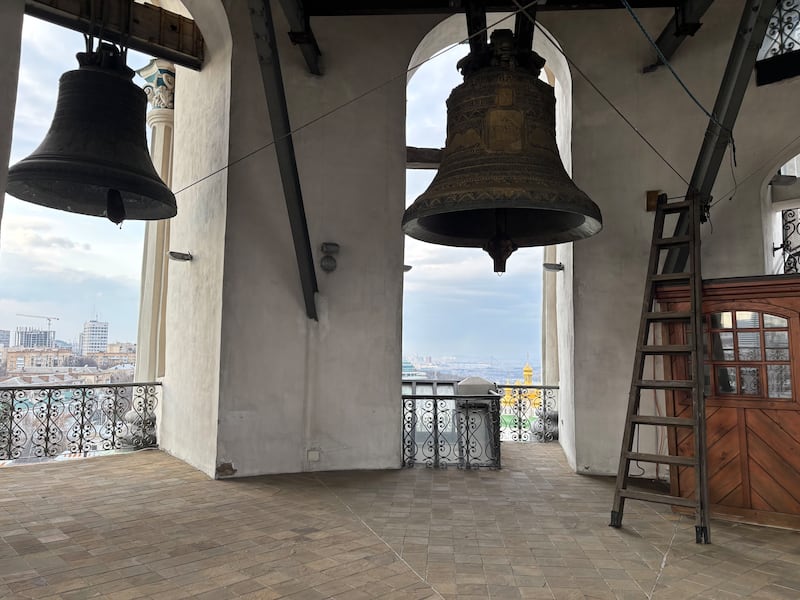
Growing up in Kyiv, I have visited Lavra many times and climbed the bell tower on its grounds. It has one of the best views of the city — you see the Dnipro River, the golden domes of the churches and the skyline of an expansive metropolis.
Within Lavra’s walls, the modern and ancient worlds came together. As a child, seeing Orthodox monks in their black cassocks walking between churches of the complex offered a glimpse into a religious life I knew little about. Returning to this place for this Deseret Magazine feature in the spring, I saw Lavra anew — as a beautiful and significant architectural and religious landmark, but also as a place at the heart of Ukraine’s struggle to reclaim its national identity, now under ongoing Russian attack.
The Kyiv-Pechersk Lavra is different from many other churches in Ukraine. It is one of the oldest, and many would argue, the most important religious and cultural site in Orthodox Christianity in Eastern Europe.
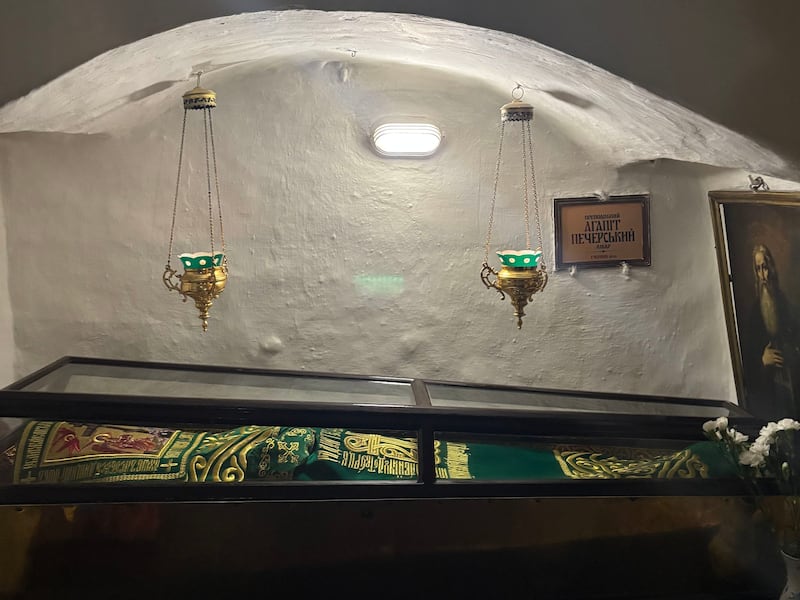
Much of the region’s artistic, religious and intellectual tradition had its beginnings within the Lavra’s monasteries and churches. Beneath the complex is a dimly lit labyrinth of tunnels with caves that host mummified bodies of venerated monks and saints.
When I was younger, I thought the caves were creepy. When I visited them in the spring, they felt like sacred shelter underneath a battlefield. Lavra also hosts a historic monastery, where Orthodox monks are still residing.
Lavra also embodies a kind of unique church and state “synergy,” as the staff describe it.
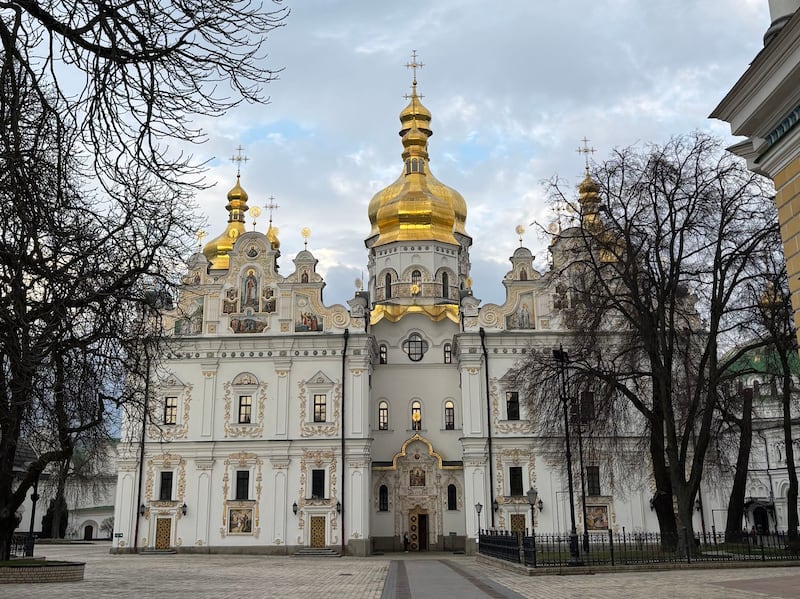
Because it’s a state-owned cultural site, the Lavra officials work closely with the religious community and the monks to be able to preserve the church both as a cultural landmark and also a living place of worship and prayer.
Even during the war, Lavra has remained both a tourist attraction, albeit with a much more limited number of visitors, and a pilgrimage site frequented by believers.

This is how Maksym Ostapenko, the director of the Kyiv-Pechersk Lavra National Reserve, described to me the unique nature of Lavra:
“The revival and continuation of Lavra’s history as a spiritual center is important,” Ostapenko said. “But we believe that, because of the many tragic and heroic chapters of Ukrainian history, Lavra has become something more than just a monastery.
“It is more than a museum preserve, more than a cultural, archaeological, historical or architectural monument. It is something much greater.
“This unique combination is what we call a national shrine or sanctuary — a sacred place that holds tremendous significance for both the church and the state. These are places where spiritual, national and often cultural dimensions come together. As a result, they become extraordinarily valuable.”
During the latest attack, the staff rushed to save important religious relics. One video showed people rushing to carry the crucifix out of a church:
On Monday, the bell tower hauntingly played the national anthem.
Ukrainian outlets reported that the fire was extinguished without causing major damage to the structure of the church. Since the beginning of the war, nearly 700 religious sites were damaged by Russia — most are Orthodox churches, but there are also mosques, synagogues and Protestant churches.
This is not the first time the Dormition Cathedral has been destroyed by forces from Moscow. After standing at the heart of Kyiv-Pechersk Lavra for nearly 900 years, the cathedral was blown up in 1941 during the Soviet retreat from Kyiv. Historians widely believe Soviet authorities planted explosives as part of a scorched-earth campaign that devastated many parts of Kyiv and killed civilians. Following Ukraine’s independence, the reconstruction of the cathedral began in 1995 and it was reconsecrated in 2000.
Over decades of Soviet rule, Russia has claimed Lavra as part of its own religious and cultural heritage, even while trying to suppress the religious life within its walls. During the Soviet period, the Lavra was closed as a monastery and transformed into a museum complex, though monastic life partially returned in the late Soviet era.
After Ukraine gained its independence in 1991, the monastery remained under the jurisdiction of the Ukrainian Orthodox Church affiliated with Moscow. But especially since the 2022 invasion, Lavra officials have ramped up efforts to rid Lavra of this nearly 300-year Russian influence by reviving Ukrainian monuments, pilgrimage traditions and even restoring correct entrances to the churches.
Some of those influences still linger. Lavra has been embroiled in a three-year court battle, trying to evict the monks with alleged lingering ties to Moscow who still reside on the property and who sued the Ukrainian government. Lavra officials describe the nature of their war not only in political or legal terms but also as “spiritual” and informational, a war that’s unfolding alongside the military conflict.
“Ukraine, as an independent state that has found itself in this war, has accepted this challenge and is now carrying out work to cleanse this ‘Russian world’ here, within the walls of this sacred site and to restore Ukrainian tradition,” Ostapenko told me.
Ultimately, the preservation of Lavra is about Ukraine’s future.
“Lavra is not only a place with a museum component that tells only about the past,” Ostapenko said. “It is also a place where modern Ukraine and the Ukraine of the future should be formed. It is a place where values should be formed, where spirituality should be formed, where traditions of statehood and military service … should take shape.”
Fresh off the press:
These are the U.S. World Cup players powered by their faith.
The opportunity in the Pentagon’s about-face on Latter-day Saints and Christianity.
What went right — and wrong — at the White House fights.
End note
Reading this latest Ballerina Farm story in The New York Times, I thought that maybe the appeal of the “tradwife” aesthetic is not so much about traditional gender roles, but about a longing for a life that is more connected, grounded, healthier and overall slower. Whether women want to stay home with children full-time or have a full-fledged career, I think all of us want to have a sense of control in a culture that often imposes busyness on us and ultimately feels relentless and exhausting.