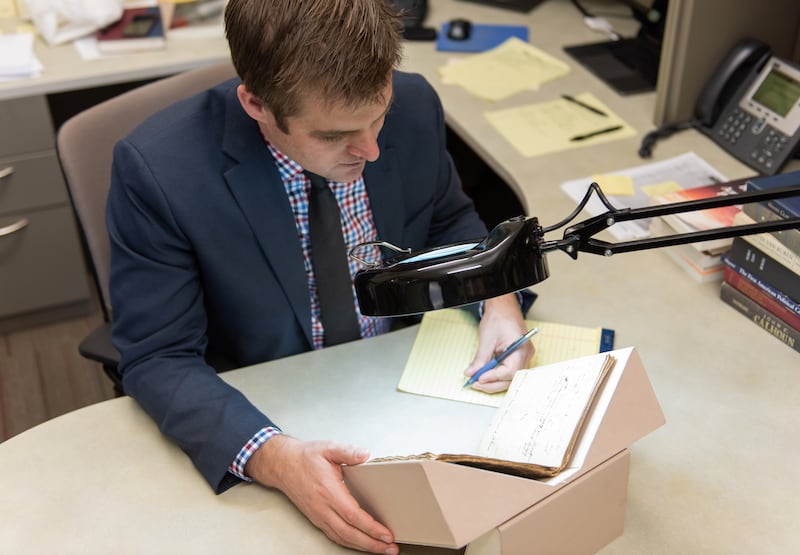
- An expert in an obscure form of shorthand is helping the Church of Jesus Christ publish news sermons of an early church leader.
- Seven surviving versions exist of Joseph Smith's King Follett discourse from April 7, 1844, two months before his murder.
- A leading church historian hopes someone will discover the full transcript of a sermon Joseph Smith gave on the East Coast.
This article is an excerpt from the weekly ChurchBeat newsletter. Sign up to receive the newsletter in your inbox each Wednesday night.
Last week’s story about the discovery of Saint Augustine’s lost sermons raised an immediate question for ChurchBeat: Will anyone ever discover lost Joseph Smith sermons?
That may seem unlikely for two reasons. One, he was surrounded by prodigious notetakers like Wilford Woodruff, Oliver Cowdery and many others.
Two, those scribes were under divine fiat to capture what he said. “Behold, there shall be a record kept among you,” Jesus Christ told Joseph Smith on April 6, 1830, in a revelation during the first official meeting of The Church of Jesus Christ of Latter-day Saints, according to church scripture.
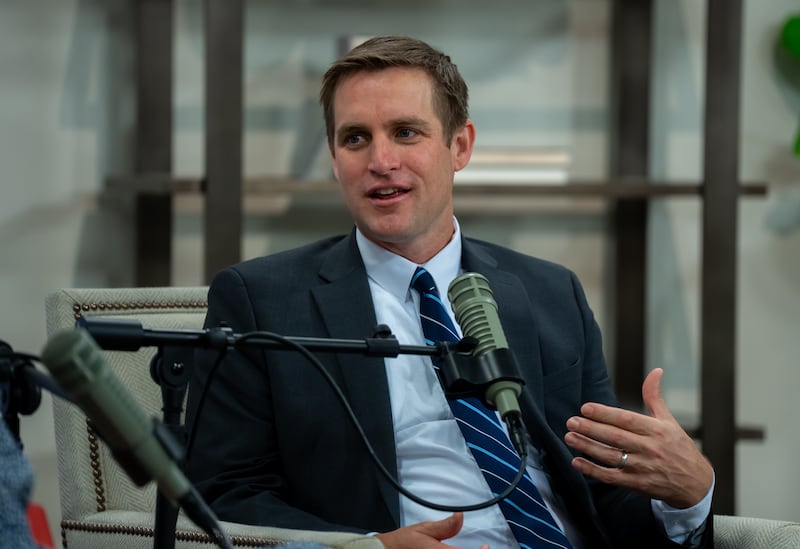
But the idea that we won’t ever discover a lost sermon of the church’s first prophet and president drew a chuckle from a senior managing historian in the Church History Department.
Why did the idea bring a smile to the face of Spencer McBride? Well, it just so happens that the Church Historian’s Press is preparing a book titled “The Lost Discourses of John Taylor.” It is scheduled for release in the fall of 2027.
So, yeah, discoveries about early Latter-day Saint leaders are still possible.
In this case, many of President Taylor’s discourses were recorded in Pitman shorthand. Those documents sat in the church’s archives with their contents lost to time, because they were indecipherable to anyone who looked at them.
Now, Pitman expert LaJean Purcell Carruth has transcribed them, providing a new window into church history. (She once told the Deseret News that she could tell President Taylor spoke slower than others because the “shorthand is better.” Slower speech gives notetakers more time to write.
So, what about Joseph Smith?
A lot of clergy in his day wrote out and preserved their sermons, McBride said. That wasn’t Joseph Smith.
“You could say he almost never spoke from a prepared text,” McBride said. “He often knew what he wanted to talk about, but he spoke extemporaneously with the scriptures, and he spoke really well. What that means, though, is you’re not going to find a sermon notebook where Joseph Smith wrote down his talks.”
Instead, his words were captured by church historians, by journal writers, by people who took notes, and by people who shared what he said in letters they sent.
“Wilfred Woodruff took very seriously the charge to write down what Joseph said and to learn from what Joseph said as a prophet,” McBride said. “So his journals are an amazing resource for us. Willard Richards is another one of the scribes that record a lot of what Joseph said.”
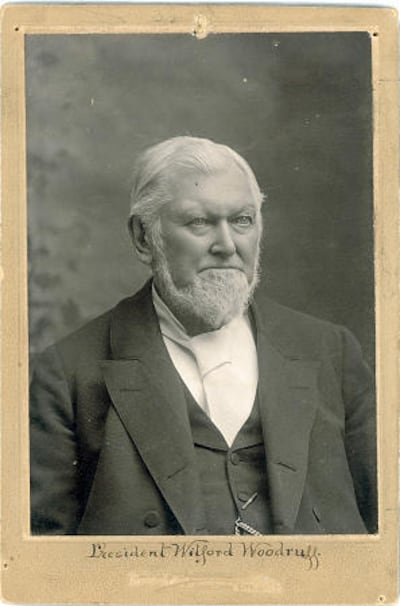
A number of women who heard him speak also recorded what he said without having an official role.
That means there are multiple accounts of several of his sermons. For example, there are seven surviving versions of his King Follett discourse on April 7, 1844, two months before his murder.
“They line up pretty well,” McBride said, “but some go into way more depth than others.”
The historian said a major find could still be out there.
“It’s possible that somebody digs through their attic and finds an old ancestor’s diary or journal to find a Joseph Smith discourse that we didn’t know about before,” he said.
So, is there one sermon McBride really hopes to see?
There sure is.
In February 1840, Joseph Smith spoke publicly in Washington, D.C., with few Latter-day Saints in attendance. The only account of what he said is provided by a journalist named Matthew Livingston Davis.
Davis wrote a letter to his wife, who was curious about the church.
President Smith spoke for at least an hour or two. Davis summarized it in a couple of pages.
“If there was one sermon for which I wish we had a total transcript,” McBride said, “I would welcome that transcript.
“This is a chance to see how — in the nation’s capital — he’s portraying himself, his faith, his beliefs, to a nonmember audience. We get the gist of what he’s saying from Davis, but I think it would be tremendous to kind of get almost a word-for-word account of what he said.”
About the church
- Did you know that the famous organ in the Tabernacle on Temple Square sounds odd to the person sitting on the organ’s bench? The Tabernacle’s remarkable acoustics move listeners, but they create a jumble of sound for the organ player. Famed organist Richard Elliott gave our Amy Ortiz an inside look at one of the longest-standing traditions at Temple Square.
- The church released four videos to help Latter-day Saints prepare for the new Sunday meeting schedule.
- Alaska’s only operating Latter-day Saint temple will be rebuilt bigger than before.
- Leaders broke ground broken for the Santos Brazil Temple, “an expression of God’s love.”
- Elder Michael A. Dunn threw out the first pitch at an Arizona Diamondbacks baseball game in July. The Gilbert Arizona Seville Stake partners annually with the team for a Latter-day Saint night. This year, the stadium announcer told the crowd about the church’s deep roots in Arizona and recognized its commitment to strengthening families and faith in Jesus Christ.
What I’m reading
- How could you not read this? “His BYU football career was derailed by injuries. Now he’s in Disney’s ‘Moana.’”
- We have written about President Dallin H. Oaks as the prophet who wants to save democracy. That comes from a chapter in a book that argues that he has outlined a civic theology for Latter-day Saints. We published an excerpt from that chapter. I have written about the author’s presentation at BYU. Now Wayfair magazine has published a longer excerpt.
- Last November, we introduced you to the stunning new BYU finding that the Bible book of 2 John was a letter sent to a woman. Now an independent professor has published an academic review of that discovery: “This reading makes far more sense with the letter as a whole and makes it the only text in the entire New Testament canon addressed to a woman.”
- Latter-day Saint writer Carol Lynn Pearson died at age 86. Our Mariya Manzhos wrote a moving piece about her legacy of compassion: “A person of faith and courage.”
- Please make this happen so the Red Sox come to play in Utah! Salt Lake City just got its strongest endorsement yet for an MLB expansion team.
Behind the scenes