
- Legislation would allow experimental treatments for patients with rare, devastating illness and no approved options.
- Eighteen states have passed related laws to improve access to individualized therapies.
- An Arizona family's experience highlights the urgent need for more immediately accessible treatments.
Congress is being asked to consider a bill designed to give families with a member battling a devastating rare disease for which there’s no approved treatment the right to try experimental treatment tailored to the individual, such as gene therapy.
Eighteen states have already passed state versions of what’s being called “Right to Try 2.0,” which builds on already-approved legislation that isn’t individually targeted. The states that have such laws include Arizona, Nevada, Louisiana, Maryland, Mississippi, North Carolina, Arkansas, Colorado, Georgia, Indiana, Iowa Kansas, New Hampshire, South Dakota, Tennessee, Texas, Utah and West Virginia. The list shows the order in which the measures were passed by state legislatures.
The bill’s formal name is the Right to Try Individualized Treatment Act and it’s being introduced by Rep. Diana Harshbarger, R-Tenn., and Sen. Ron Johnson, R-Wisc.
Congress passed the first federal Right to Try bill in 2018, allowing terminally ill patients to access investigational treatments that have passed some clinical trials, but lack FDA approval. It passed in 41 states before President Donald Trump signed the federal legislation into law, per the Goldwater Institute, which crafted both the first and the 2.0 version. The institute said in a news release that the update is urgently needed because “today, breakthroughs in medical science allow for highly specific individualized treatments — treatments that simply cannot go through the FDA’s outdated regulatory processes in a timely manner."
“We knew the original Right to Try was never going to be the first and last step to provide patients — especially the most vulnerable — access to needed treatments in the manner that best suits them and where their doctor’s recommending it," Naomi Lopez, a Goldwater Institute senior fellow, told Deseret News.
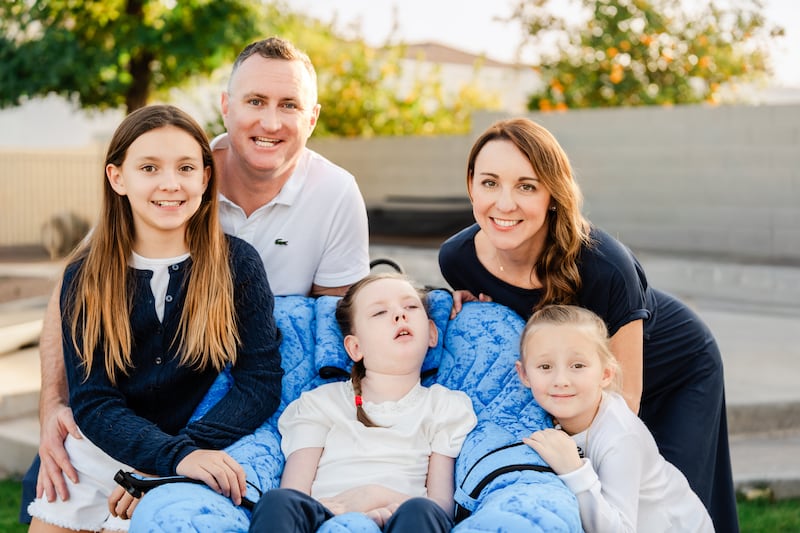
It’s possible no one knows more about the need than Kendra and David Riley, an Arizona couple whose daughters prompted the new legislation.
A tale of two children
Olivia —they call her Livvy — is 8 years old, the middle child, sandwiched between Eva, who’ll turn 11 in a few days, and Keira, who is 6.
When Livvy was little, the Rileys had never heard of a medical condition called metachromatic leukodystrophy — MLD for short. It’s a rare and devastating condition that impacts brain, spinal cord and peripheral nerves, leading to a decline in mental and motor function. It’s progressive and ends in death, but usually strips away any quality of life well before then. The Cleveland Clinic said MLD occurs in about 1 in 40,000 people in the U.S.
Before they were married, the couple actually had some genetic testing done, but it didn’t pick up the MLD, which requires both parents to be carriers. Kendra said testing is now vastly better than it was then.
When Livvy was about 18 months old, she began having trouble walking. They figured she probably needed a little physical therapy. Then her irises began to bounce. It was in the early, panicked stage of the COVID-19 pandemic, and it was hard to get an MRI, but when they did, the news was good. All’s well, but come back in a year. Still, they decided to see a rare disease pediatric neurologist. He knew right away that Livvy had MLD.
“We found out there was nothing you can do for a symptomatic child, so it’s basically go home and enjoy every moment you have,” Kendra said.
They found a clinical trial that was trying to slow the disease in Iowa, so they went there every week from their Phoenix home for the injections. While they were there, they got the results back for genetic testing of Keira, who it turned out also had MLD, though without any symptoms yet.
Eva, the oldest Riley child, doesn’t have MLD.
The Rileys figured they’d have to try to get Keira in the same clinical trial Livvy was in, but a mother in an MLD advocacy group suggested there was a chance they could actually save Keira’s life if they chose a different path: A gene therapy for MLD in Milan, Italy, targeted the individual. The catch was, they’d have to be accepted for treatment, get all their travel plans in order in a shut-it-down pandemic, raise money to go there and afford to stay as long as it took. All that had to happen fast. Once Keira showed any symptoms, it would be too late. Most children who show MLD symptoms so young die by age 6, Kendra Riley said.
By this time, Livvy could no longer speak and was tube-fed.
They scrambled, raised a half-million dollars from individuals and compassionate corporate sponsors and flew to Italy, where for five months life revolved around the gene therapy protocols, which “renewed” Keira’s stem cells and put them back into her body, as her mother described it. The company that developed the treatment offered it on a compassionate basis, so they didn’t have to pay for the drug itself.
But the rest of the journey was pricey. And priceless.
The Rileys describe other children who received the treatment, such as the boy, now 16, who’s 6-foot-1, plays basketball and goes to school. “It’s very promising,” Kendra Riley said.
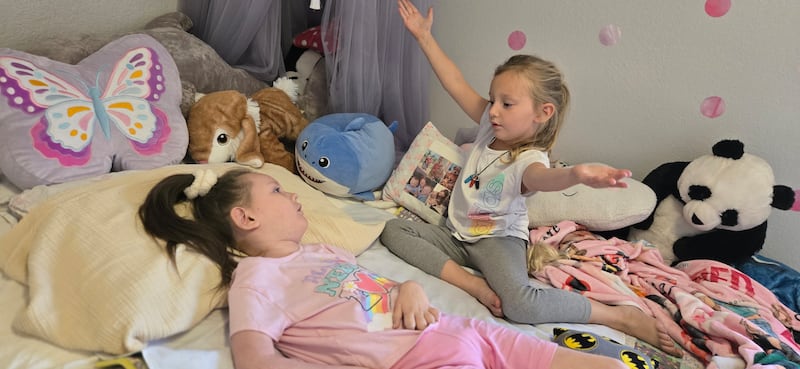
Fast-forward to today and Livvy is in hospice, slowly winding down. Keira is in school. She likes to paint and do gymnastics and can often be found sitting on Livvy’s bed, singing to her big sister.

Some Right to Try 2.0 basics
According to the Right to Try website, an individual needs a formal diagnosis of a life-threatening or severely debilitating illness and all treatments already approved by the FDA have to have been considered — if there are any. That must be documented. Then a doctor can suggest an investigative treatment targeting the individual’s genetics.
Informed consent is crucial and must meet certain specific requirements.
The treatment location has to be officially sanctioned under “Federalwide Assurance for the Protection of Human Subjects,” which is determined by the U.S. Department of Health and Human Services.
There’s no obligation that the treatment be provided; the manufacturer, facility, etc., must agree to do it.
Families must formally request the treatment and be prepared to pay for it, though the manufacturer may choose to simply provide it. The administration and care, however, are likely to be among the costs.
The doctor making the recommendation and the manufacturer and others involved cannot be sued if they “acted in good faith and with reasonable care.”
A bill designed to change a life

Keira was the 32nd child in the world to get the therapy, which is considered “curative.” It wasn’t available in the U.S. and there was no legal pathway to get it, even had it been here, because the Right to Try law didn’t cover individually targeted therapy.
“We did look into the original Right to Try bill that passed, but unfortunately it did not include individualized treatments like the gene therapy Keira needed, which is tailored to her DNA,” Kendra Riley said.
She noted that the proposed bill would essentially let a family take a treatment offered in another country as long as a U.S. doctor or hospital was willing to work with them and offer it in America. It would be legal to access it.
When they were in Italy for the treatment, one of the doctors on the team was flying back and forth between Italy and Boston. Had Right to Try 2.0 been the law then, the Rileys might have been able to save the trip and the disruption.
Arizona became the first to pass the 2.0 version after a state legislator heard about the Riley family’s effort to raise money to go to Italy and asked Lopez at the Goldwater Institute if they could get the treatment under the existing Right to Try, or what changes to the original bill would have alleviated their challenges. The original bill didn’t cover gene therapy and treatments tailored to individuals, so the answer was no.
After that, Lopez said the institute spent a couple of years talking to stakeholders and figuring out how to create a pathway for families like the Rileys within existing rules or how to change the rules to allow it.
None of the efforts will ever help Livvy, given the march of her condition.

But, Lopez said, “we knew that we could help some — not all patients, unfortunately — but we could help some more patients by creating this new pathway that was specific to individualized treatments and that worked in tandem with patient protections that have been in place for four decades. So that’s pretty much how it works. Because there aren’t treatments, when you’re doing an individualized treatment in this case (with very rare conditions), you’re not at that point in time looking at commercialization."
She added, “It was really the Riley family that inspired the Right to Try for Individualized Treatments.”
Kendra Riley, according to Lopez, has been a warrior helping other families get help they desperately need. There are, Lopez said, “children alive today and thriving because of Kendra helping them.”