

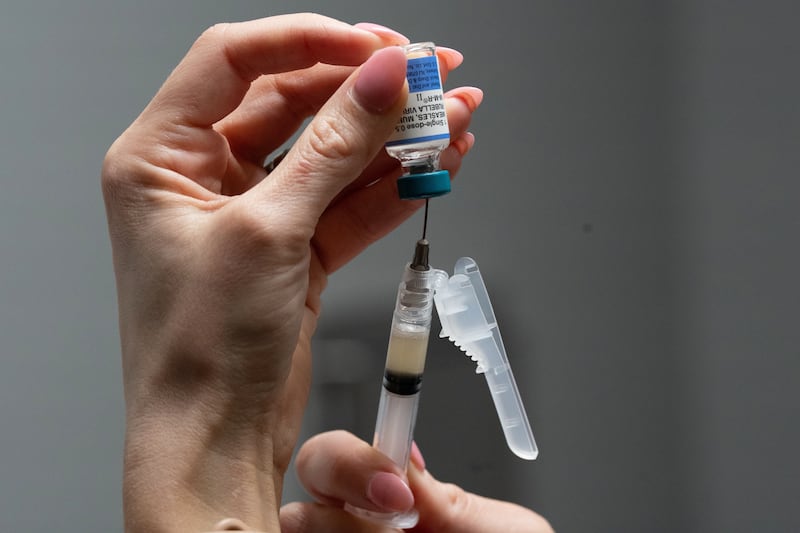

- Two unvaccinated people in Pennsylvania died from measles — the first U.S. deaths this year.
- The national case count surpassed 2,700 as of Aug. 20, the highest since 1991
- Measles is extraordinarily contagious, lingering in the air up to two hours.
Two people in Pennsylvania have died as a result of measles, marking the first deaths from the highly contagious virus in the U.S. in 2026. The Pennsylvania Department of Health called the deaths the state’s first losses to measles in 35 years.
Aside from mentioning both deaths were in Lancaster County and neither person had been vaccinated, no ages or other demographic information was provided.
Last year, three deaths were reported, including two school-aged children and one adult.
The Centers for Disease Control and Prevention this week confirmed 211 new measles cases, bringing the total of lab-confirmed measles cases to 2,777 in its current count for 2026.
The Center for Infectious Disease Research and Policy or CIDRAP at the University of Minnesota said the increase is more than double that of last week.
The CDC said it has received other reports of measles, which will not be added to official counts until they are lab-confirmed. The numbers are likely undercounts because new cases are being reported regularly. The CDC notes that states usually have the most current data, with reports to the federal agency lagging somewhat behind.
Where the outbreaks are — and aren’t
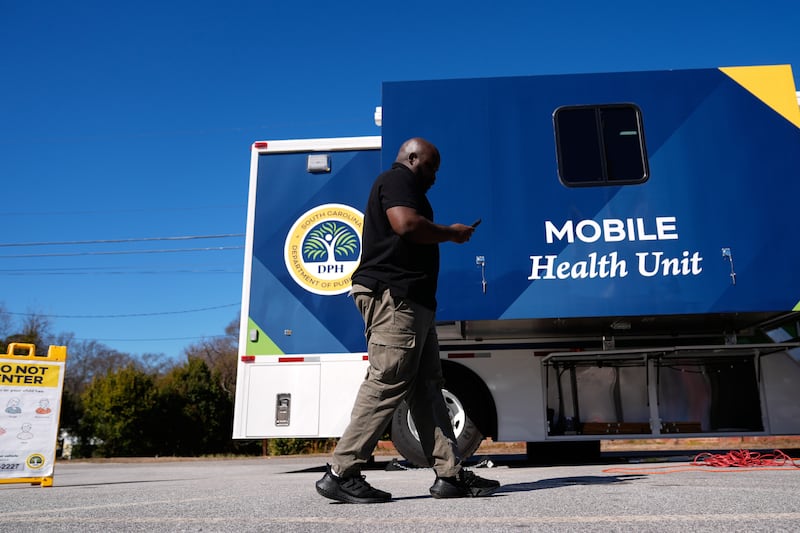
Cases have been confirmed in 45 states and two jurisdictions. Just Arkansas, Hawaii, Mississippi, Nevada and New Hampshire have reported no confirmed cases so far in 2026. South Carolina (670), Utah (526) and Pennsylvania (393) have had the most confirmed measles cases this year, per public health officials.
Sixteen cases involved international visitors to the U.S., while the rest are considered home-grown.
The surge in measles began in 2025 with 2,289 cases confirmed in the U.S., with 48 known outbreaks. But in 2026 alone there have been 36 new outbreaks reported. Most cases are tied to outbreaks. In 2024, there were 16 outbreaks. An outbreak is defined as three or more related cases in one area.
This year’s count is the highest since 1991. As WBAL TV in Baltimore reported, “Measles was declared eliminated in the U.S. in 2000, but more cases have been reported over the past 18 months than in the previous 25 years combined.”
At the moment, Pennsylvania is the growing hotspot, with 89 new cases this week, followed by Ohio with 73. Per CIDRAP, “Utah, the state with the largest active measles outbreak, had no new cases, keeping its 2026 total at 518. The CDC measles map however, lists 526 cases for Utah. Last year Utah recorded 197 cases.”
CIDRAP added that “likewise, Washington state had no new infections (55 total), and neither did Arizona, whose total remains at 122. Virginia also held steady, at 177 cases.”
By the numbers, 19% of the confirmed cases this year were in children younger than 5, while 47% were among children 5 to 19. Thirty-four percent were in those 20 and older, while age was unknown in fewer than 1% of cases.
In 94% of cases this year, those who became sick were unvaccinated or their status was unknown. In 3% of cases the person had had one dose of the measles, mumps, rubella (MMR) vaccine and in 3% of cases the individual had received two doses.
Entering grade school
Health and Human Services Secretary Robert F. Kennedy Jr. has previously expressed skepticism regarding the MMR vaccine, but the outbreaks across the nation have led to public health agencies under his purview recommending the vaccine as the best way to protect people from measles, which can linger in the air for at least a couple of hours after someone with the virus occupies an area. It is among the most highly contagious illnesses.
A prime time for having had vaccinations for measles is when entering kindergarten, but the share of children who are vaccinated has slipped some in recent years.
According to the CDC, the MMR vaccine “is very safe and effective. When more than 95% of people in a community are vaccinated, most people are protected through community immunity (herd immunity). However, vaccination coverage among U.S. kindergartners has decreased from 95.2% during the 2019–2020 school year to 92.4% in the 2025–2026 school year, leaving approximately 280,000 kindergartners at risk during the 2025–2026 school year.”
Utah is among 18 states where vaccine rates are lower than 90%, while 13 states have vaccination rates above 95% for entering kindergarten students. Per the CDC, “At local levels, vaccine coverage rates may vary considerably, and pockets of unvaccinated people can exist in states with high vaccination coverage. When measles gets into communities of unvaccinated people in the United States, outbreaks can occur.”
Measles symptoms
According to earlier Deseret News reporting, symptoms usually start with a high fever — 101°F or higher — a cough, runny nose, watery eyes and the well-known rash, which typically begins at the hairline and moves down to cover the body. The rash can last up to a week, but doesn’t usually show up for a few days after the other symptoms have started, delaying recognition that the illness is measles.
That is worrisome, since the CDC notes someone is contagious from four days before the rash starts to about four days after.
Measles can also cause diarrhea and ear infections. And there’s a rare but lethal condition that shows up a decade after someone was believed to have fully recovered from measles. Subacute sclerosing panencephalitis is a degenerative nervous system disease.