

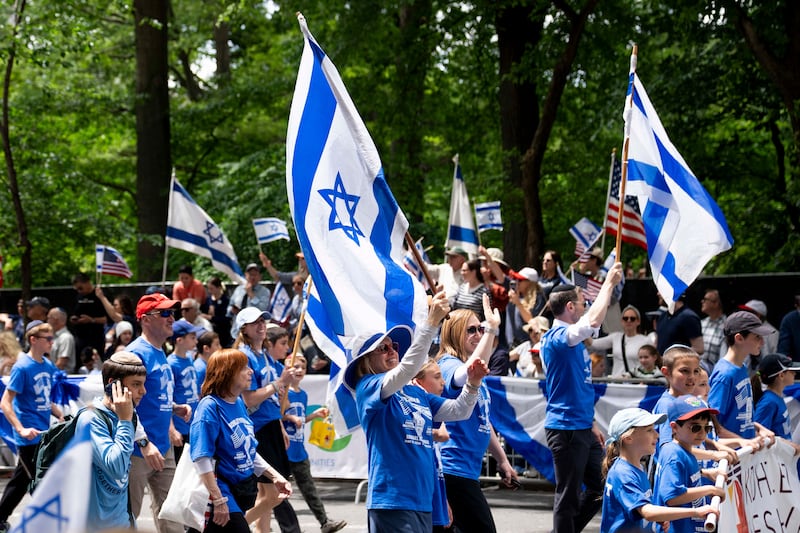

Since Oct. 7, much of the public discussion of Jewish life has centered on fear. The reasons are not hard to understand. Jewish Americans have watched antisemitism surge, campuses have erupted into violence, synagogues added security and debates over Israel have turned bitter and dangerous. The stories that reach us dwell on vulnerability, conflict and threat.
It has been nearly three years now — long enough for vigilance to become routine, long enough for many to assume that anxiety is the defining feature of Jewish public life.
So, when I took my children to New York City’s Israel Day Parade on Sunday, I expected some reflection of that mood. What I found instead was joy; not naivete, not denial and certainly not forgetfulness. The last 31 months were present in everyone’s minds. Yet, what dominated the day was something else: energy, confidence and joy.
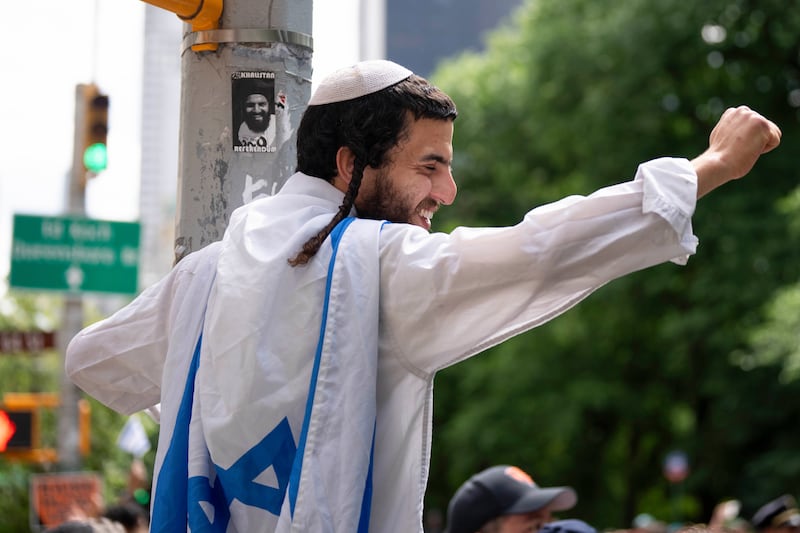
My children saw it first. They knew nothing of the debates that had preceded the day — which officials would march and which would stay away, the arguments over Israel and Gaza playing out on television and online. They had come for the parade because they already understand that Israel is part of who they are as Jews.
What a parade it was. Dancers and marching bands. School groups filling the avenue, teenagers singing with friends, children on their parents’ shoulders waving blue-and-white flags. Grandparents clapping as the delegations passed. Families, synagogues, communal organizations and youth groups celebrating together on a bright New York afternoon.
Most of all, there were smiles.
At one point, my son stood at the barricade waving his small Israeli flag at nearly every group that passed. Many waved back. A few tossed stickers and souvenirs into the crowd. He treated each one like a treasure. Nearby, my daughter watched a group of dancers move down Fifth Avenue and began copying their steps from the sidewalk. For them, the day was not about politics or controversy. It was about participation.
Watching my children take it in, I was struck by how different this was from the way Jewish life is usually portrayed. Follow only the headlines and you would conclude that Jewish identity today is defined by conflict, protests, confrontations, security barriers and arguments. Those realities are real, and they deserve attention. But, they are not the whole story.
What surprised me was how little of the day revolved around any of it. The debates were happening on television and in newspaper columns, somewhere else entirely. On Fifth Avenue, parents chased children through the crowd, school groups posed for photographs, teenagers enjoyed the rare chance to be together away from their screens. People were doing what healthy communities do. They were showing up.
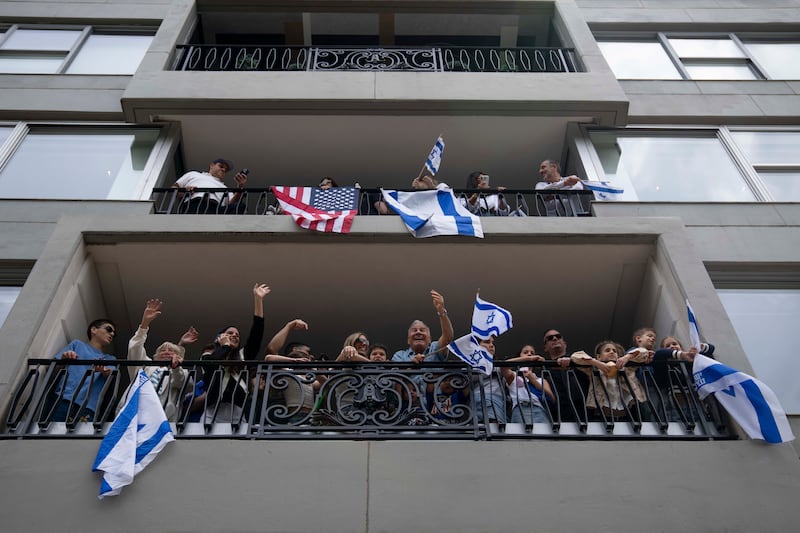
In another era, none of this would have seemed remarkable. Today it does. In an age of declining civic participation, rising loneliness and too much life lived through screens, there was something quietly profound about tens of thousands of people simply gathering together. Communities are not sustained by statements or hashtags. They endure because people gather in person, build relationships, create memories and give the next generation reasons to belong.
There were American flags everywhere, and Israeli flags everywhere, and something quietly reassuring in seeing them together. For generations, Jewish Americans have understood that one need not choose between Jewish identity and American identity: that the great achievement of Jewish life here has been to take part fully in American civic life while remaining proudly, openly Jewish. That truth was visible the length of the parade route. The crowd was not gathered around grievance. It was gathered around gratitude.
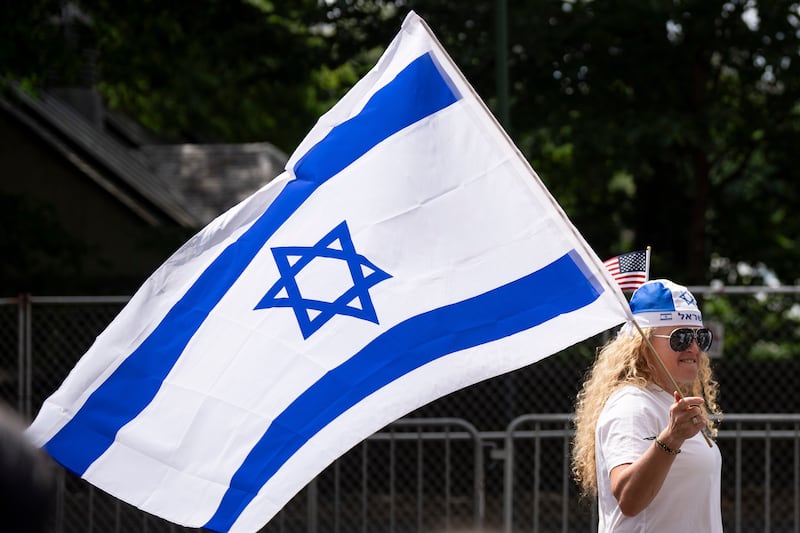
I found myself watching my children more than the parade. By late afternoon, they were tired, sweaty and happy.
Like many Jewish parents, I spend a good deal of time worrying about the world they are inheriting: about the hostility they sadly encounter and the hate they already experience in New York. About what awaits them on future campuses and in future workplaces. About whether American institutions still possess the civic confidence that once made religious communities feel unquestionably welcome. Standing on Fifth Avenue, those worries gave way to something else.
I watched them experience Jewish life not as a problem to be solved or a threat to be managed, but as a source of happiness: learning about identity not through a lesson but through participation, music, crowds and the simple sense of being part of something larger than themselves.
Years from now they will have forgotten the speeches and the arguments, and which officials came and which stayed home. What they may keep is the feeling — a bright afternoon among thousands of people celebrating openly and without apology, the sense of belonging to a story and a community that runs across generations.
Nobody at the parade seemed confused about the dangers facing Jews. The last 31 months were not forgotten. They were simply not allowed to have the final word. Nobody needed reminding; the threats were understood and security was intense and appreciated.
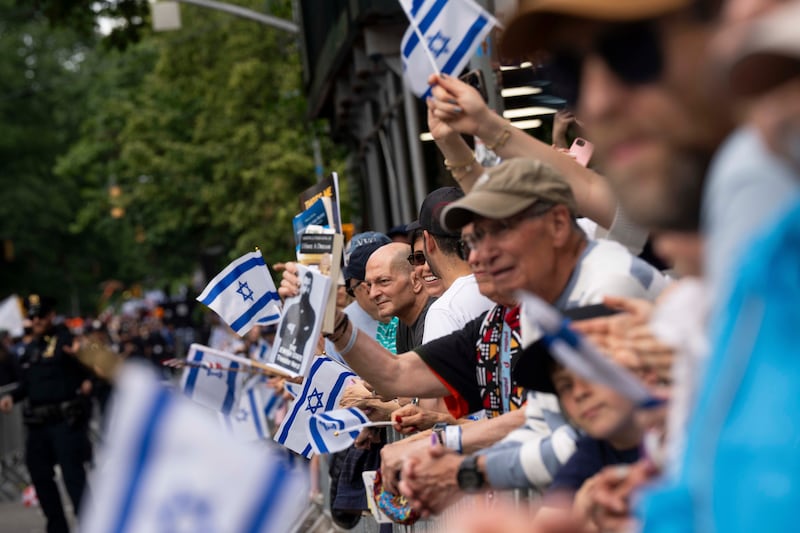
People came to celebrate anyway — not because the challenges had vanished or the fears were imagined, but because a healthy community cannot allow its identity to be defined entirely by its wounds.
As we headed home, my children were still carrying their flags. The arguments that fill so much of our public life were nowhere in their minds. What they carried home was simpler: the memory of a community confident enough to celebrate, and a Jewish life large enough to be defined by joy, not only by fear.
In a moment when so many Americans feel disconnected from institutions, traditions and one another, that lesson may matter beyond Jewish life. Communities survive not only because they defend themselves against threats, but because they remain capable of celebration. Fifth Avenue reminded me that resilience is not merely the ability to endure hardship. It is the ability to experience joy despite it.