


The important decisions of the Supreme Court of the United States this summer include two regarding the limits of presidential power. The court has ruled in Trump v. Slaughter that the president has broad authority under the U.S. Constitution to remove heads of executive branch agencies, reversing a long-standing 1935 decision.
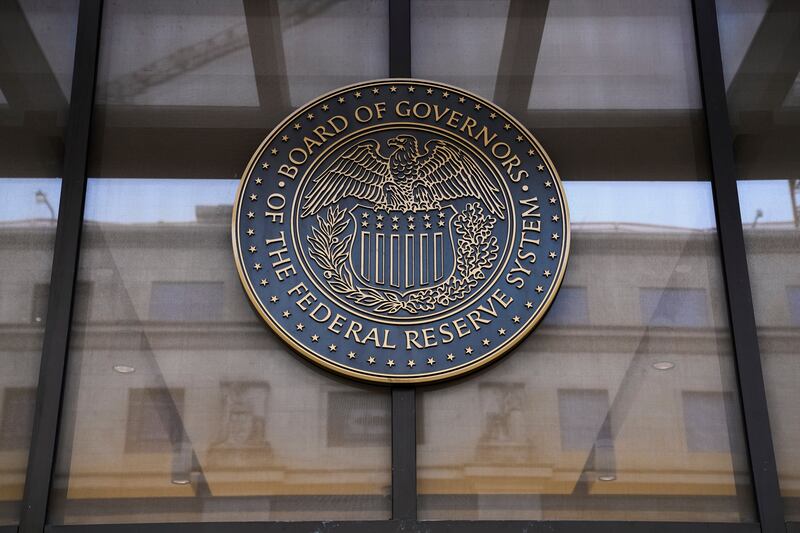
At the same time, the Court also has ruled that the Federal Reserve does not fall under this general executive rule. In Trump v. Cook, a narrow 5-4 majority has determined the president cannot fire a Fed governor without cause. President Donald Trump’s sustained attacks on the Fed for not lowering interest rates make this decision especially important.
In effect, the Fed is not comparable to other federal agencies. History provides confirmation of the importance of the political independence of this distinctive public body.
In the late 1950s, economist William Phillips at the London School of Economics discovered a strong inverse correlation between inflation and unemployment. He himself did not conclude this was some sort of iron law to guide policy, but others did.
A belief based on the Phillips Curve took hold in federal fiscal policies. Professor Walter Heller of the University of Minnesota, head of the Council of Economic Advisers in the Kennedy administration, compared managing the economy to driving a car — you step on the gas or the brakes, depending on circumstances.
Once again, as through history, human behavior undermined assumptions. By the end of the 1960s, inflation and unemployment were going up together.
During the 1960s and 1970s, problems increased fast. Escalating federal spending and deficits spurred rising prices. The OPEC (Organization of the Petroleum Exporting Countries) oil embargo and price hikes of 1973 and 1979 fueled financial fires. High and rising unemployment failed to provide relief.
President Lyndon Johnson, aided in particular by Defense Secretary Robert McNamara, deceived Congress and the American people regarding the true costs of the Vietnam War. Good intentions were at least part of the reason.
Johnson did not want to weaken, perhaps lose, his Great Society. This refers to enormously ambitious spending to build on the New Deal reforms of the Great Depression. Medicare and Medicaid, along with other aspects of today’s comfortable collective life, are part of this legacy.
Johnson’s successor Richard Nixon, obsessed with reelection in 1972, aggressively threatened Federal Reserve Chairman Arthur Burns to pursue expansionary monetary policy. Frightened, Burns opened the spigots, pouring more gasoline on the fires.
Paul Volcker, nominated by President Jimmy Carter to head the Federal Reserve Board, finally broke the back of the inflation beast with restrictive monetary policy and high interest rates.
Volcker personifies the gold standard of policy leadership.
Finance is only one component of our complex economy. Money is a universally accepted means of exchange, but tangible value results from the work of vast diverse arrays of people.
Here is what we should remember. First, take pride in work. The U.S. has the most productive economy in the world.
Second, as a citizen, be active. Government decisions reflect public pressures. There must be serious, sustained public oversight of financial activities.
Third, as an investor, do homework, starting with the classic book by Dodd and Graham, respectively a professor and a Wall Street genius, first published in 1934, regularly revised. You can read this while watching/listening to media.
But why distract yourself? Nonstop media are low in value.