

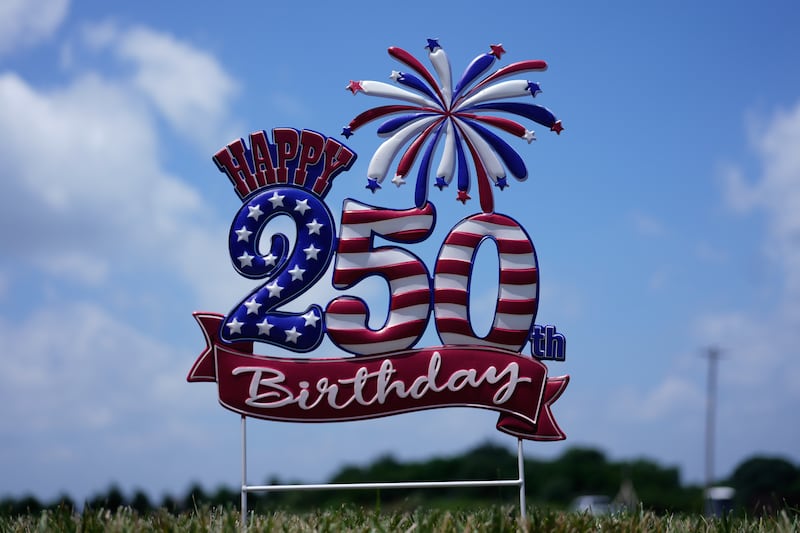

It’s happened. We have celebrated the 250th anniversary (the semiquincentennial if you want to get pedantic). The banners are coming down, the speeches fading into echoes, the parades becoming memories. Time now to look forward to the next 250 years, and I anticipate them with avid optimism. First among those reasons is America’s capacity for improvement. Not always rapid. Not without occasional regression. But improvement. Maybe the drafting of the Declaration of Independence’s most famous lines can serve as a metaphor.
“We hold these truths to be sacred and undeniable; that all men are created equal and independent, that from that equal creation they derive rights inherent and inalienable, among which are the preservation of life, and liberty, and the pursuit of happiness; that to secure these ends, governments are instituted among men, deriving their just powers from the consent of the governed.”
The words read a bit differently than those many of us have committed to heart: “We hold these truths to be self-evident, that all men are created equal, that they are endowed by their Creator with certain unalienable Rights, that among these are Life, Liberty and the pursuit of Happiness. That to secure these rights, Governments are instituted among Men, deriving their just powers from the consent of the governed.”
The first version comes from Thomas Jefferson’s rough draft of the Declaration of Independence. It represents his thoughts before he submitted them to the other four men the Continental Congress had tasked with writing a defense of their revolution — John Adams, Benjamin Franklin, Robert Livingston and Roger Sherman.
Editing the Declaration of Independence
As the document underwent editing by Jefferson and his fellow committee members, that line evolved. They left no records about why they discarded some phrases in favor of others, so the best we can do is surmise.
They tried, “We hold these truths to be sacred and undeniable, that all men are created equal, that they are endowed by their creator with equal rights, some of which are inherent and inalienable, among which are life, liberty, and the pursuit of happiness.”
Maybe the change was merely stylistic, removing two “equals” in the same sentence, but the wording would have seemed terribly radical at the time. Men hold equal rights? It was one thing to say that men were created equal and entitled to the same natural rights. It was entirely different to say that they held equal rights in all respects. At the time, for example, not even white men had an equal right to vote. Every state in their new nation had some sort of property qualification to vote.
The committee finally landed on, “We hold these truths to be self evident: that all men are created equal; that they are endowed by their creator with inherent and inalienable rights; that among these are life, liberty and the pursuit of happiness.”
After they submitted that version to the Continental Congress, that body changed the wording to what we recognize today: “We hold these truths to be self evident: that all men are created equal; that they are endowed by their creator with certain inalienable rights; that among these are life, liberty and the pursuit of happiness.”
‘All men are created equal’
The wording may serve as something of a metaphor for how America has improved. In Jefferson’s rough draft, the phrase “all men are created equal” was entirely utilitarian, meant to justify the act of declaring independence from a king. The logic went: Men are created equal and so have common natural rights that governments are supposed to protect but that the king had failed to protect, so Americans could create a new nation better equipped for those ends. Jefferson didn’t write the words as a standalone ideal but connected them to his ultimate goal of justifying American independence.
For any number of reasons, the Committee of Five decided the wording could be improved. They first tried something that suggested that men have “equal rights.” To Americans today, the idea of equal rights seems not only just but obvious — so obviously just that sometimes we think the ideal originated with the founding. It didn’t. It evolved over the 19th century as equal rights advocates insisted on it — for Black people, for women, for religious minorities.
Maybe it would have been salutary for a phrase like “equal rights” to appear in the Declaration of Independence. Maybe it would have smoothed the long struggle for equal rights for a variety of people in the United States. Sure, the phrase would have been contested, disputed and interpreted in any number of ways, but maybe it would have inched us closer earlier to an ideal we accept as universal today.
In the end, for reasons unknown but maybe surmisable, the Committee of Five scratched what at the time would have been that more radical wording but still landed on something revolutionary — something that became foundational to American ideals. “We hold these truths to be self evident: that all men are created equal; that they are endowed by their creator with inherent and inalienable rights; that among these are life, liberty and the pursuit of happiness.”
Though a subtle shift from Jefferson’s earlier version, this change came with drastic connotations. The phrase “all men are created equal” became an independent phrase. Remember that Jefferson originally included it to further his justification for independence. Intentionally or unintentionally (my bet is the latter), the phrase became in a sense dislodged from the logic necessary to declare independence. “All men are created equal” full stop. Yes, similar ideas about rights and governments meant to protect those rights follow the phrase, but “all men are created equal” became an independent thought. By becoming an independent phrase, it became the iconic ideal of the declaration.
In the final form of the Declaration of Independence, Jefferson and all his editors could have just left the phrase out, as it did nothing to advance their case that they had the right to declare independence. Abraham Lincoln put it this way: “In the concrete pressure of a struggle for national independence,” Jefferson (and we should include the other editors) “had the coolness, forecast, and capacity to introduce into a merely revolutionary document, an abstract truth, applicable to all men and all times, and so to embalm it there.”
As Lincoln recognized, the founders could have done the “concrete” work of declaring independence from Britain and fighting a war for it without the “abstract truth” that “all men are created equal.” They could have stripped the phrase entirely from the document without changing their immediate purpose of obtaining independence.

But they left the phrase in. They “embalmed it,” as Lincoln said.
By making the phrase an independent thought, they created an ideal for which Americans have striven ever since, not just a utilitarian argument to justify independence. Because of the change, Lincoln could eventually describe the United States as a nation “dedicated to the proposition that all men are created equal.”
The improvement in the declaration mirrors how the United States has improved throughout its history. It came not through the genius of a single mind but through deliberation and debate. The improvement came not by chance but by people who pored over every word — by deliberate effort from those committed to its improvement. The Committee of Five discarded wording about “equal rights” that would have been more radical at the time but eventually became orthodox as Americans followed the phrase “all men are created equal” to its logical conclusion.
However haltingly, sporadically, and fitfully improvement came, it came.