

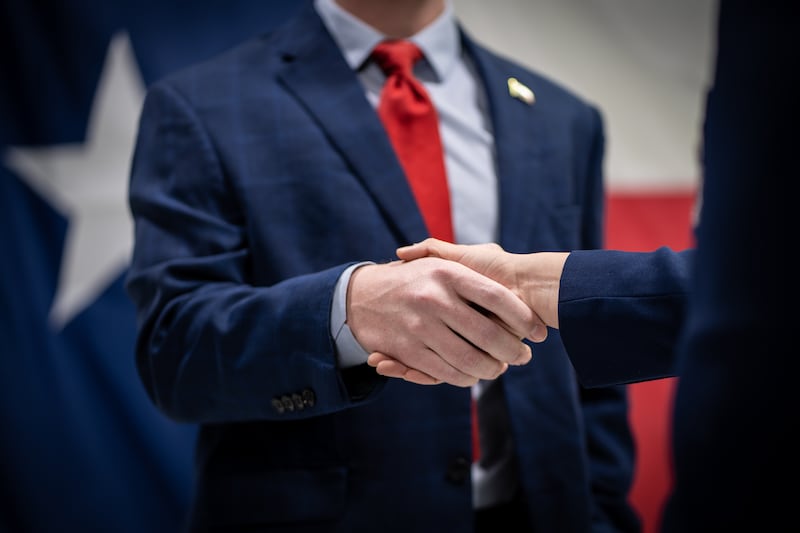
Utah’s June primaries sent a quiet but unmistakable signal. Across the spectrum, from Ben McAdams on the left to Reps. Blake Moore and Celeste Maloy on the right, voters rewarded leaders who lower the temperature instead of raising it.
Maloy’s win is especially telling. She beat a far more combative challenger by better than 2 to 1. In a country that seems addicted to outrage, Utah keeps choosing something steadier.
That instinct is worth defending, because our friends in other states sometimes badly misunderstand civility as weakness, or splitting every difference down the middle. Civility is the discipline of treating the people you disagree with as you would like to be treated. It means seeing our political opponents as fellow citizens rather than enemies, and that calls for good faith. It is harder than shouting, but it works. In Christian faith, it is how we earn God’s grace. In a democracy, it’s how progress is made.
Civility does not ask anyone to abandon their principles.
We saw what that discipline looks like under the worst kind of pressure. After the assassination of Charlie Kirk, Gov. Spencer Cox could have fed the cycle of blame.
Instead he asked the harder question: Do we escalate, or do we find an off-ramp? He told Utahns it was a choice, and he urged people to stop hating their fellow Americans. This was no one-off stunt by Cox, who has spent years building a “disagree better” approach to politics, and when the moment demanded it, he lived up to his own standard. Leadership like that doesn’t let the other side win, nor does it lower the stakes of a disagreement. It ensures a disagreement stays in words.
Civility is not only how we keep the peace. It is how we get things done. Sen. John Curtis, R-Utah, has made a career of proving it. He founded the Conservative Climate Caucus to bring his own party to a table it had mostly avoided. He has delivered incredible progress at uniting the two political parties behind serious, thoughtful, bipartisan solutions to climate change, like permitting reform, which he’s worked on for years. He has done the same on issues from wildfire to energy.
Curtis’ conciliatory approach has brought Democrats onboard for deregulatory legislation they previously never engaged on, because they trusted him, even if they don’t trust the industries they’re deregulating. Perhaps Curtis is aware that any significant accomplishment in this country has been bipartisan. The Senate filibuster makes it so; tax and spending policy can be reversed, but policy changes with 60-plus senators on board endure. The leaders who understand this deliver results. The ones who treat every issue as a brawl deliver press clippings.
Even Utah’s sharper-elbowed voices are finding their way to the same place. Sen. Mike Lee, R-Utah, not known for making compromises, now leads those permitting reform discussions as chairman of the Energy and Natural Resources Committee. He recently sat down with a bipartisan group of colleagues over dinner to push a long-stalled deal on energy permitting forward, and he called it good progress.
These are the kinds of good-faith meetings that actually unlock legislative progress. A deal on this issue could mean projects, jobs and lower costs out West. Utahns should hope that Lee keeps choosing that path, because the permitting reforms our state needs will not pass on partisan anger alone. They will pass the way real things always pass, when people who disagree sit in the same room, without cameras, and look for the deal.
None of this means surrendering conviction. Curtis is still a conservative. Cox still fights for what he believes. Lee is still Lee. Civility does not ask anyone to abandon their principles. It asks them to pursue those principles like adults who expect to share a country with the people on the other side. That’s what Utahns teach their kids.
June’s results were a solemn verdict. Utahns are telling their leaders, again, that they are tired of politics as blood sport and that they will reward those who rise above it. The leaders who already practice this deserve our support. The ones still deciding should know that the voters have made their preference clear, and that the path forward in this state runs through the better angels, not the loudest voices.