

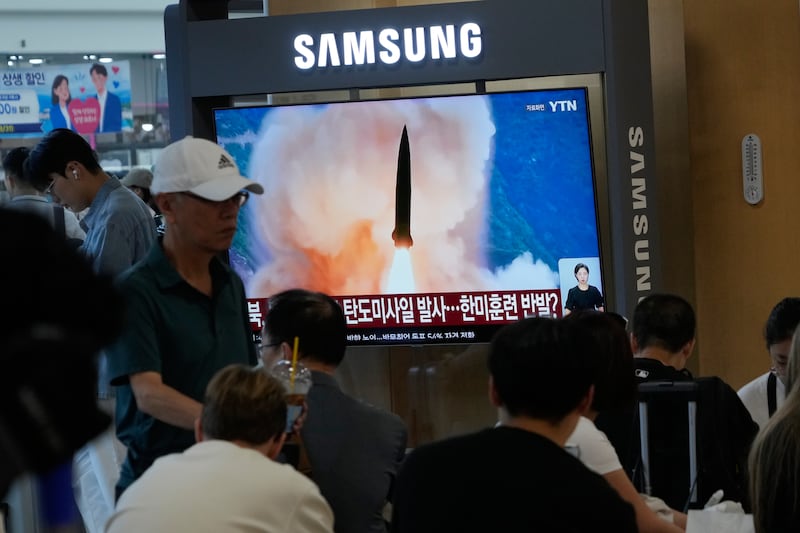

The surviving communist regime in North Korea has belligerently threatened unspecified action due to joint military exercises involving South Korea and the United States. This is nothing new, nor are the exercises.
What is new is the declaration by President Donald Trump that the exercises will be scaled back. He cited his alleged good relations with North Korea’s ruler Kim Jong-un, plus South Korea’s unwillingness to support the current attacks against Iran.
North Korea is giving sustained attention to development of long-range missiles, including capability to strike the U.S., along with nuclear weapons.
U.S. government officials should keep in mind three basic realities about dealing with North Korea. First, for many years Pyongyang has been inconsistent, often erratic. In 2013, the regime declared a “state of war” with South Korea and abruptly abrogated the 1953 armistice that ended the Korean War.
Yet, accommodation moves followed. In short, unpredictability is the norm. This implies considerable factional infighting at the top, along with collective insecurity.
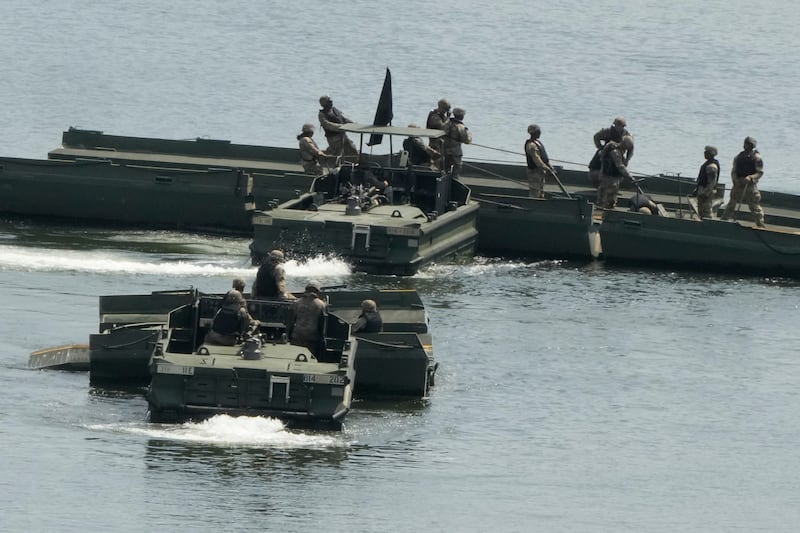
Second, we should highlight commitment to defense of South Korea and our own readiness and willingness to use a range of forces. The Obama administration rightly deployed the THAAD (Terminal High Altitude Air Defense) anti-missile system for this purpose.
In 2013, the Pentagon expanded anti-ballistic missile defenses on the U.S. West Coast. Simultaneously, THAAD was sent to Guam, a potential target. In 2009, THAAD was deployed to Hawaii for the same reason.
On cue, China expressed indignation about anti-missile deployments. That was predictable, and understandable given potential use of the system’s radars for information gathering. At the same time, Beijing worked to restrain Pyongyang, including suspending airline flights between the two cities.
Third, we should emphasize coordination with other nations. This ideally should include China and Russia, but also our close friend South Korea and ally Japan.
South Korea’s substantial investment in and trade with China grows, while North Korea remains a costly dependent, though ideologically important. China’s President Xi Jinping visited Seoul in 2014. He finally visited North Korea in 2019.
China’s foreign policy reflects self-interest and traditional caution regarding military force. North Korea is a drain, and over time, a source of growing well-founded anxiety.
The COVID-19 pandemic brought North Korea’s long-evident economic deterioration to a major crisis. Trade and wider interchange with China contracted. Long-term economic sanctions stymie recovery.
The brutal Korean War of 1950 to 1953 devastated the Korean Peninsula, and made the Cold War global. President Harry Truman’s courageous decision to support the United Nations in defending the South against invasion from the North laid the foundation for today’s remarkably successful Republic of Korea.
Throughout the long Vietnam War, South Korea maintained substantial military combat forces in South Vietnam in support of South Vietnamese and U.S. forces, as well as our other allies Australia and New Zealand.
Democratic change culminated with election in 1998 of President Kim Dae-jung, heroic opponent of dictatorship. In 2000, he received the Nobel Peace Prize. During the earlier dictatorship, Kim survived imprisonment and at least one attempt to kill him. Occasional political turmoil since 1998 has confirmed South Korean democracy.
U.S. leaders overall emphasize collaboration with allies, and should encourage South Korea’s diplomatic leadership. Traditional strong ties between the U.S. and Asian allies transcend the peculiarities of any one leader.
Our alliance, established during the Korean War, was greatly reinforced during the Vietnam War.
Structural realities should guide policy. Korean peace has endured since 1953.