
Utah Sen. John Curtis said the Trump administration’s commitment to comply with a federal ruling pausing its proposed anti-weaponization fund is “not enough” to satisfy concerns about the fund’s legality.
In a statement on Monday, the DOJ said it would follow the court’s order to temporarily halt the fund despite “strongly” disagreeing with the ruling’s merits — arguing the fund would merely allow individuals to be compensated if they believe they have been unfairly targeted by the federal government. However, lawmakers from both parties questioned whether the Trump administration had the authority to create such a fund, and raised concerns about who would be eligible for payments.
“I have a lot of unanswered questions,” Curtis said on Monday. “It’s not enough for me to have the courts push back. I just want to make sure this thing doesn’t move forward in its current form.”
“That’s not enough for me,” Curtis added in a conversation with the Deseret News, “because what if the temporary order changes?”
The Justice Department’s ruling does not order the Trump administration to dismantle the fund entirely. Rather, it only halts the fund from disbursing money temporarily until its legality can be litigated.
Senate Democrats have indicated plans to introduce legislation banning the fund from being created as well as ensuring “no president can ever do this again,” according to Minority Leader Chuck Schumer, D-N.Y.
Curtis declined to say whether he would back such legislation, telling the Deseret News he would need to say specific language first. But the Utah senator didn’t close the door to implementing certain guardrails on such a fund to ensure it isn’t misused.
“There are things that probably could be done to satisfy me, as far as guardrails, but they’d have to be super robust,” Curtis said. “I think my biggest concern is: is this the way that we handle missteps by our judicial branch? I don’t think it is. I think the system is already there to handle those missteps, and I don’t think we need another system on top of it that starts with a large fund.”
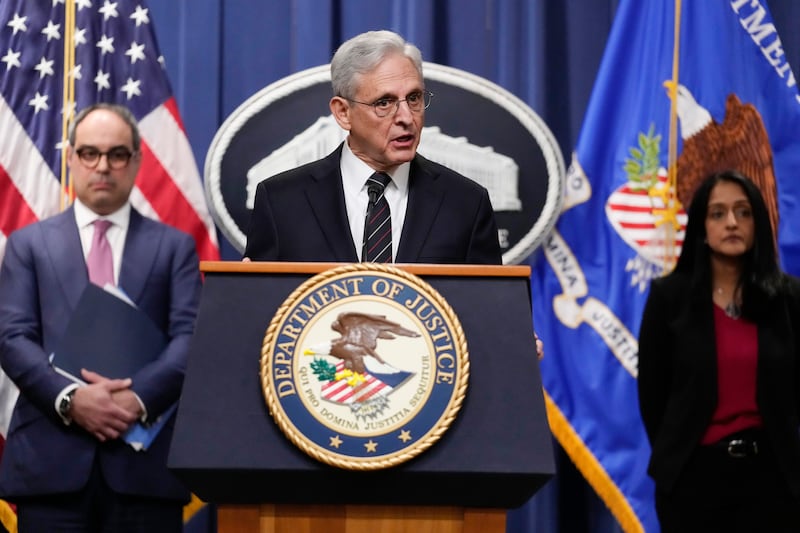
Although the administration agreed to comply with the two-week pause, DOJ officials emphasized they do not agree with the ruling.
“This Fund was open to anybody who was so weaponized, targeted, or persecuted, whether they were Democrat, Republican, Conservative, Independent, or otherwise,” the department said in a statement. “The Department will abide by the Court’s ruling.”
U.S. District Judge Leonie Brinkema ruled Friday that the Justice Department must pause any claims being made through the $1.776 billion settlement funds while there are ongoing legal challenges to the fund’s creation. The judge scheduled a hearing for June 12 on whether to extend the pause or allow payments to go through.
Meanwhile, President Donald Trump has been leaning toward scrapping the fund for days, anonymous sources told The New York Times.
The pause is welcome news for Republican leaders on Capitol Hill who have been dealing with an internal revolt from GOP lawmakers who rejected the fund’s creation. Confusion over the fund quickly bled into other tense negotiations on Capitol Hill, prompting GOP leaders to delay consideration of their multibillion-dollar immigration funding bill.
It’s not yet clear whether the DOJ’s agreement to comply with the temporary ruling will ease enough concerns to get the immigration funding package through. It’s possible some Republican senators will still demand attaching language to the package or another piece of legislation blocking the creation of such a fund now and in the future.
Senate Majority Leader John Thune, R-S.D., told reporters on Monday his preference is for the Trump administration to “shut down” the fund itself without an opportunity for it to be reinstated at a later date.
“That’s the ideal outcome,” he said.
It’s not yet clear how Republicans will move forward with the immigration bill, which has become a major focus for the party ahead of the midterm elections. Republicans are poised to fly past the June 1 deadline given by Trump earlier this year, especially as there are still disagreements over proposed funding related to White House ballroom security adjustments.