



President Donald Trump on Monday signed an executive order to secure U.S. defense supply chains, including the critical materials necessary for weapons manufacturing.
The order makes it harder for U.S. defense contractors to obtain a waiver that would allow them to buy minerals from prohibited foreign suppliers like China.
The order means the contractors will have to do a lot more to prove that a purchase from a prohibited supplier is necessary than they have in the past.
“No more: ‘we tried nothing and we’re out of options,’” White House adviser Peter Navarro said on a briefing call with reporters.
The world is almost entirely dependent on China for rare earth minerals, with about 90% of the world’s entire supply of processed rare earth minerals coming from the country.
The White House said supply chain resilience and domestic production has been “historically under-prioritized” and the order will push U.S. contractors to look at domestic suppliers.

“To continue this dominance in an era of renewed great power competition, the United States must secure its supply chains against physical, cyber, and economic subversion,” the executive order said.
Beginning on Jan. 1, 2027, Secretary Pete Hegseth and the secretaries of the military departments will stop issuing waivers to contractors for their desired materials.
Hegseth can still continue to issue waivers otherwise prohibited by the order, but the contractor must submit a formal mitigation plan that identifies the source of the covered material, documents that prove “exhaustive efforts” were made to acquire that material, a document describing the steps to remove the “non-covered material” from the contractor’s supply chains, and a “strict projected timeline” for a complete implementation of the order’s intended mitigation plan.
The order comes as the Pentagon continues to press U.S. defense contractors like Boeing and Lockheed Martin to expand weapons production domestically.
Many minerals and materials used in missiles, aircraft and other systems still rely on Chinese suppliers, putting companies in a tough position with this change, Reuters highlighted.
All eyes on Utah
Measures introduced during the 2026 Utah legislative session are seeking to make Utah a primary U.S. hub for critical mineral production, processing and research.
Awareness of the need to diversify critical mineral supply chains grew after China said foreign companies need to get approval from the Chinese government to export magnets containing small amounts of rare-earth minerals.
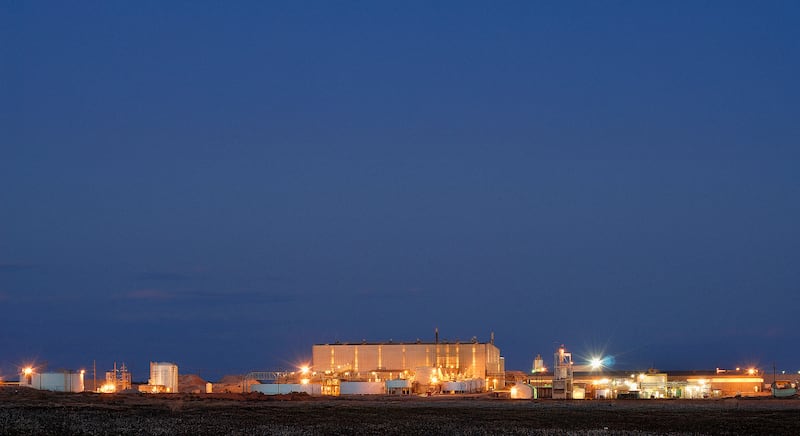
Several businesses in the state are looking to fill the need for critical minerals. The White Mesa Mill in the southeast corner of Utah is the only conventional uranium processing plant left in the United States. The Denver-based company that owns the mill realized they could do a lot of the same processing and is looking to “vertically” integrate the rare earth supply chain.
Additionally, Provo-based Ionic Mineral Technologies recently announced to investors that an independent review found its mine has 19 critical minerals, which could lead to billions in profit.