

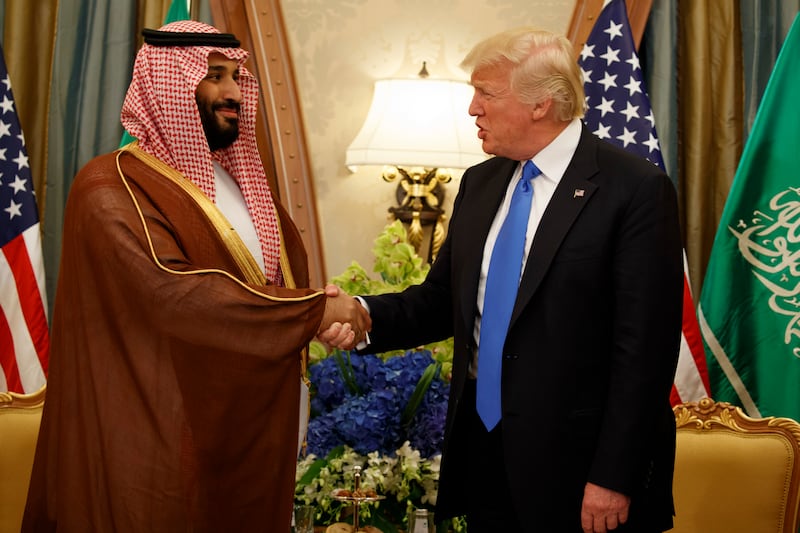

- Former national security adviser said Trump made a good call tying Saudi nuclear deal to Abraham Accords.
- The deal would allow Saudi Arabia to buy nuclear energy technology from America with U.S. supervision.
- Middle East experts say the deal risks overturning decades of nonproliferation standards set by U.S. policy.
Former Amb. Robert O’Brien, who played a key role in brokering the historic Abraham Accords, praised President Donald Trump for making a landmark nuclear cooperation agreement with Saudi Arabia dependent on the nation formally recognizing Israel.
The condition to normalize diplomatic relations with Israel did not appear in the initial announcement that revealed U.S. Secretary of Energy Chris Wright and his Saudi counterpart had signed onto a multi-billion-dollar energy partnership on Wednesday.
Under the deal, known as a 123 agreement, the Saudis would be permitted to purchase nuclear energy technology from American companies with oversight from U.S. officials. If proven feasible by a study, they could also enrich uranium on Saudi soil.
Concerns quickly emerged around the precedent the agreement could set for nations trying to expand nuclear programs. Experts also expressed skepticism that Saudi Arabia will enter the Abraham Accords without a plan to establish a Palestinian state.
In an interview with the Deseret News, O’Brien, as one of the architects of the Abraham Accords, said there is no better way to ensure peaceful nuclear power than tying it directly to the most significant peace treaty to exist in the Middle East in decades.
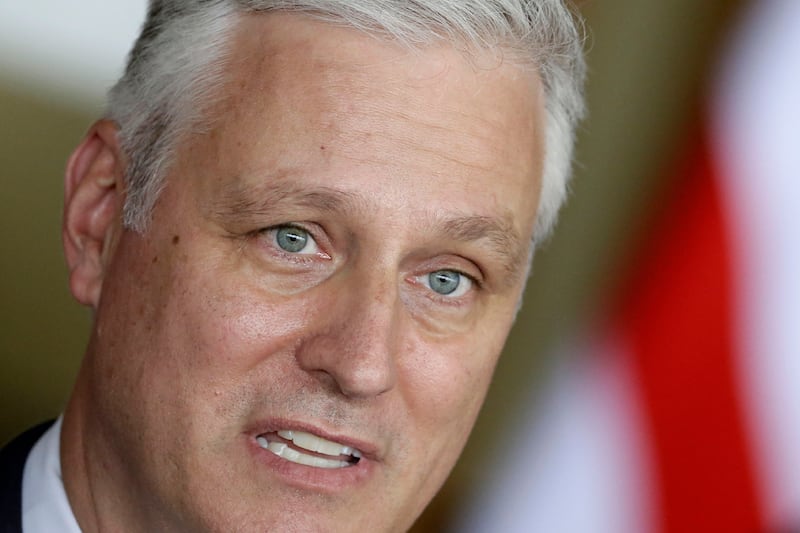
“It’s good for America and good for Saudi Arabia,” he said. “I think it’s also good for Israel, especially if we can fold in diplomatic normalization between Saudi and Israel. I think that that’s a wonderful opportunity to further the peace initiative in the region.”
O’Brien served as Trump’s national security adviser from 2019 to 2021. In 2020, he was awarded the National Security Medal for playing a part in opening up dialogue between Israel and four Arab nations: United Arab Emirates, Bahrain, Sudan and Morocco.
Israeli Prime Minister Benjamin Netanyahu called the deal “a new dawn of peace.” It later became a foreign policy priority of the Biden administration to include Saudi Arabia in the arrangement. But negotiations ended after Hamas attacked Israel on Oct. 7, 2023.
Will Congress approve the deal?
The Saudis hesitated to join the agreement, wanting first to see how it played out in other nations, according to O’Brien. The Abraham Accords aimed to prove that Middle East peace could be divorced from the idea of an “independent Palestine,” O’Brien said.
“The Abraham Accords have been good for security..., especially in this conflict with Iran,” he said. “I think Saudi Arabia sees the benefits of the Abraham Accords and of having peace in the region. That should be sufficient for them to want to now join.”
Long before Trump posted his conditions on Truth Social Thursday morning, he had spoken to the Saudis about making a nuclear deal contingent on joining the Abraham Accords, White House press secretary Karoline Leavitt told reporters on Thursday.
Saudi Arabia has yet to respond to Trump’s addendum to the deal that it agreed to on Wednesday. The president will continue to talk with Saudi officials “to get the deal finalized and hopefully see them join Abraham Accords very soon,” Leavitt said.
The 123 agreement signed on Wednesday must now be transmitted to Congress where lawmakers may use a 60-day review period to block the deal by passing a resolution of disapproval. To overcome a presidential veto, this resolution would need a two-thirds vote.
Utah Sen. John Curtis, who sits on the Senate Committee on Foreign Relations, told the Deseret News he will analyze the agreement based on how it might impact U.S. national security, American economic interests and stability in the region.
“In any case, keeping adversaries like Russia and China from tapping into the nuclear capabilities of foreign nations where the U.S. could strategically serve as that primary partner is a welcome objective,” Curtis added as part of his written statement.
Trump’s approach to the deal contrasts with his aggressive stance on Iran, where he has done all he can to prevent a nuclear program through military actions, including a bombing campaign last summer, and the Iran war that has lasted nearly five months.

Risks of a Saudi deal
The surprising Saudi announcement, coming after Trump’s withdrawal from the 2015 Iran nuclear deal, creates uncertainty around nuclear policy, on which the U.S. has been the global leader, Brigham Young University political scientist Chad Nelson said.
The agreement appears like a concession from the U.S., and a victory for Saudi Arabia, according to Nelson, who authored a book on the Iranian revolution’s impact on international relations. But Trump’s latest demand could sabotage it all together.
Regardless of how the deal pans out, it may have permanently shifted the conversation around what the U.S. — and other global powers — can do to enable nuclear enrichment in parts of the world where it had previously been prohibited, Nelson said.
“This is just part of a package of a lot of things the Trump administration is doing that erodes safeguards against nuclear proliferation,” he said. “The United States has been very important in preventing nuclear proliferation. So that’s of major consequence.”
On Wednesday, Trump’s top energy adviser assured Americans the 123 agreement met the “highest standards of nuclear safety and nonproliferation.” The deal intends to continue the mission of building an “American nuclear renaissance,” Wright said.

However, it is unclear how the U.S.-Saudi agreement will achieve those adjectives, according to Khosrow Semnani, an Iranian-American entrepreneur living in Salt Lake City who founded the nation’s first privately owned low-level nuclear waste disposal facility.
It is unlikely Saudi Arabia wants nuclear enrichment technology for energy because it already has the largest oil reserves in the world, Semnani said. Using it as “a carrot for signing the Abraham Accords” could actually escalate Middle East tensions, he added.
“Here’s the thing, if Iran knows that, for instance, Saudi Arabia has nuclear power plants, I can assure you that would be on their target list,” Semnani said. “And so I just worry about that. I don’t see the immediate benefit. I don’t see a long-term benefit.”