


President Donald Trump earlier this month issued two new executive orders seeking to limit avenues for birthright citizenship in the United States, another attempt at changing the long-standing guarantee after a loss at the Supreme Court in June.
The two orders appeared to try to find away around the court’s ruling that struck down his previous executive order attempting to end birthright citizenship all together.
After receiving the setback from the justices, Trump vowed to change the constitutional guarantee another way.
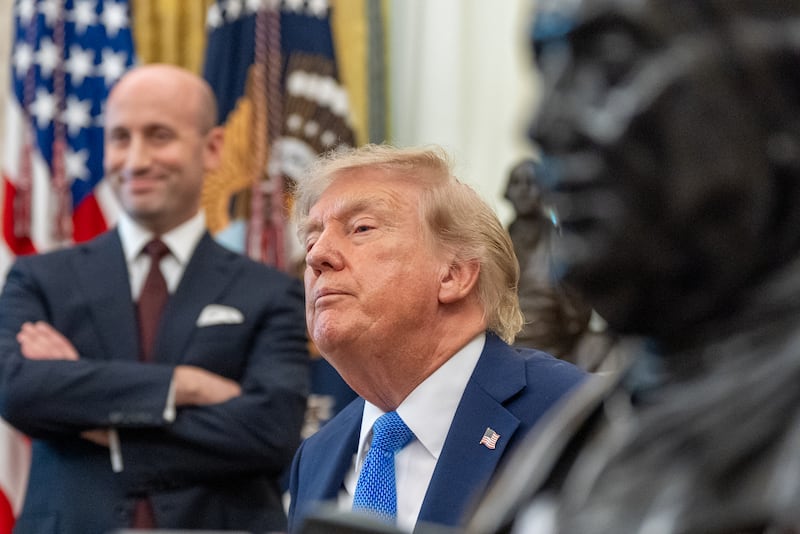
He was accompanied by White House deputy chief of staff for policy Steven Miller in the Oval Office as he signed the new executive orders: one that puts limits on birthright citizenship for children of embassy employees and another on birth tourism.
Scholars are divided about whether his orders will be allowed to go into effect and advocates are questioning the legality, just as they did in January 2025.
But what do Trump’s orders actually say, and will they fail legal scrutiny like the last one?
The birthright citizenship executive orders
The first order, titled “Continuing to Protect the Meaning and Value of American Citizenship,” looks to exclude babies born to employees working for foreign governments, meaning embassy or consulate staff who aren’t U.S. citizens.
The long-standing rule was that children born in the U.S. to accredited ambassadors or diplomats didn’t receive birthright citizenship because their parents are not subject to U.S. jurisdiction — which was the key question before the Supreme Court. However, Trump’s order covers a broader number of people, not just diplomats.
Trump’s new order expands the ban on birthright citizenship to all foreign government employees living in the United States.
The order raises legal questions because the Trump administration argues those people aren’t “subject to the jurisdiction” of the United States under the 14th Amendment, but others argue that the diplomatic exception was a very narrow avenue to deny birthright citizenship to begin with and cannot be expanded.
The order also targets children of members of foreign terrorist groups and babies whose parents are engaged in “fraudulent activity” to gain citizenship in the country.
The second executive order, titled “Ending Birth Tourism,” directs the secretary of state and the secretary of homeland security to deny visas to anyone suspected of engaging in birth tourism.
While the exact scale of birth tourism is unclear and the number of children born to foreign nationals in the United States was less than 10,000 in 2024, the order is looking to end or limit the practice of pregnant women who say they’re coming to the U.S. for another reason in order to give birth so their child can receive U.S. citizenship under the constitutional guarantee.
The Wall Street Journal in 2017 reported that a Pacific island, Saipan, which is a U.S. territory, had become a hot-spot for birth tourism for some Chinese parents. At the time, it was the only U.S. land that Chinese nationals could visit without a visa and the number of Chinese visitors had grown over the years and the number of babies born to Chinese women ballooned from just eight in 2009 to 472 in 2016, which was more than American women on the island that year.
Since then, the number of children born to foreigners visiting the island has dropped, but concerns persist.
Trump’s order will likely face legal challenges, but still, it targets a very small number of children born in the U.S. annually, since the Centers for Disease Control and Prevention estimates 3.6 million babies were born in 2024.
Trump said when signing the orders that people were building businesses around birth tourism and birthright citizenship.
“They’re buying their way in, and we’re not going to let it happen,” he said, adding, “We look very heavily at denying visas to people that we have reason to believe are coming here for that purpose.”
What the orders mean
This was Trump’s second attempt at trying to reconfigure birthright citizenship.
On his first day back in office in 2025, he signed an executive order ending birthright citizenship. Immigration advocates and expectant mothers took the case to court, but didn’t get a ruling until this June.
Chief Justice John Roberts wrote the majority opinion, saying that children born in the U.S. to parents “unlawfully or temporarily present” are “subject to the jurisdiction” of the United States and should be considered citizens under the 14th Amendment.
After the ruling, Trump indicated he would ask for a rehearing, but it appears his administration did not since the deadline passed on July 27. Rehearings are extremely rare.
Trump said the ruling was “too bad” but he would have Congress pass legislation to end birthright. But the recent orders appear to skip past Congress and try to deal with the issue through executive order.
Scholars are divided over whether the courts will allow Trump to amend birthright citizenship and birth tourism.
It’s potentially legal to expand the category of foreign diplomats not being included but it also would give them significant immunity from U.S. law, Amanda Frost, a University of Virginia law professor, told Reuters.
University of Michigan law professor Sam Erman told the outlet that during World War II, Japanese immigrants to the U.S. were deemed enemy aliens and if the Trump administration’s order was applied then, those U.S.-born babies would not have been given citizenship.
The American Civil Liberties Union and other advocacy groups filed a motion last week asking a federal judge to block the enforcement of the two orders.
They argue Trump can’t circumvent the Supreme Court’s ruling since the justices already confirmed the 14th Amendment guarantees and the specific “subject to the jurisdiction” language.
Since the administration deliberately narrowed the language of the birthright executive order, courts will have to decide if the foreign government employees and birth tourists fit within the historical framework of the jurisdiction clause.