

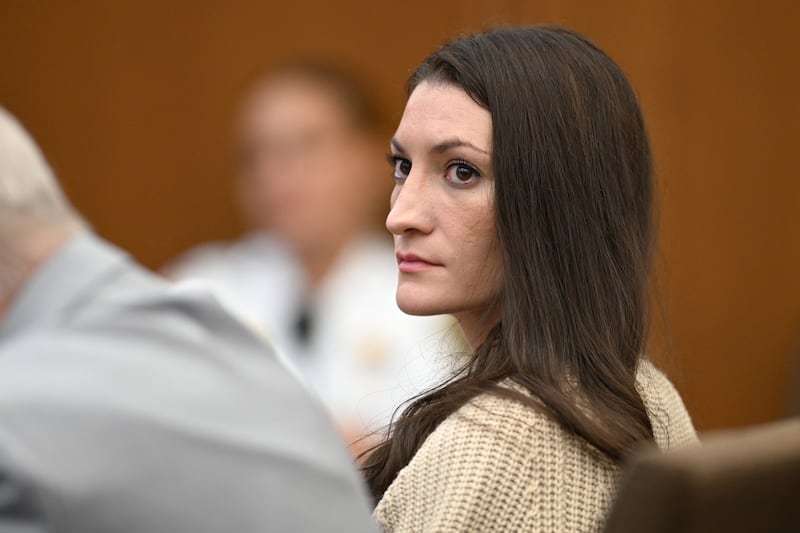

More than three years ago, Lindsay Clancy’s then-husband Patrick entered his Massachusetts home to find his three children strangled with exercise bands in their basement while their mother lay paralyzed outside after an attempted suicide.
For the past weeks, a jury has listened as both the prosecution and defense present their arguments surrounding the case during her murder trial. The two sides do not dispute that Lindsay Clancy killed her children. Rather, the debate is to decide whether she can be held criminally responsible.
Clancy’s defense lawyer, Kevin Reddington, has raised an insanity defense, saying Clancy had acute postpartum psychosis and cannot be held responsible for her actions.
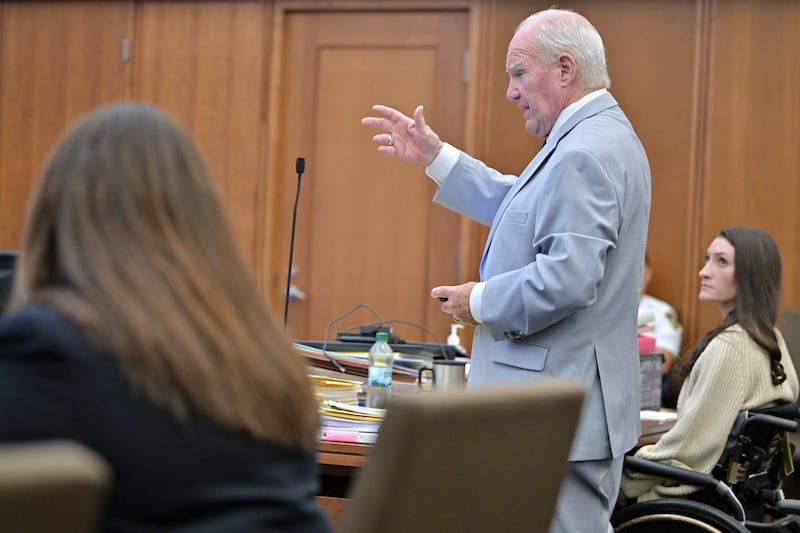
The prosecution argues her mental illness does not meet the grounds for insanity, and that the killings were both intentional and well-planned.
This week, as the trial comes to a close in a Plymouth, Massachusetts courtroom, the jury prepares to decide the 35-year-old’s fate.
Context: Clancy’s battle with mental illness leading up to the killings
Clancy, a former labor and delivery nurse, struggled with severe mental illness after the birth of her third child, Callan, according to the testimonies of family, friends and Clancy’s former husband.
She experienced frequent insomnia, depression, anxiety and cardiac palpitations, and spent months meeting with healthcare providers and rotating through medications to find a solution.
The medications prescribed for her worsened her condition, according to arguments made by Clancy and her former husband in a lawsuit against her providers. Clancy became “disoriented, forgetful, confused, and disconnected from her own body,” according to court documents obtained by Fox News.
Eventually, Clancy told Patrick and her then-mother-in-law that she had thoughts of harming her three children: Cora, 8, Dawson, 3, and Callan, 8 months. She even reported having “auditory hallucinations all day, every day,” with many hallucinations involving a voice that told her to harm her children.
Patrick said Lindsay started describing these thoughts about a month before the killings, and he found them “very confusing,” as reported by The Associated Press, because moments later she could be playing with the children or making them lunch.

Patrick and Lindsay are divorced but he has publicly advocated for Lindsay, saying she should not be held responsible for her actions.
Amid her criminal trial, Lindsay and Patrick have filed a lawsuit against Clancy’s healthcare providers, claiming the providers failed to properly diagnose and treat her for a “severe postpartum psychiatric condition.”
“Lindsay Clancy did everything a mother in her situation could do,” Reddington wrote in court documents. “And still, the medical system failed her completely.”
Clancy’s healthcare providers testified that they never saw her display warning signs of psychosis or mania. Though Clancy did mention suicidal thoughts, they said in court, she did not inform them that she was having thoughts of harming others.
While receiving care, Clancy was given prescriptions for several different medications in an effort to find one that would work, but often reported side effects and requested different medications. Witnesses noted Clancy would not always take the medications due to fear that she was addicted to some of them.
In addition to medication, Clancy spent time in a psychiatric hospital. She strangled her children less than three weeks after she was released. After the killings, a forensic psychiatrist diagnosed her with postpartum psychosis and bipolar disorder.
Some expert witnesses say Clancy was fully aware of her actions

Some experts have testified that even though Clancy was suffering from mental illness, it was not to the extent to be considered for an insanity defense.
Kirk Heilbrun, who is reported to have performed psychiatric tests on Clancy in April, told jurors that Clancy had bipolar disorder and depression, both of which were made worse by her insomnia, but that she was still “criminally responsible” for the killings.
Heilbrun said Clancy described hearing a voice she had never heard before only for the approximate 18 minutes it took to kill the children.
“To put it mildly, that would be a very, very unusual pattern or manifestation of how this kind of thing comes about,” Heilbrun testified, according to AP. “Very unusual.”
Heilbrun said Clancy “retained an awareness of the illegality of killing others, including her children.”
“Her moral awareness of this killing was influenced by her strong desire to die and, if she was dead, not to leave her children behind,” he said.
Forensic psychiatrist Avram Mack said even if Clancy did have psychosis, there is “no reason that psychosis in and of itself inhibits a person’s ability to know right from wrong.”
Clancy has not testified and is not required to, but she has been seen breaking down in sobs several times throughout the duration of the trial.
‘It was almost like she was a puppet and someone else was pulling the strings’

Other expert witnesses argue that due to her mental state, Clancy believed she was doing the right thing for her children. Because she intended to kill herself, she may have killed her children so that they would not be left without her.
“She believed that she was doing what was right for her children,” said Phillip Resnick, a forensic psychiatrist and expert in filicide. Resnick testified that Clancy was “clearly psychotic” on the day of the killing.
“It was almost like she was a puppet and someone else was pulling the strings,” Resnick said.
Clancy’s attorney argued the medications Clancy received for her diagnosed mental illnesses “exacerbated her underlying psychiatric vulnerability” and the “tragedy that followed was the direct and proximate result” of insufficient care.
Clancy’s case sparks public debate over postpartum mental health care
Clancy’s case has become a public flashpoint for the larger issue of mental health care, particularly for postpartum women.
During a recent day in court, hundreds of Clancy supporters gathered outside the courthouse where the trial is taking place.
Approximately 300 women, along with some men, stood silently for more than an hour ahead of proceedings, according to AP. Many wore pink clothing with phrases such as “She Needed Help” and “Peace For Lindsay.”
Several attendants said Clancy’s case resonated with them and they wanted to raise awareness about the mental health care system, according to AP.
Buckingham encouraged jurors not to make this case “a public debate about women’s mental health and how the medical system treats women.”
“This was not a woman in the throes of psychosis,” Buckingham said. “This case is about this defendant, Lindsay Clancy.”
The 12 jurors will hear from final witnesses Tuesday and closing arguments are expected this week, according to AP. If the jury convicts Clancy of murder, she will face life in prison without parole. If she is found not guilty, she will be committed to a state mental health facility.
The events of the day of the killings
The morning of the killings, Clancy made her children breakfast, took Cora to the pediatrician for a stomachache and built a snowman in the backyard with her children, according to court documents.
“She was having one of her best days” on the day of the killing, Patrick Clancy said in court.
Later in the afternoon, Clancy asked Patrick to go run errands, including stopping at the pharmacy and picking up takeout for dinner.
As soon as he left, court documents describe, a “loud, demanding, repetitious voice” came into her head saying, “This is your last chance. Kill the children so you can kill yourself.” Lindsay “felt a force come over her” that led her to action.
While strangling her children, she muttered, “Go to God, baby.” Afterward, she undertook several attempts to kill herself. Officials with the state police crime lab testified that Clancy’s blood contained several prescription medications after the killings, according to AP, including antidepressants, antipsychotics and benzodiazepine.
When Patrick returned home and called for his family, the house was silent. He searched his kids’ rooms and bathroom before finding blood in his own room and an open window. Lindsay was on the ground below, conscious yet injured. Lindsay told Patrick she had tried to kill herself and the kids were in the basement.
When Patrick went downstairs, he found the children strangled, the exercise bands still around their necks. While on the phone with a 911 operator, the recording of which was played in court, he screamed, “She killed the kids!”
Postpartum psychosis: Explained
Postpartum psychosis is a “rare” and “dangerous” condition, according to experts at the Cleveland Clinic, and becomes more severe and dangerous the longer it goes untreated.
With treatment, patients can recover within a few weeks. Without treatment, symptoms can last weeks or even months. Many people with this condition ultimately recover.
Experts classified it as a “mental health emergency” and said patients with postpartum psychosis often are at a higher risk of harming themselves or others, or dying by suicide. Hallucinations and delusions are the two main symptoms, they said.
NOTE: If you or someone you know is struggling with thoughts of self-harm, the 988 Suicide and Crisis Line is always available. You can text or call 988 any time or chat at 988lifeline.org. In Utah, you can also reach out to SafeUT, 833-372-3388, or download the SafeUT app.