


The Supreme Court on Monday reversed a lower-court ruling and said President Donald Trump could begin carrying out parts of his executive order that intends to restrict mail-in voting, but there are still some legal challengers that could stop him from implementing it before the November midterm election.
The ruling, handed down in an unsigned order, leaves uncertainty about mail-in voting, particularly with the election just a few months away.
Trump signed the executive order earlier this year that would create a federal database of U.S. citizens eligible to vote and implementing restrictions on mail-in ballots.
He’s long been against mail-in voting, particularly because when he lost the 2020 presidential election, voters were casting ballots by mail in unprecedented levels due to the COVID-19 pandemic. He’s claimed mail-in methods cause widespread voter fraud, but there is no substantial evidence to suggest that is true.
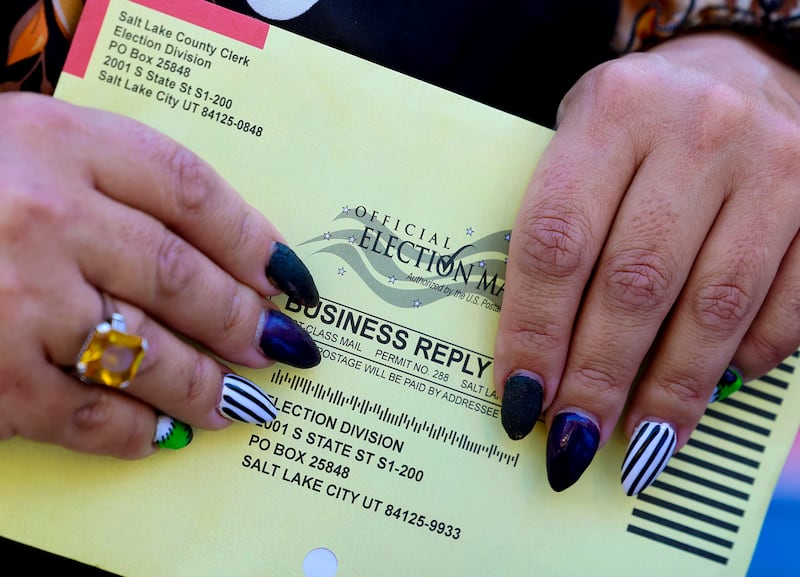
The order directs the U.S. Postal Service to establish a new standardized system for mail-in ballots. There would also be trackable ballot envelopes with individualized bar codes that are clearly labeled “official election mail.”

Democratic-led states challenged the order in court, but the justices’ order, with the three liberal justices in the dissent, allows the Department of Homeland Security to go forward with its plan to compile state-specific lists of people it believes are eligible to vote.
The justices decision on Monday also allows USPS to move forward with the new ballot method, but a lower court blocked it in a separate case, meaning there will be more court action before USPS can actually make any changes.
The justices declined to comment on whether Trump’s order was legal, noting that “time will tell.” The president himself acknowledged there would be legal challenges to the order, but argued it was “foolproof.”
Under the Constitution, only Congress can pass laws related to elections and state legislatures are given the authority to conduct elections how they see fit, meaning there’s different procedures across the country.
Democratic states that challenged Trump’s order argued that in order to implement some of the things the president is asking of them, they will need to divert energy and resources away from preparing for November.
Will mail-in voting be different in November?

Steve Vladeck, a Supreme Court expert and professor at Georgetown University, told CNN that the ruling was a win for Trump in the moment, but it doesn’t “fully clear the way for his effort to limit mail-in ballots to go into effect.”
“As soon as tomorrow, a Massachusetts district court may block the underlying USPS rule at issue — which is the real thing to watch heading into November,” he said.
While it’s the latest win for the president at the high court, he’s also been dealt some blows to his agenda from the justices this year, including with his tariff program and attempting to end birthright citizenship.
Still, the court’s 6-3 conservative majority has gutted some key election-related precedents, including narrowing the Voting Rights Act when ordering a state to redraw its congressional district map lines.
All three of the more liberal justices dissented to Monday’s order. Justice Elena Kagan wrote the dissenting opinion and was joined by Justice Sonia Sotomayor. They argue that the lower court had the authority to rule in favor of the Democratic states’ challenges and that the order Monday does not address whether Trump’s order will interfere with how states are conducting elections this November.
“Instead, today’s decision merely postpones adjudication of those challenges,” they wrote.
Justice Ketanji Brown Jackson also wrote her own, more strongly worded dissent, arguing allowing Trump’s order to proceed “needlessly injects chaos and uncertainty” into the upcoming midterm election. She also highlighted how in the past the court had declined to take up election challenges so close to when Americans cast ballots.