

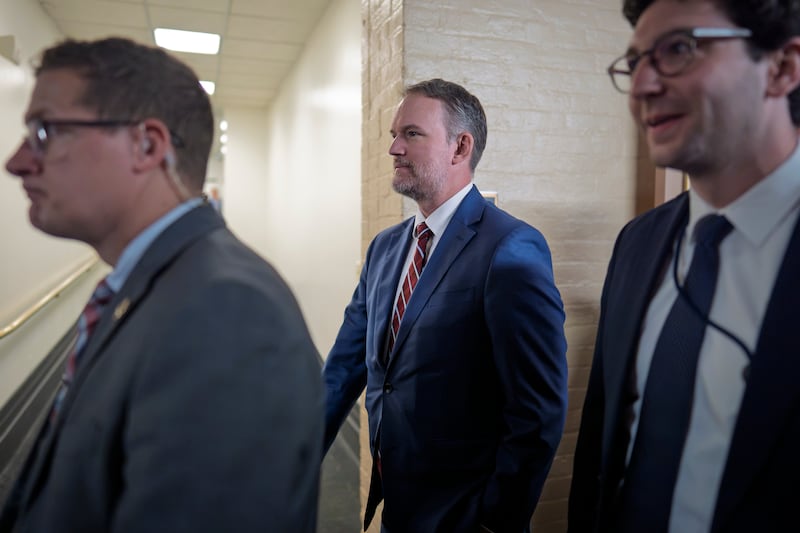

U.S. Trade Representative Jamieson Greer met with House Republicans behind closed doors on Wednesday to discuss the Trump administration’s latest trade policies, offering lawmakers a guide on how to address those issues on the campaign trail.
Greer faced questions from several members during the meeting, particularly on President Donald Trump’s decision to import foreign beef as well as the ongoing tariff war with Canada, lawmakers inside the meeting told the Deseret News. Both issues have caused headaches ahead of the midterm elections, particularly in relation to affordability concerns from voters.
“I went to hear what he had to say because I am hearing from beef producers in Utah who are really upset, and he talked about the temporary nature of this and how it’s supposed to help bring down the price of hamburger,” Rep. Celeste Maloy, R-Utah, told the Deseret News. “They’re trying to bring down the price of groceries, but the timing of it really hurt cattle producers as they were taking their cows to sale.”
Greer touched on several other issues as well, including tariff policies on countries such as Russia, Canada and Mexico. Overall, Greer sought to inject optimism within Republican members by providing a playbook of policies they can tout to voters back home.
“I think ‘frustration’ is not the right framing or word,” Greer told reporters after the meeting. “The reality is, all those members understand exactly what the president’s doing, and they want to make sure they can understand how to message it.”

The meeting was organized by the Republican Study Committee, one of the largest conservative caucuses in the House, and lasted longer than an hour. However, the top trade representative is likely to schedule follow-up meetings with individual members, according to RSC Chairman August Pfluger.
“I thought it was excellent,” Pfluger said after the meeting. “He is working on a tremendous amount of issues that are specific to districts, and I was very impressed.”
Republicans grill Greer on Trump’s beef imports
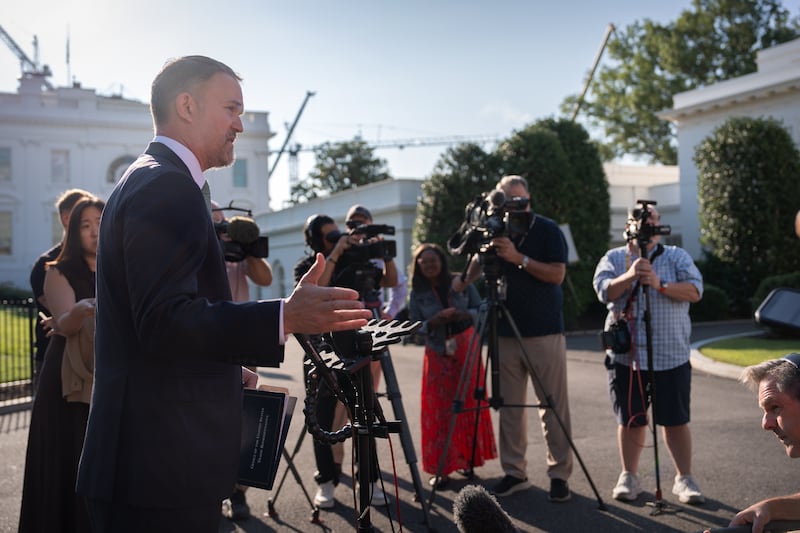
Greer faced a number of questions from lawmakers who attended the meeting, with a majority of those concerns centered on Trump’s recent beef imports decision.
Trump announced a plan last week to temporarily lift tariffs on beef imports to ease the costs of meat products in the United States, angering domestic ranchers who say it will hurt their business. Greer faced pushback from that decision, particularly from lawmakers who represent rural areas.
“Here’s the reality: This is not just a one-year issue on the affordability of beef,” Rep. Zach Nunn, R-Iowa, said after the meeting. “We’ve got to make sure that we’ve got a Made in America First beef program here. That means standing with our cattlemen on that. We’ve said the same to the ambassador here.”
Greer was receptive to the concerns, several lawmakers said, emphasizing the 90-day window would be temporary. The top trade representative appeared to be expecting questions on the issue, one lawmaker told the Deseret News, and came ready to tout lower prices for other crops.
“He knew that there were going to be people in the room who weren’t happy about beef prices, and so we talked about some of the other things that are going well,” said one lawmaker, who was granted anonymity to share details about a private meeting. “He’s managing all of those struggles.”
Maloy, who represents a large farming district, told the Deseret News she attended the meeting specifically to learn more about the beef imports, noting it has negative effects for her constituents. Although Greer was receptive, the administration did not offer a plan to ease costs beyond the 90-day plan.
“Eggs and chicken and dairy are all coming down,” Maloy said. “So you know, he talked about the successes and the wins we’re getting on trade policies and grocery prices are coming down, and we are getting more affordability.”
Greer tells Republicans Canada walked away from trade negotiations
The top trade representative also faced questions about the ongoing tariff war with Canada after talks between the two countries collapsed last month.
Trump announced tariffs up to 50% on certain Canadian products last month, quickly followed by retaliatory tariffs of the same amount by top Canadian officials. The retaliatory measures are set to take effect on Sept. 8.
Greer offered details of the negotiations to lawmakers, although the top trade official did not answer questions on whether he would restart talks with Canada.
Lawmakers framed the situation as the United States offering a new trade policy to Canada, which rejected the terms. Instead, Greer told lawmakers that Canada has been more focused on starting a messaging war than coming to a conclusion, members present for the meeting told the Deseret News.
“Everything was set. Then apparently, the (Canadian) trade negotiators went back to the politicians, and they said, ‘No, that’s not a good enough deal.’ And two days later, the whole thing blew up,” Rep. Mike Kennedy, R-Utah, said of Greer’s explanation.
“He actually did mention that Canada’s got more people in communications and less people in the trade negotiations,” Kennedy added. “Meaning they’re just talking about this inflammatory war with America instead of settling down and trying to get the work done.”
House Speaker Mike Johnson, R-La., reiterated that message after the meeting, telling reporters “it’s a shame that Canada walked away from the deal.”
Rep. Blake Moore, who sits on the House Ways and Means Committee that deals with tax policy, said the optics of the situation is different from the reality — suggesting the “nuts and bolts” of the negotiations are more complicated than the mainstream narrative.
While the trilateral trade agreement between the U.S., Canada, and Mexico remains intact, Moore noted there were “things on the periphery” that negotiators have not been able to come to an agreement on. Moore reiterated that the two countries were close to a deal on those things with the federal government in Canada, but the terms were rejected by the provincial governments.
“The provincial governments are the ones that are the sticking point, and I don’t blame the Trump administration for that at all,” Moore told the Deseret News. “There was a good faith approach to this one, and it’s sort of falling apart. I hope it’s not just because there’s animosity for the White House’s approach to trade over the last 18 months.”
Still, lawmakers raised concerns about the tariffs, pointing to the higher costs their constituents must contend with while negotiations stall.
“Tariffs do tend to create this economic uncertainty that can actually be the opposite of what we want to accomplish,” Kennedy said. “Obviously in Utah, we love our Canadian brothers and sisters and our tourist friends and the imports and exports that routinely go back and forth between their country and our state.”