

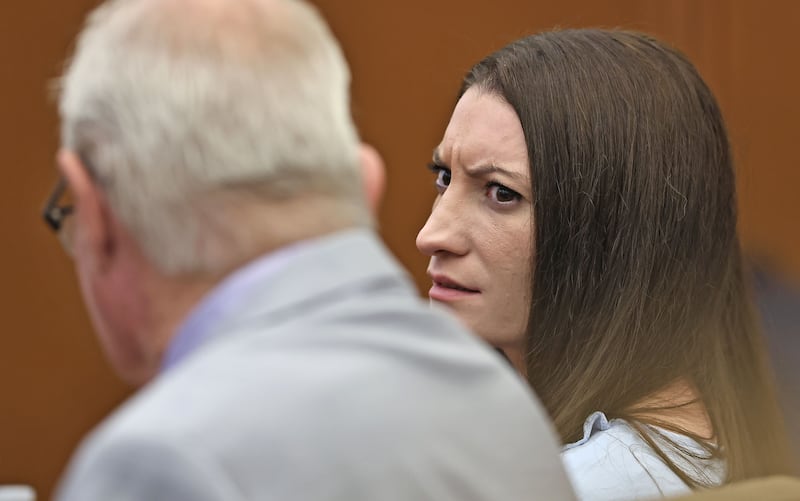

Jurors in the Lindsay Clancy trial entered their fifth day of deliberations Wednesday, and it is unclear if and when they will reach a verdict.
The group, made of nine women and three men, has been tasked with deciding if Lindsay Clancy is guilty of murdering her three children: Cora, 8, Dawson, 3, and Callan, 8 months.
Clancy’s defense lawyers have not disputed that the defendant killed her children, but they have raised an insanity defense and argued that Clancy cannot be held criminally responsible due to a state of psychosis caused by insufficient care to manage her postpartum depression.
Prosecutors argue Clancy was fully aware of her actions and seek a first-degree murder conviction, which would sentence Clancy to life in prison.
The jury could convict Clancy of first-degree murder, or with a lesser charge of second-degree murder or manslaughter. The jury could also accept the insanity defense and deem Clancy not guilty. If this is the case, Clancy would likely be committed to a mental health facility.
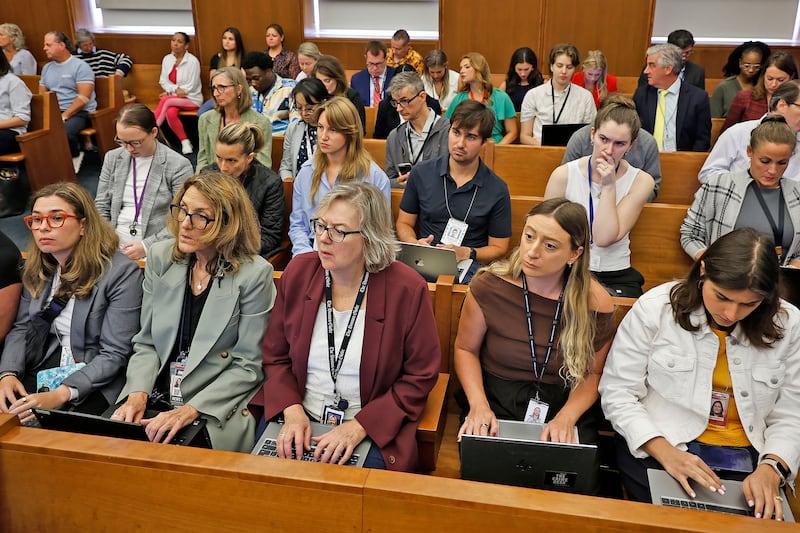
The group must provide a unanimous decision to the judge, which may be a tall order. Jurors gave the public a preview into the group’s division Tuesday when they sent a note to Judge William Sullivan that said they were unable to reach a unanimous decision after several hours of discussion. Sullivan told them to keep trying.
Under Massachusetts law, the judge is only allowed to ask the jury to keep deliberating twice, unless the jury consents to further deliberations.
If the jury cannot reach a verdict and a mistrial is declared, the prosecutors would be forced to decide whether to restart the jury selection process and try Clancy again in front of a new group of jurors, or offer Clancy a plea deal.
The current trial has been going on for more than 5 weeks and has included more than 80 witnesses and 300 exhibits. Restarting the trial would require significant work and expense from both sides. Massachusetts law states the judge should not mention the “possible expense or inconvenience of a second trial” to the jury.
Woman arrested outside courthouse for alleged juror intimidation
When jurors returned to the courthouse in Plymouth, Massachusetts this morning, they first listened to the judge issue a stern warning to any who attempted to intimidate the jurors.
What inspired the judge’s lecture? Dawn Light, a Massachusetts woman, was arrested Tuesday for allegedly filming the jury.
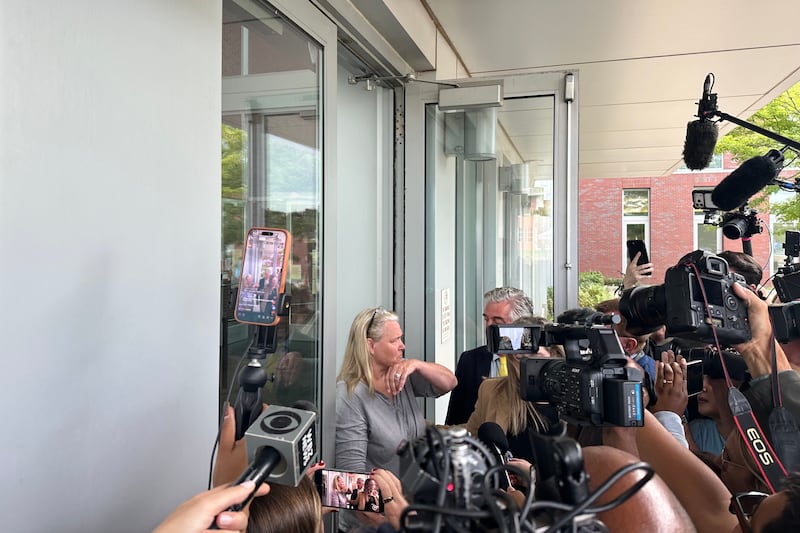
According to the prosecution, Light pulled her blue Toyota into a “restricted area” and both filmed and photographed the jurors leaving court Tuesday afternoon from her car.
When police approached Light, she said she was not filming jurors but was instead “waiting to see if Lindsay Clancy would come out of the building,” the prosecution said. The cops looked through Light’s phone and found a video of jurors in her deleted folder.
Dawn was arrested and arraigned Wednesday morning at the same courthouse in Plymouth.
Prosecutor Nicole Piacenti said Light’s actions risked “the sanctity of the judicial system.”
Jennifer White, Light’s defense lawyer, said the situation was “a complete misunderstanding.”
Light was released without having to post a bail, but was ordered by Judge Shelby M. Smith to stay away from the courthouse, except for future hearings in Light’s case, the New York Post reported.
When asked by reporters why she filmed outside the courthouse, Light said it was “To see Lindsay. And I did see her. She was getting picked up by the van.”
Background on the Lindsay Clancy trial
Clancy, a former labor and delivery nurse, struggled with severe postpartum depression after the birth of her third child in 2022, according to testimony by her friends, family and former husband.
To treat her mental illness, she received care from medical professionals who prescribed her medications, which she argues worsened her condition, making her “disoriented, forgetful, confused, and disconnected from her own body,” according to court documents.
Clancy’s healthcare providers testified that they never saw her display warning signs related to psychosis or mania, and that Clancy never admitted to having thoughts of causing harm to others.
In January of 2023, Clancy’s then-husband Patrick left to run errands. When he returned home, he found Lindsay in the front yard, paralyzed after attempting suicide by jumping from the second floor window. Their three children were in the basement, strangled by exercise bands.
Lindsay said she heard a voice telling her to kill the children so that she could kill herself without leaving them behind.
Phillip Resnick, a forensic psychiatrist and expert in filicide, said Clancy was “clearly psychotic” on the day of the killing and “believed that she was doing what was right for her children.”
“It was almost like she was a puppet and someone else was pulling the strings,” Resnick said.
Witnesses for the prosecution argue Clancy “retained an awareness of the illegality of killing others, including her children.”
“Her moral awareness of this killing was influenced by her strong desire to die and, if she was dead, not to leave her children behind,” said Kirk Heilbrun, who is reported to have performed psychiatric tests on Clancy in April.
Forensic psychiatrist Avram Mack said even if Clancy did have psychosis, there is “no reason that psychosis in and of itself inhibits a person’s ability to know right from wrong.”
Clancy’s trial has become a public flashpoint for a debate about postpartum mental health care, with hundreds of women gathering outside the courtroom in support of Clancy.
Shanan Buckingham, Plymouth County prosecutor, encouraged jurors not to make this case “a public debate about women’s mental health and how the medical system treats women.”
“This was not a woman in the throes of psychosis,” Buckingham said. “This case is about this defendant, Lindsay Clancy.”
NOTE: If you or someone you know is struggling with thoughts of self-harm, the 988 Suicide and Crisis Line is always available. You can text or call 988 any time or chat at 988lifeline.org. In Utah, you can also reach out to SafeUT, 833-372-3388, or download the SafeUT app.