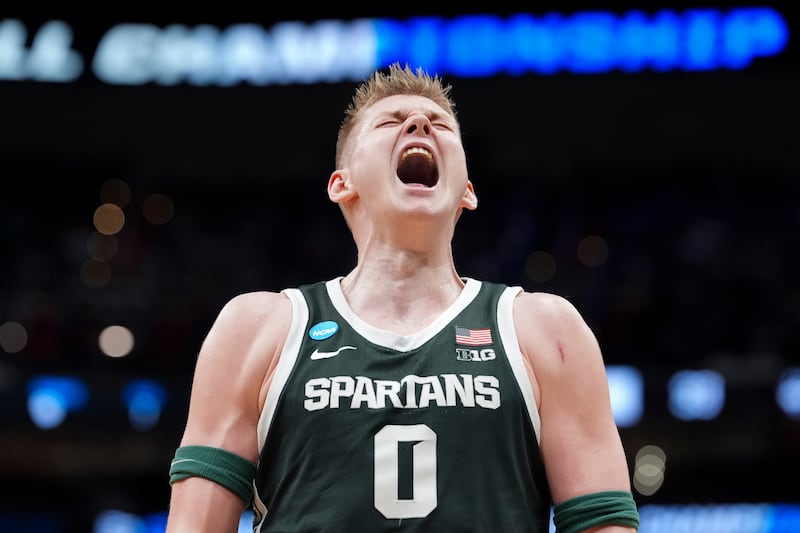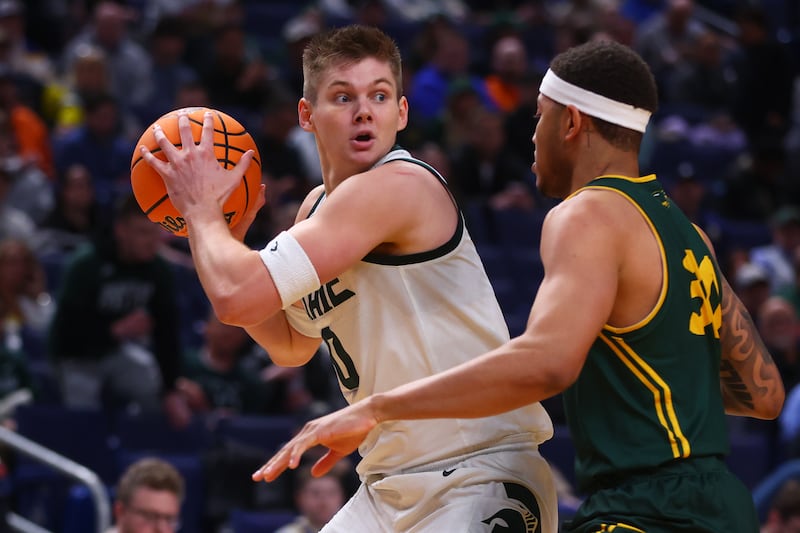

When former Michigan State big man Jaxon Kohler committed to BYU this past Thursday, Cougar fans rejoiced. Kevin Young’s lengthy, well-publicized search for a starting center had seemingly — and finally — paid off.
But for some, the excitement quickly became agony.
Less than 24 hours after Kohler’s commitment, the NCAA secured a temporary win in its effort to prevent recently-graduated seniors from receiving a fifth year of college eligibility, as the 10th Circuit Court of Appeals granted the NCAA a stay regarding a Colorado judge’s previous decision for Wisne v. NCAA in July.
This development led to a number of fans believing BYU’s addition of Kohler was in jeopardy, or worse, completely off the table. In reality, it doesn’t currently affect Kohler at all.
As the situation stands, Kohler is eligible to play for the Cougars in the coming 2026-27 campaign.
This is because he was part of a separate, non-federal injunction at the state level in California that granted him a temporary restraining order, subsequent fifth season of eligibility and window for entering the transfer portal, thus allowing him to land at BYU.
In Wisne v. NCAA, the 10th circuit paused Judge Charlotte Sweeney’s granting of blanket protection — and eligibility — at the federal level to all college athletes who began their careers in the 2022-23 season and had since exhausted their four years of eligibility.
A more permanent decision is yet to come, but for the time being, those wishing to utilize Sweeney’s ruling for additional eligibility will have to wait — and may be out of luck.
But the potential loss of federal protection is irrelevant to Kohler, as he was cleared separately in California. The appeals court could only impact Wisne v. NCAA and does not have any bearing on any of the other state lawsuits filed around the country, including Kohler’s California injunction.
Former BYU and Virginia point guard Dallin Hall, who recently announced his fifth-year commitment to Utah State, is similarly protected by a North Carolina injunction.
The only way Kohler could lose his newfound eligibility is if his injunction — which includes more than 70 other athletes as well — is stayed or reversed on appeal in California. However, while certainly possible, this is believed to be “unlikely,” according to Jonathan Hafen, partner at Parr Brown Gee & Loveless in Salt Lake City.
“California, traditionally, is a legal jurisdiction that is seen as favoring the rights of individuals over institutions,” Hafen told the Deseret News.
The lawsuits and rulings for additional eligibility have come as the NCAA adopted a new age-based eligibility model that gives athletes five years to play five seasons, with recently-graduated seniors now looking to be included in the new model to prolong their playing careers and financial earning opportunities.
The NCAA has said it will continue to fight against and appeal the state lawsuits in order to prevent fifth-year seniors from returning to college. There will surely be more updates to come. Eligibility matters rarely get resolved quickly or without drama.
But as of Monday, Jaxon Kohler is eligible to play for BYU, which should continue to be the case moving forward. Barring what would be a very surprising turn of events, he will be wearing royal blue and white in Provo this fall.