

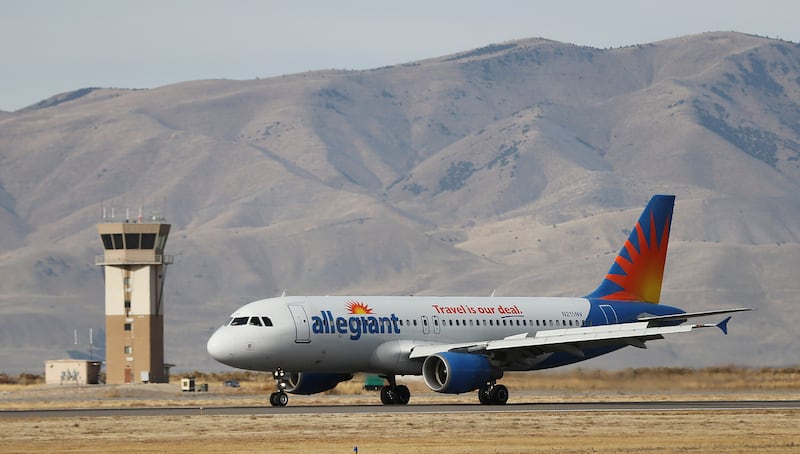

The Association of Value Airlines is requesting $2.5 billion from the Trump administration to offset surging fuel costs due to the war in Iran, which the group says has significantly affected low-cost carriers, The Wall Street Journal reported.
The trade group, which represents Allegiant Air, Avelo Airlines, Frontier Airlines and Sun Country Airlines, estimated that jet fuel prices will average more than $4 a gallon for the remainder of the year, according to The Wall Street Journal.
Last week, jet fuel prices in North America hit an average of $4.10, an 88% increase from the same period last year, according to The New York Times.
The group said the requested $2.5 billion “liquidity pool” was a necessary measure to stabilize operations and maintain affordable airfare for consumers.
“Since February, jet fuel prices have increased by nearly 100% and are placing significant financial pressure on value airlines,” the group said in a statement.
For airlines, fuel expenses typically account for 30% of operating costs. According to UPI, even a sustained $1 increase in the price of a barrel of oil can increase industry costs by millions of dollars.
In addition to the fuel subsidy, the group is lobbying Congress to temporarily waive a 7.5% excise tax and a $5.30 per-segment fee required for each passenger, according to The Wall Street Journal.
White House response
Several of the chief executives from low-cost airlines met in Washington, D.C., with Transportation Secretary Sean Duffy and Federal Aviation Administration chief Bryan Bedford last week, according to The Wall Street Journal.
White House spokesperson Kush Desai confirmed the administration is aware of the outreach to the Department of Transportation. “The administration continues to monitor the health of the U.S. aviation industry for passengers and airline employees,” Desai said in a statement to Forbes.
However, Desai continued that without an official announcement, “any discussion about federal policymaking should be regarded as baseless speculation.”
Duffy said he is “concerned about the health of the sector” and was interested in the proposal, a person with knowledge of the meeting told Forbes, adding “we anticipate that conversations will continue” since the current cost landscape is not expected to get better “at least in the near term.”
The request comes as larger carriers, such as United and American Airlines, have lowered their full-year outlooks. Unlike budget carriers, larger airlines have reported they have successfully passed increased costs to consumers through higher fares without a significant drop in demand.
Would government intervention help?
The Association of Value Airlines’ $2.5 billion request is separate from a potential $500 million loan being negotiated by Spirit Airlines, which is currently in its second bankruptcy in two years. Under the proposed deal, the government could receive warrants for an ownership stake of up to 90% in the carrier, according to The New York Times.
While President Donald Trump addressed the Spirit Airlines loan Thursday, stating he prefers “having a lot of airlines, so it’s competitive,” no official decision has been reached.
Several travel experts and politicians have voiced concern for the government intervening in any capacity.
“It’s not the government’s fault that budget airlines aren’t able to necessarily run their businesses as well as other carriers,” Henry Harteveldt, president of Atmosphere Research Group, told Forbes. “Why should American taxpayers bail them out? That’s free market enterprise.”
“We’re looking at probably a six month or longer timeline for the supplies of jet fuel to get back to normal, or even close to normal, levels,” Harteveldt said. “Will the price of that jet fuel come back down to where it was before the fighting began? Will it be considerably more expensive, or could it become cheaper? We don’t know.”
In response to the Spirit Airlines loan discussions, former Vice President Mike Pence submitted a policy paper opposing the rescue plan. Pence cited the $39 trillion national debt and the “too big to fail” precedent set during the 2008 financial crisis.
Texas Sen. Ted Cruz seemingly agreed, voicing his own concerns for the government bailout of Spirit Airlines on X, writing, “This is an absolutely TERRIBLE idea. The TARP corporate bailouts were a huge mistake.”
Travel experts have said the possibility of receiving a large infusion of money to these carriers could be good for consumers, as it keeps low-cost competitors in the market, but could be “not a great deal for taxpayers,” according to Clint Henderson, a travel expert with The Points Guy.
U.S. airlines previously received $54 billion in grants and loans from the government in 2020 and 2021 to avoid mass layoffs amid the COVID-19 pandemic.