


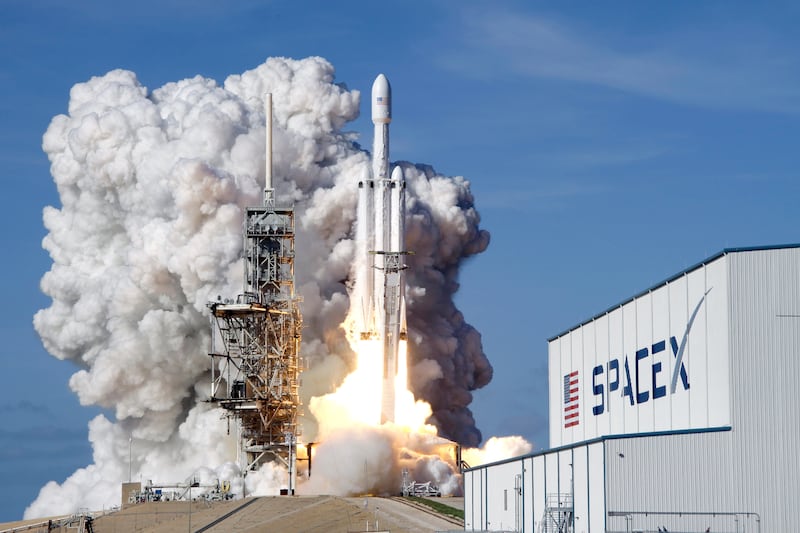
On Feb. 6, 2018, the ground shook in Cape Canaveral, Florida.
More than five million pounds of thrust lifted SpaceX’s Falcon Heavy off the ground. It was the world’s most powerful rocket of its time, and it held special cargo: Elon Musk’s personal Tesla Roadster.
Millions watched as the rocket’s fairing fell away against the black vacuum of space, exposing the car’s mannequin passenger, “Starman,” to the camera. The livestream cut from Starman gliding gently away from Earth to SpaceX’s headquarters, where engineers blasted David Bowie’s “Life on Mars?” and screamed in joy.
Just several states north of the launch, Halen Mattison was sitting in class at North Carolina State University, when his professor paused class to watch SpaceX’s livestream with his students.
“And that was the day I applied to SpaceX,” Mattison told me.
The first thing that hit him was the “cool factor.” The second was the enormity of America’s space industry making progress again. “It was like, wait a minute, there are these guys in California, and they just launched a car into space for fun,” Mattison said.
At the time of the launch, SpaceX had only been around for 16 years. It started in El Segundo, California, across the street from a tire shop and in the shadow of America’s aerospace pioneers.
Now in 2026, the company has a public valuation just north of $1.7 trillion. It launches about three rockets a week, sends thousands of satellites into orbit and blasts astronauts up to the International Space Station every six months.
They’ve fundamentally changed the game of space.
“Elon has been inspirational, clearly, to an entire generation of engineers, in the same way the space program was inspirational to the older generation of engineers.”
— Trip Allen, executive chairman of Terranova
But Musk and his companies have done more than that. They are reshaping the way America’s hard-tech industry runs, what drives it and who drives it.
Through the 2020s, young engineers have returned to warehouses near SpaceX’s original headquarters to begin their own hard-tech companies. Some are former SpaceX employees, some are Musk admirers, and others are simply interested in solving real problems in the physical world.
From conversations I’ve had with founders of these companies, there are throughlines to Musk, his vision, his drive and his way of business. Some are adopting Musk’s ethos, his hiring processes and his philosophical beliefs about physics, innovation and regulations.
As the world largely pays attention to Musk for his political maneuvers, there’s a larger story worth paying attention to about the tech renaissance he has spurred.
During a visit to Idaho National Laboratory last week, NASA Administrator Jared Isaacman told me he believes SpaceX has been a major source of inspiration for young engineers.
“I would almost guarantee after the simultaneous Falcon Heavy booster landings, the number of people who have pursued aerospace-related degrees has gone up several orders of magnitude, and now they’re making their way into industry,” Isaacman said.
He continued, “And those who have been in industry and have already achieved great success are moving on and starting their own companies.”
These companies are already contributing to America’s third space race, he said, adding, “We’re going to leverage that commercial industry. We’re very advantaged right now, and I’m sure SpaceX has played a large part.”
Ownership and enthusiasm required
After being inspired by Starman and Musk, Mattison applied for an internship with SpaceX.
“I remember staying up all night making a presentation for the interview,” Mattison said. “They want to know you’re very technically skilled and capable of making strong engineering decisions.”
The SpaceX vetting process is revered as one of the most thorough in the industry. They look for employees who are not only technically skilled and intelligent but can be trusted to own what they do.
Benji Reed, the director of SpaceX’s human spaceflight program, joined Mattison on the call the next day. They talked about the research Mattison was doing on high-altitude balloons.
When SpaceX’s “Congratulations!” email arrived in his inbox, Mattison had never been to California before.
“I didn’t know anybody, so through a friend of a friend, I paid a guy to just crash in an extra room in his place,” he said. “I worked at SpaceX for a few months and then was like, ‘This is super cool.’”
He discovered that working at SpaceX required him to be flexible and enthusiastic. “I’ve done everything from meeting with the leadership at NASA to having to crawl inside of a Starship prototype and personally chop parts out of it. That’s part of the fun of it. There is so much variety,” he said.
Through various internships and full-time positions, Mattison successfully interviewed with SpaceX three separate times. In each iteration, interviewers asked him very applied, technical questions: things like how do you calculate bolt stresses? How would you weigh something in creative ways? How would you calculate specific pressure differentials?
He carried over the application process to his own business, General Galactic, which he founded in 2023.
“I basically copied the interview process,” Mattison told me. He has two foundational requirements for the people who apply to his company: they should know how to operate in space, and they should own the work they do.
The self-taught man
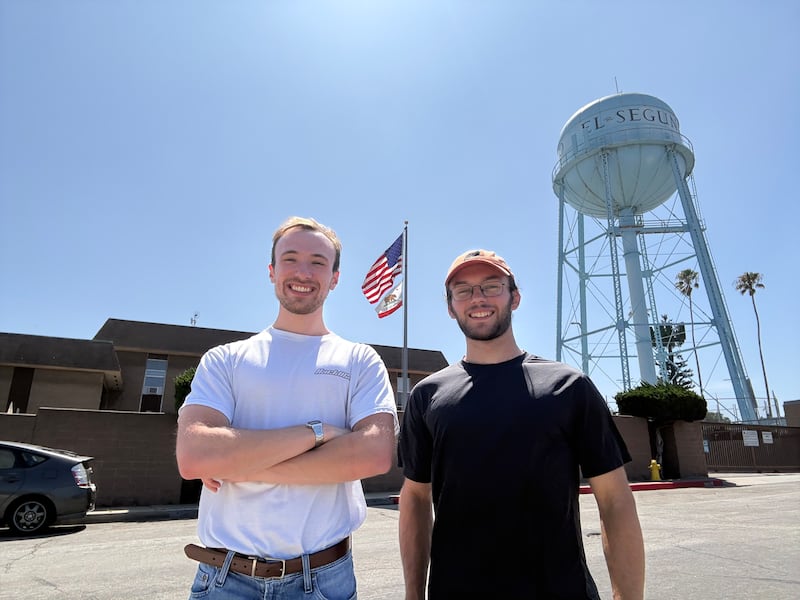
Ethan Wicko, another SpaceX employee turned founder, told me he’s taken inspiration from Musk’s ability to learn.
“He has a physics background, but a lot of what he’s learned is self-taught,” Wicko said. “That has actually inspired me. This person showed that it’s possible to learn anything. Most of what I know now and do every day was self-taught.”
When Musk decided to start a rocket company, he went to his local library in Palo Alto, California. He started reading old engine manuals and books about rocket engineering.
He borrowed a series of textbooks about rocket propulsion, aerothermodynamics and space launch systems from the Utah-native mechanical engineer Jim Cantrell. Cantrell never got them back.
“He would quote passages verbatim from these books. He became very conversant in the material,” Cantrell said of Musk. He “knows everything about what he’s building.”
“It’s the inspiration of a tiny little piece of knowledge about something that enables you to innovate.”
— Trip Allen, executive chairman at Terranova
It’s a quality Wicko is working to emulate.
After graduating in mechanical engineering from the University of Connecticut, Wicko co-founded Transcend Mechanics with Alex McLeod, a friend from college. They develop robot grippers that do anything from laundry to industrial tasks.
When asked what his go-to learning method is, Wicko paralleled Musk. “I actually find the most success with textbooks and anthologies that I can go back to very easily. So I buy physical textbooks. They’re super cheap these days,” he said.
Wicko said his bookshelf in Los Angeles is stacked with textbooks and printed research papers.
The affinity to being self-taught is a quality other hard-tech founders have as well. Isaiah Taylor, the founder of Valar Atomics, spent his childhood reading textbooks about fission and nuclear energy. He never went to college; his first small modular reactor now successfully splits atoms in Orangeville, Utah.
Trip Allen, a co-founder of the San Rafael-based Terranova, told me the industrialist drive to be self-taught is deeply American.
“It’s the inspiration of a tiny little piece of knowledge about something that enables you to innovate,” he said. Allen then referenced the business magnate Henry Ford.
Ford never attended high school or college, but through pioneering the auto industry, he inadvertently taught himself a lot about mechanical engineering, chemical engineering, rubber farming and business.
“Elon is the same,” Allen said. “When people say there aren’t enough chips to do full self-driving or Optimus robots, he says, ‘I’m going to build a giant chip manufacturing system.’”
The only regulations respected are the laws of physics
Musk does not rely on industry standards when designing his products; he relies on physics. This approach, known as “first principles,” has worked its way into nearly every new hard-tech startup.
It has been distilled into a famous three-word slogan: Question every requirement.
Building rockets is expensive, and regulations make them more expensive. So to make better, cheaper rockets, Musk asked his employees to cut through red tape.
“This was part of my job for a while,” Mattison told me. “It’s a very real thing.”
When NASA sent SpaceX build requirements, Mattison would look through those pertinent to his projects and determine whether they made sense.
“At a conventional aerospace contractor, you just don’t really ask questions. You just design to requirement, and many times, it doesn’t make sense, and the product suffers,” he said.
“A lot of times, people believe that all the solutions are already out there, but often we find that existing solutions don’t match against first principles.”
— Halen Mattison, co-founder of General Galactic
This is not the case at SpaceX. Multiple times a week, Mattison would find whoever made the requirement, get them on the phone and say, “Hi, how did you guys determine this requirement?”
“And in a lot of cases, they’d respond, ‘Yeah, actually, we use these kind of outdated estimates,’ or ‘This carried over from something else — what else can we do here?’” Mattison explained. “And we would actually go back and renegotiate the contract to update those requirements on something that we and NASA had actually hammered out together.”
At each of Musk’s companies, he has instilled a culture of questioning how standard industries operate at default mode.
“A lot of times people believe that all the solutions are already out there, but often we find that existing solutions don’t match against first principles,” Mattison said.
Thinking deeply about first principles while working at SpaceX led Mattison to found General Galactic. He was puzzled by one question: “If we’re going to send Starships to Mars, we need to be able to refuel them to come home.”
He began asking questions like, “How do you find energy in space? How do you use it? How does energy impact what you can actually do and where you can go?”
Mattison and his employees still work directly with requirements-writers to land on the best, physics-based product. “We’ve found that SpaceX’s mentality has been growing and the customer organizations (NASA, Space Force, aerospace primes) are much more willing to ‘question the requirements’ than in years past,” he said.
His company’s goal is to build a gas station on Mars.
A focus on physics during Wicko’s time at SpaceX similarly pushed him to found his own company. Working on Starship’s igniter, he realized that most human inventions are “pretty unimpressive compared to what nature can make.”
He realized that if you build “really, really advanced designs,” based on the first principles of physics, “you can reduce lead times and costs in the manufacturing world.”
A hard-willed, stubborn drive to win
Trip Allen’s home of San Rafael, California, is sinking into the ocean.
“It was built on loose mud on landfill, and it’s been sinking for 70 years,” he told me. “And now it’s sunk so far that parts are six feet below high tide.”
The problem affects his family personally, so he started wondering what it would take to solve it. Allen reasoned, “Well, you need to elevate it, and that can be done. That’s not impossible.”
In the past, engineers tried to raise ground levels by injecting material beneath the surface, but it ended up being too costly to do at scale. Having worked extensively in biology, chemistry and agriculture through his career, Allen realized that using wood instead of cement could allow the process to scale.
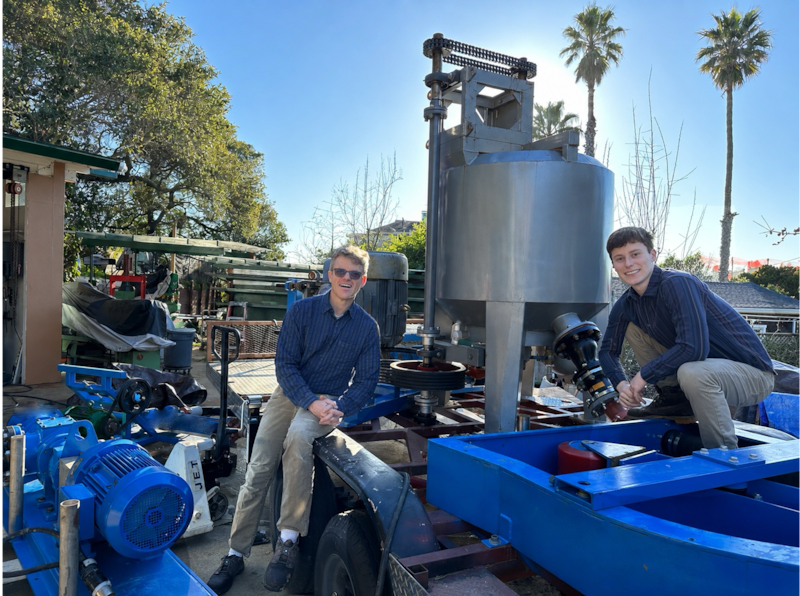
So he and his son Laurence began building a machine in their garage.
Their machine is a large car-sized robot with a big pump. It connects to a shipping container in the parking lot that processes their biomass. If you squint at it, version one of their terraformer (a concrete pump they hacked) fairly resembles Maurice’s automatic wood-chopping machine from “Beauty and the Beast.”
Laurence told me their system can lift an acre of land by about a foot a day, which is enough to do big projects.
On July 28, the Allens drilled their first wells on subsided land that borders the Bay Area, a river, Highway 37 and Port Sonoma, California.
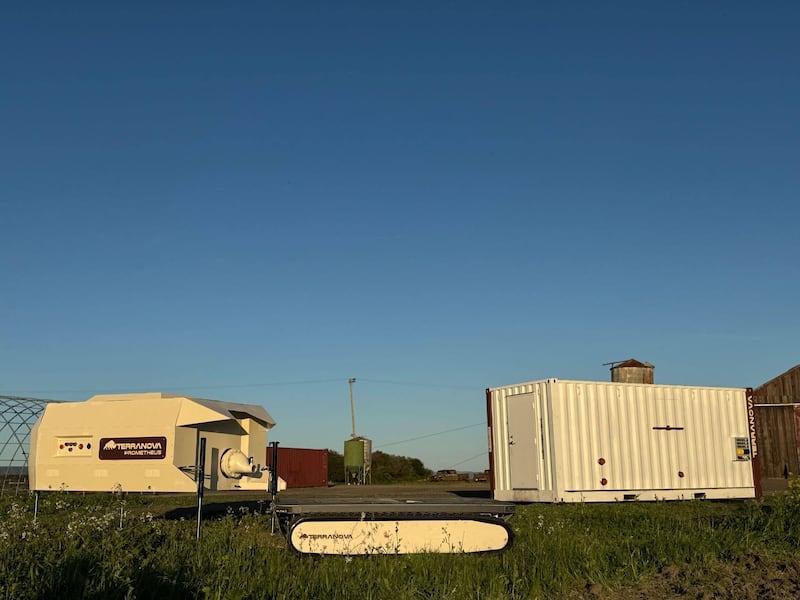
Their company, Terranova, fits into Musk’s mindset that human ingenuity can solve the world’s most difficult problems, but progress is not inevitable.
Allen believes the hard-tech industry’s shift toward being technologically optimistic is really a return to the drive American engineers had during World War II and the first space race.
Musk catalyzed the reemergence of this attitude, Allen said.
“Elon said, ‘I’ll fire you if you don’t rock the boat. If you’re not making mistakes, you’re not trying hard enough.’ That’s the mindset that we had back when Kennedy put a man on the moon, and here it is again,” Allen said.
He continued, “If our cities are too low, well, let’s lift them up. What does it take to lift a city? What does it take to make it rain? What does it take to get the U.S. back into space? What does it take to get internet on the North Pole and everywhere else on planet earth?”
“Elon has been inspirational, clearly, to an entire generation of engineers, in the same way the space program was inspirational to the older generation of engineers,” Allen said. “When the space program came along, you had John F. Kennedy saying, ‘We will land a man on the moon by the end of this decade.’ He said that, and the U.S. accomplished it.”
That accomplishment inspired NASA and a host of other fields, he said.
“It’s the inspiration, the innovation and the drive that makes Americans remember that we lead, we innovate, and we achieve,” Allen said. “I think this generation of engineers is coming out. They’re inspired. They want to get involved. They want to build things. They want to make things. They see that amazing, miraculous things can happen.”