


Summer sports could be added to Utah’s 2034 Winter Games under a new process backed by leaders of the International Olympic Committee.
“We discussed it for a long time, the question about crossover from summer sport to winter,” Karl Stoss, the Austrian IOC member heading up a look at how changes are made to the Olympic program, told the Deseret News during a virtual news conference Wednesday.
Stoss, who also led the IOC commission that positively assessed Utah’s Olympic bid following a 2024 visit to the state, said there was no interest in that happening at the next Winter Games, in 2030 in the French Alps.
“We decided, very clear for the upcoming Winter Olympics that we would like to keep the identity of winter sport, of snow and ice. These are the Winter Olympic Games. No crossover at the moment,” he said.
Wednesday, a winter sport that made its Olympic debut at this year’s Winter Games in Milan Cortina, Italy, ski mountaineering, was proposed as an addition to the French Alps Games. The largely European sport known as skimo sends skiers up steep slopes under their own power.
The IOC had announced in May that no summer sports would be added to the 2030 Winter Games, ending hopes that cross-country running and cyclocross, a combination of road cycling, mountain biking and steeplechase, would be included.
But Stoss said that doesn’t mean sports that don’t require snow and ice couldn’t be part of other Winter Games, including in 2034, under the new process for determining which sports disciplines are added to or removed from an Olympics.
“It could be in the future, maybe a (summer) discipline would come to the program,” he said. For the 2034 Winter Games and beyond, Stoss said if requests for summer sports “come to the table, we will discuss it and we will find a solution. We will decide, absolutely.”

What Utah’s Olympic organizers say about adding new sports
Any talk about new sports at Utah’s second Olympics is still at least a year away, said Fraser Bullock, president and executive chair of the Organizing Committee for the 2034 Olympic and Paralympic Winter Games.
“As we look at additional sports or sports disciplines, we view summer and winter differently. Because winter, there’s a natural evolution of things that are added and things that are dropped over time,” Bullock said. “Those decisions are easier.”

The size of the Winter Games has grown some 40% since Utah hosted in 2002, thanks to new events like big air skiing and snowboarding. Further increasing the number of events would add to what’s already a $4 billion price tag.
Decisions about summer sports would “be far more significant,” Bullock said. “We have a fantastic plan today that would give us a very robust Winter Games to be enjoyed by Utah and the world. Any additions to that would have to be very carefully considered.”
So far, he said Utah organizers have not been formally pitched to pick up any new sports.
Regula Meier, president of the International Ski Mountaineering Federation in Switzerland, told the Deseret News Wednesday her hope for 2034 is for skimo “to be included in the program, too.”
‘Not everyone will be happy’ about Olympic sports program decisions
The IOC’s new process would be in effect for the 2032 Summer Games in Brisbane, Australia, if approved by the full membership at a meeting later this month. Brisbane’s Games are expected to have fewer events — and fewer athletes — than the 2028 Summer Games in Los Angeles.
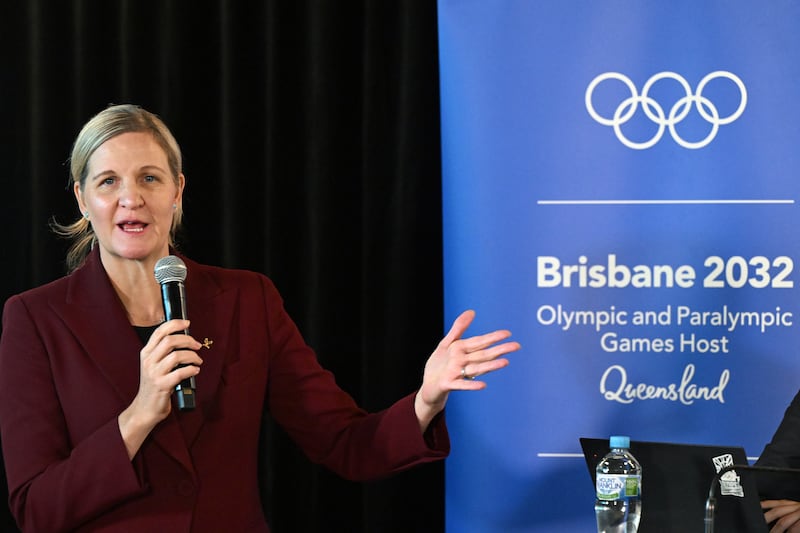
The process is described by the IOC as providing “a more objective and transparent approach to program decisions” by evaluating both current and potential Olympic disciplines against three priorities:
- Maintaining an appropriate Games size
- Ensuring global relevance
- Integrating new opportunities
“We know at the end of the day not everyone will be happy,” IOC President Kirsty Coventry said. But she said the international federations over the sports that may be affected “understand the time is now because in LA we have 36 sports and we won’t have 36 sports in Brisbane.”
There are also more specific deadlines for decisions to be made. The process arose as part of the sweeping review of IOC policies put in place by Coventry shortly after she took office nearly a year ago as the first female and first African leader of the Switzerland-based organization.
Some of the “Fit for the Future” working groups she assembled have already had an impact. In March, the IOC changed its policy on transgender athlete participation, saying only “biological females” can compete in the Olympics and instituting a testing requirement.
Other policies are set to be discussed at the IOC session scheduled for June 24-25, including adding another stage to the new bidding process and making other changes to involve more IOC members and offer more transparency to would-be Games hosts.