



Paying athletes that participate in the Olympics $10,000. Setting limits on the number of competitions added at Summer and Winter Games. Altering the bid process. Looking for new ways to showcase sponsors. Declaring political neutrality.
These wide-ranging changes just approved by the International Olympic Committee come as Utah gets ready to host the 2034 Winter Games and will likely make a difference in the state’s next Olympics and Paralympics for athletes with disabilities.
“I look forward to understanding more of the details and charging forward,” Fraser Bullock, president and executive chair of the Organizing Committee for the 2034 Olympic and Paralympic Winter Games, said.
Although Bullock said he’s “very excited, very pleased with really everything that I heard,” from the special session of the IOC held recently in Switzerland, there is still more to be determined about what’s described as a new “strategic direction.”

The framework that’s now in place is the result of the “Fit for the Future” initiative launched by IOC President Kirsty Coventry shortly after she took office a year ago as the organization’s first woman and first African leader.
“This is not the end, right. This is the beginning of this next chapter,” Coventry, an Olympic champion swimmer from Zimbabwe, told reporters about the work ahead. “Now it’s going to be about implementation.”
So changes meant to control the ever-expanding size of the Olympics, including limiting organizers from proposing more than four new disciplines for a Summer Games and two for a Winter Games, are being used to trim the program for the 2032 Summer Games in Brisbane, Australia.
Utah will also be subject to the IOC’s more rigorous process that also allows for eliminating disciplines based on global appeal and other criteria.
“There has to be limits on growth,” Bullock said, citing the impact on costs of increasing the number of athletes and venues to accommodate new events. “It’s not driven by emotions. It’s driven by data.”
Ski mountaineering or skimo, however, does appear more likely for 2034 after making its Olympic debut earlier this year at Italy’s 2026 Winter Games and being approved as a sport for the next Winter Games, being held in the French Alps in 2030.

How climate change could affect the Olympics
The IOC still has plenty of work left in other areas, especially climate change. That includes deciding whether to move what’s seen as summer sports to future Winter Games, such as judo or other indoor competitions, or even add events like cross-country running.
In May, IOC leaders ruled out adding any “crossover” sports to France’s 2030 Winter Games. But Coventry made clear then that going beyond “snow and ice” sports is definitely a possibility for 2034 and beyond.
After the IOC session, she said with summertime temperatures rising so rapidly that some world championships have had to be rescheduled, the issue has become bigger than the Winter Games.
“I think it’s a conversation we have to have holistically, not just for the Winter Games, not just for the summer, but really for both,” Coventry said, adding, “We do have to acknowledge that it is getting warmer.”
That could mean adjusting sports calendars, including the traditional mid-season dates for the Olympics and Paralympics, to accommodate extreme heat in the summer and less snowfall in the winter as the climate changes.
Plus, with fewer and fewer potential Winter Games locations seen as climate reliable in the coming decades, there’s also been talk of rotating the event held every four years among a group of permanent hosts, something Utah leaders like Gov. Spencer Cox want to see happen.
Rotating the Winter Games didn’t come up as part of the initial “Fit for the Future” report, something that didn’t surprise Bullock. With Switzerland in exclusive talks to host in 2038, the IOC doesn’t have to tackle that right away, he said.
“There’s lots of time to look at that, look at rotation, as we observe the impact of climate change over the next six or seven years,” Bullock said, noting the wait shouldn’t affect Utah’s hopes of hosting future Winter Games.
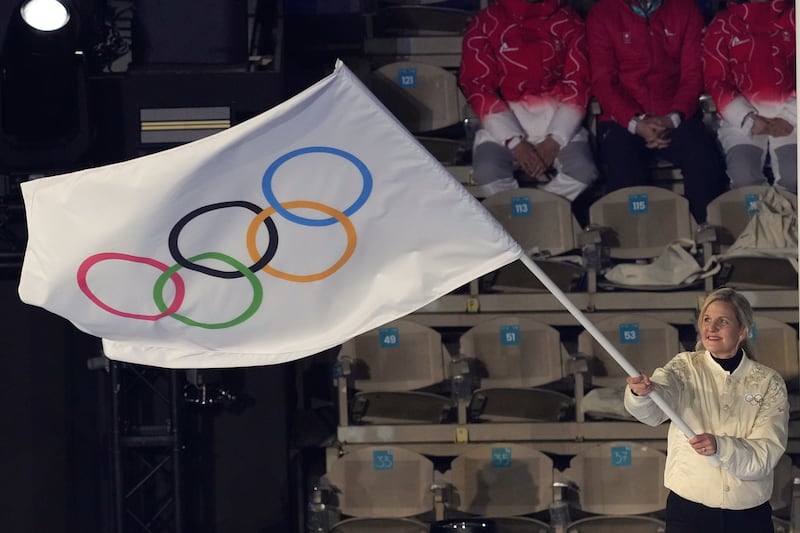
“We have a fantastic model for hosting Winter Games,” he said. “We’re climate reliable and so we will be a good candidate long into the future as other regions become less able to host given climate change.”
Another bid, of course, is years away. Now, the complicated bidding process that saw Utah first named a “preferred host” before being advanced months later to a final vote has an additional step as well as more input by IOC members.
Money for Olympians and more
It’s the new grant program for Olympians that’s getting the most attention. Every athlete at an Olympics is now eligible for a $10,000 grant to help cover the costs of getting ready to compete again or make a career transition.
Coventry had previously said she opposed paying Olympic athletes, a statement she later clarified to mean prize money. The decision to set up the $140 million grant fund is a first for the IOC and comes amid increasing opportunities for amateur athletes to earn money.
For Bullock, the new grants set to be distributed starting in 2027 are a good fit with the Utah organizing committee’s plans to be the first to offer housing, tickets and transportation for the families of athletes.
“We want to put athletes at the heart of the Games as well,” he said, calling the money being made available especially meaningful for members of Team USA “because in so many countries, the athletes are paid by their governments. That’s not true in the United States.”
Money is also important to Utah organizers, who plan to cover their $4 billion budget with funds from private sources like the sale of sponsorships, just as was done for the state’s 2002 Winter Games.
“The IOC is opening the door to some key elements that would enable us to be more successful in our sponsorship effort. To me that is very significant,” Bullock said, describing the IOC as focused on helping domestic and international sponsors maximize their investment.
One of the most complex issues facing the IOC, he said, is navigating ongoing conflicts, including the war launched in Iran in late February by the U.S. and Israel. The IOC, Bullock said, “can’t take sides. They just have to focus on sport.”
In a new statement on political neutrality, now part of the IOC’s governing Olympic Charter, the organization defines its role as “to apply neutrality at all times, free from governmental, cultural, societal or economic pressure.”
Coventry told reporters the change to the charter is intended to make it clear the IOC’s “remit is the Games and sport” by strengthening “that position of neutrality that we need in a very divided world that we sadly have today.”