


When it comes to college athletics revenue, no one beats the Big Ten and SEC.
Well, almost no one.
USA Today released information regarding the top universities in the country in athletic revenue for 2022 on Wednesday, and of the top 25 earners, 17 can be found in either the Big Ten or the SEC.
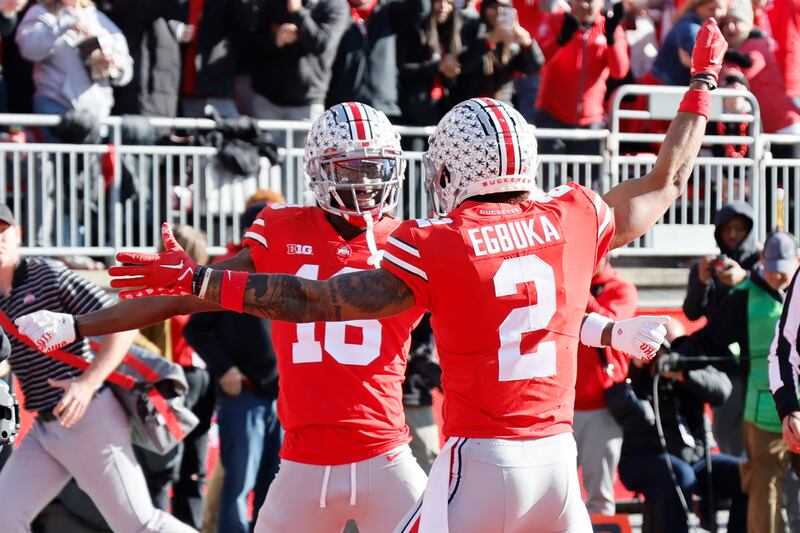
Ohio State was No. 1, pulling in $251 million, followed by Texas ($239 million), Alabama ($214 million), Michigan ($210 million) and Georgia ($203 million).
Of the top 10 schools, only Texas and Oklahoma weren’t Big Ten or SEC schools, and the Longhorns and Sooners will be in the SEC come 2024.
The Pac-12 is represented by only Oregon (No. 19 with $153 million) and Washington (No. 25 with $145 million).
The Big 12 had Texas and Oklahoma and that’s it. No other member of the conference, old or new, cracked the top 25.
As for the ACC, the final Power Five conference, Virginia pulled in the most, ranking No. 14 with $161.9 million, followed by Florida State at No. 15 with $161.1 million, Clemson at No. 17 with $158 million and Louisville at No. 23 with $146 million.
Private schools were not a part of the list, as they are under no obligation to disclose revenue.
Per Steve Berkowitz, the median value of school’s revenue by conference was as follows:
- SEC — $159.1 million.
- Big Ten: $150.1 million.
- ACC: $134.4 million.
- Pac-12: $117 million.
- Big 12: $110.7 million.
Berkowitz noted, however, that those numbers are flawed. For instance, the Pac-12’s public schools, “receive more revenue through allocations of student-fee money than do the other conferences. In 2022, there were 19 Power Five schools that received at least $10 million in allocated revenue; eight were in the Pac-12.”
Because of that, a more accurate ranking of median revenue generated by athletic departments is:
- SEC — $159 million.
- Big Ten — $147.1 million.
- ACC — $125.2 million.
- Big 12 — $106.9 million.
- Pac-12 — $96.9 million.
One interesting note: Mississippi State was the SEC’s lowest revenue generator with $110.7 million, which was at least $8.5 million ahead of every Pac-12 public school except Oregon and Washington.
What’s going on with the Pac-12?
Per Berkowitz, the Pac-12 more than any other conference is at a disadvantage due to stadium capacity and attendance.
Pac-12 teams cannot get as many fans in the stands as their Power Five counterparts, even if they filled their stadiums to capacity.
Said Arizona president Robert Robbins to USA Today: “You know, we don’t have a lot of stadiums that are 100,000 (capacity). And it seems like the Big Ten and SEC are all selling those things out — and that’s a lot of revenue. So I think we’re at a disadvantage, obviously.
For those numbers that you just quoted, that’s a big delta — and it obviously hurts us in terms of being able to attract coaches and pay salaries. We aren’t going to be as competitive (in those offers) as, say, the SEC or Big Ten.”
Robbins touted the Pac-12’s success winning national championships — the “Conference of Champions” — but Berkowitz noted that the conference hasn’t been nearly as dominant as late, even in Olympic sports.
To illustrate, he highlighted Texas winning the Director’s Cup last year, although Stanford retook that crown this year — and that is before USC and UCLA leave for the Big Ten.