

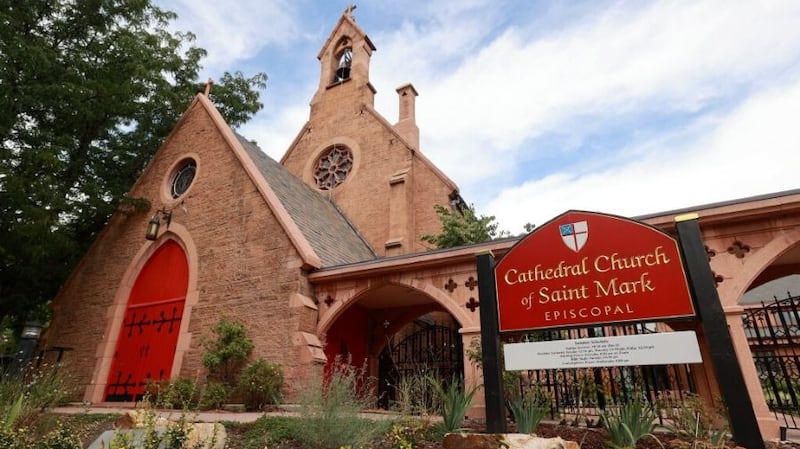
The first church bell to ring out across Salt Lake City was tolled in 1871. More than 150 years later, its successor still rings out above the Cathedral Church of St. Mark, welcoming all to come and worship.
The Episcopal congregation has been gathering in Salt Lake City since Bishop Daniel S. Tuttle arrived in 1867 as a missionary bishop to the territory of Montana.
“There was a small congregation of non-LDS folks that met at Independence Hall,” said Kurt Cook, historiographer for both the Cathedral Church of St. Mark and the Episcopal Diocese of Utah. “We became St. Mark’s Mission in 1867.”
In 1870, the men of the congregation voted to hire a builder to construct an Episcopal Church building, Cook said. They laid the cornerstone on July 30, 1870. The first service was held there just over a year later, filling the room to capacity, Cook said.
Building the Cathedral
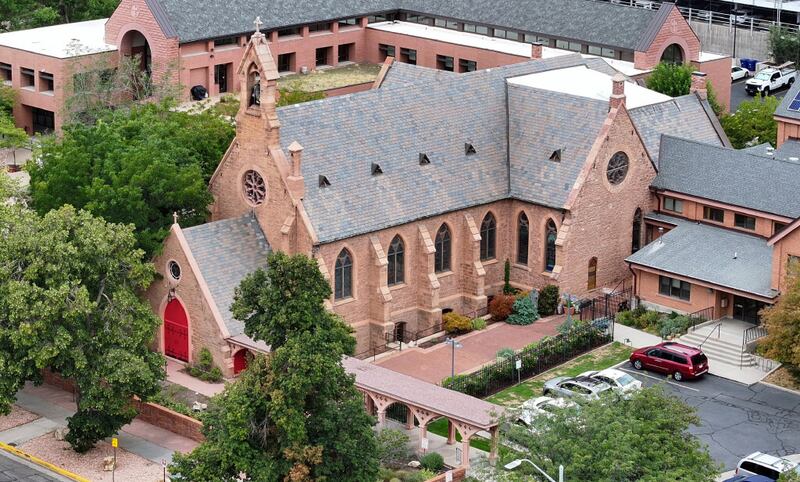
The materials used to build the cathedral have an interesting origin: According to Cook, members of The Church of Jesus Christ of Latter-day Saints originally cut the sandstone used to build the cathedral to build the Salt Lake Temple.
These members originally cut large sandstone blocks to use as the foundation of the Salt Lake Temple, but later changed their building material to granite after multiple veins of the harder stone were found in Little Cottonwood Canyon.
Cook said the Episcopal church bought up much of the already-cut stone to use in the walls and foundation of its cathedral. The sandstone has continued to support the building, though Cook said the material is monitored to ensure it maintains its stability.
“We’ve had a lot of good people care for the building for years, so it’s in pretty good shape,” he said.
In the Cathedral’s basement, he pointed out a section of glass embedded in the plaster wall, exposing the unadorned sandstone beneath. The sandstone had been impacted by underground springs in the area, leaving portions of it “continually damp.”
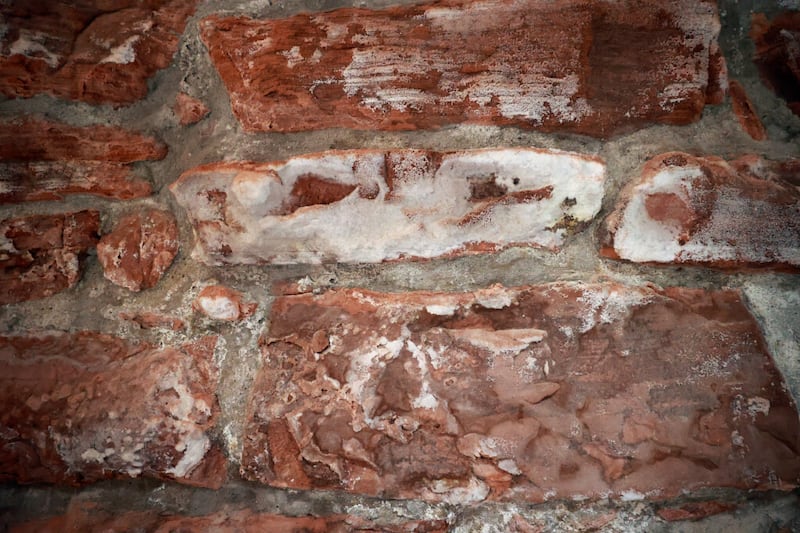
“You can see the sandstones flaking out,” he said, pointing out sections of white mineral “salts” that leached through the stone.
While the structure was sturdy enough to survive Utah’s 2020 earthquake with only superficial damage, he said repairing the leaching sandstone would likely be an “expensive fix” in years to come.
Expansions
The cathedral was originally built as a rectangle, with the main entrance and bell tower in the south and three stained glass windows set into the north wall.
In 1903, the west transept was added, with a small chapel behind it. Several years later, they added both the north and east transepts. The south, east and west ends of the building each had a circular rose window set high in the wall.
The building kept its new footprint even after a fire in 1935 damaged the northern end. Cook said the rose windows positioned in the west and east transepts blew out with the smoke and heat, allowing firefighters to quickly identify and fight the blaze.
After the fire, workers used old photographs to rebuild the burned and damaged cathedral as close to the original as possible. However, some sections of the building remain blackened as a historic reminder of the fire.
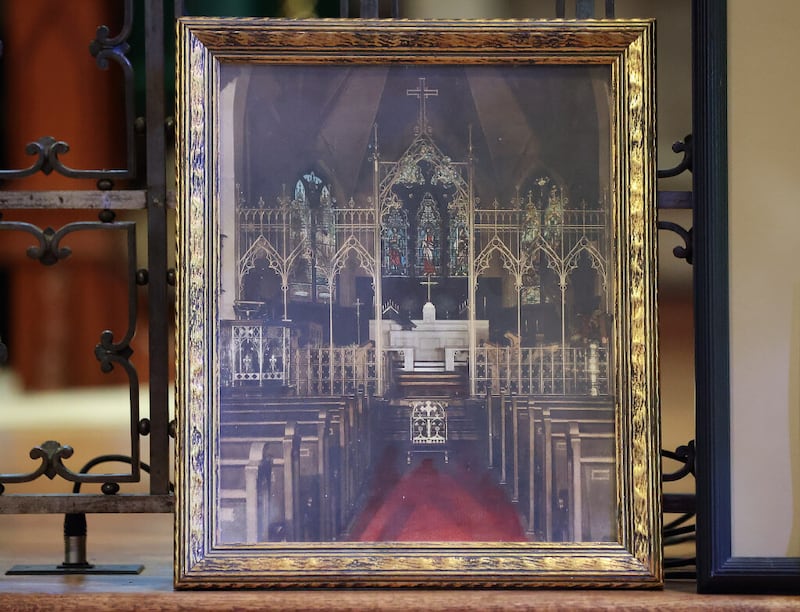
In 1971, a choir loft was installed in the southern end of the building, coupled with a new organ. The surviving rose window was moved from behind the organ and reinstalled in the western transept.
During a later roof renovation, Cook said the cathedral staff discovered the roof had never been secured to the building’s walls.
“We discovered that building codes in 1871 allowed you to set a roof on top of the walls, but not necessarily connect them,” Cook said. “So that was kind of a shock.”
The roof has since been attached, and a slate roof was installed in 1988.
Outside on the western side of the building is a small columbarium that holds the ashes of approximately 300 individuals. Additional space is still available for future burials, including those that are not members of the Episcopal church.
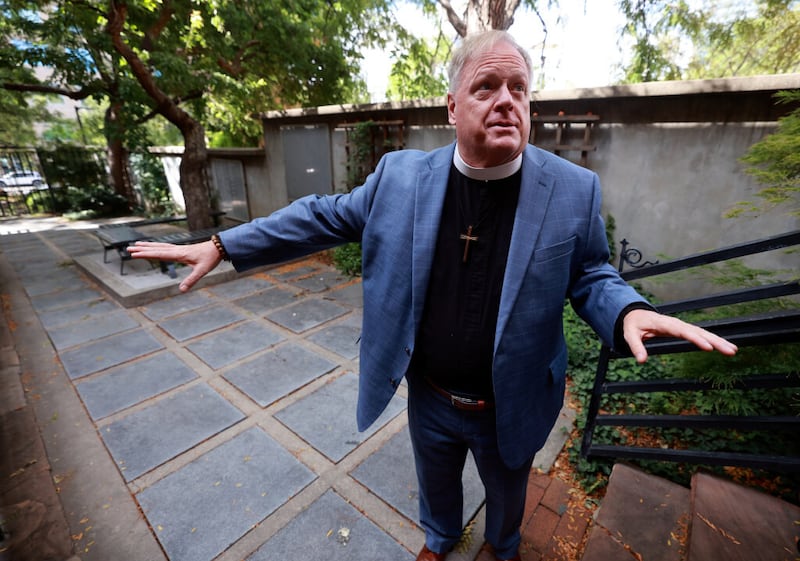
Welcoming to all
Reverend Steven Smith, priest in charge of the Episcopal Cathedral Church of St. Mark, expressed his gratitude to the other faiths present in Salt Lake City.
He cited a number of different religions, including the Roman Catholic Church, the Methodist Church, The Church of Jesus Christ of Latter-day Saints and the local Muslim community, that work together to serve the people of Salt Lake City.
“I think we have strong relations with all the denominations,” he said.
As part of their interfaith outreach, the Cathedral Church of St. Mark works with different denominations to stock Hildegarde’s Food Pantry, which is next door to the cathedral.
“We really try to be a community center as well,” Cook said. The cathedral often opens its doors to other organizations to host concerts and memorial services. It also is open to unhoused individuals who are looking for a place to shelter from the heat in the summer and the cold in the winter.
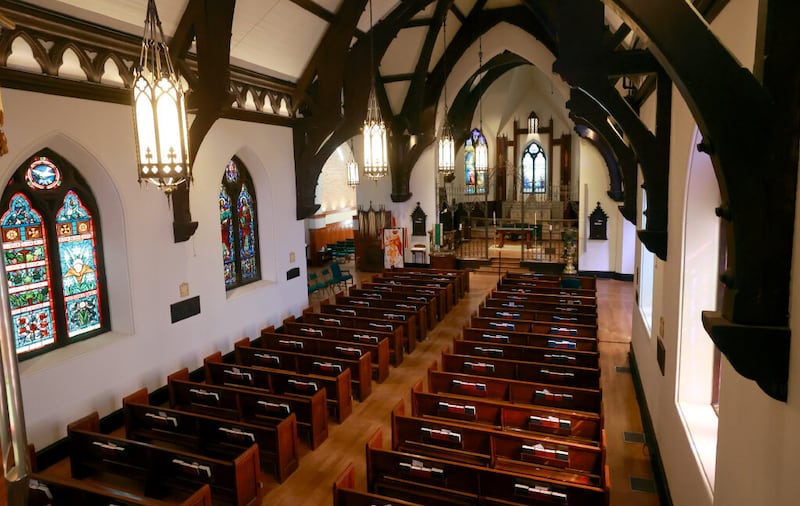
“It is open for people,” Smith said.
The Cathedral Church of St. Mark hosts events each day of the week, encouraging people to come together, to worship together and to serve those around them.
“We want to welcome anybody who wants to come in the door,” Cook said.