
Within NHL circles, the summer of 2026 will be remembered as the time salaries skyrocketed.
It all started when Leo Carlsson signed an offer sheet worth $18 million annually — a record-breaking contract, offer sheet or otherwise.
His mark only stood for 26 days before Macklin Celebrini broke it, only for Cale Makar to raise the bar even higher a month later. That makes Celebrini the highest-paid forward at $18.8 million and Makar the highest-earning defenseman at $20.4 million.
By contrast, Igor Shesterkin is the highest-paid goalie of all time, but earns a measly $11.5 million and change. The pay gap doesn’t just affect the top-earning guys, either.
Excluding entry-level contracts, the average salary among currently rostered goalies in the NHL is $3,882,146, according to data retrieved from PuckPedia. The average skater, by the same qualifications, makes $4,613,900.
There’s a certain level of irony there.
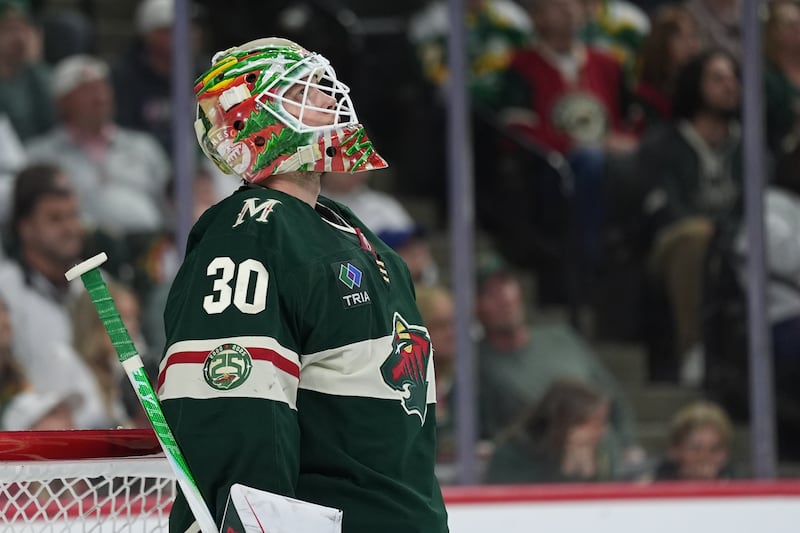
Goaltending is typically considered the most important position, yet many teams pay their second-line wingers more than their starting goalies.
Shesterkin’s New York Rangers are the only team whose goalie makes more than the rest of his teammates, and that only became true after they traded Artemi Panarin in February.
It’s well-documented that a good goalie can make a bad team great — look at the Winnipeg Jets’ numbers with and without Connor Hellebuyck — and that a bad one can degrade an otherwise excellent squad.
Goalies are also the only players who start a game not expecting to leave the ice until the final buzzer sounds, so while some of their teammates can fly under the radar during the occasional slump, net-minders don’t have that luxury.
With all that in mind, wouldn’t it make sense that they’d be paid more than their counterparts?
Of course, even the minimum NHL salary is still exponentially more than what most people make. If you play more than a few seasons, you’ll be set for life. But relative to the rest of the league, are goalies underpaid?
The argument against paying goalies is volatility.
Every season, half a dozen net-minders break out as bona fide NHLers. Last season, the list included Brandon Bussi, Jet Greaves, Jesper Wallstedt, Yaroslav Askarov, Jakub Dobeš and Colten Ellis. A big season can come out of nowhere.
At the same time, a number of guys completely fall off every season. The Utah Mammoth, for example, thought they were getting a solid, experienced backup goalie out of Vítek Vaněček, but they ended up not being able to trust him with more than a handful of games.
Similarly, the Edmonton Oilers paid a hefty price for Tristan Jarry, only for him to post the worst numbers of his career by far.
Committing big money and lengthy term to someone you might not even want in a few years is risky, which is why only the best goalies tend to get those deals.
But it’s a hasty generalization to put all goalies into that bucket.
Look at Jacob Markström, for example. When he signed a six-year deal with the Calgary Flames in 2020, Vancouver Canucks fans took relief in the sentiment that if they had to lose their star goalie to a divisional rival, at least it was on a contract that would anchor them down for its latter years, once he got old.
But the opposite happened.
The Flames enjoyed Markström’s services for the first four seasons and then got a first-round pick and a good defenseman by trading him to the New Jersey Devils.
The Devils then signed him to a two-year extension at age 35 for the exact same salary he was already making.
The truth of the matter is that because there are so few true No. 1 goalies, those who prove themselves tend to have guaranteed jobs the rest of their careers. But the same logic, combined with the basic principle of supply and demand, would suggest that desperate teams would give every last possible dollar to secure one of them.
It’s time for someone to reset the goalie market, just like Carlsson, Celebrini and Makar did for skaters. Someone needs to raise the bar, which, in turn, will raise the floor.