

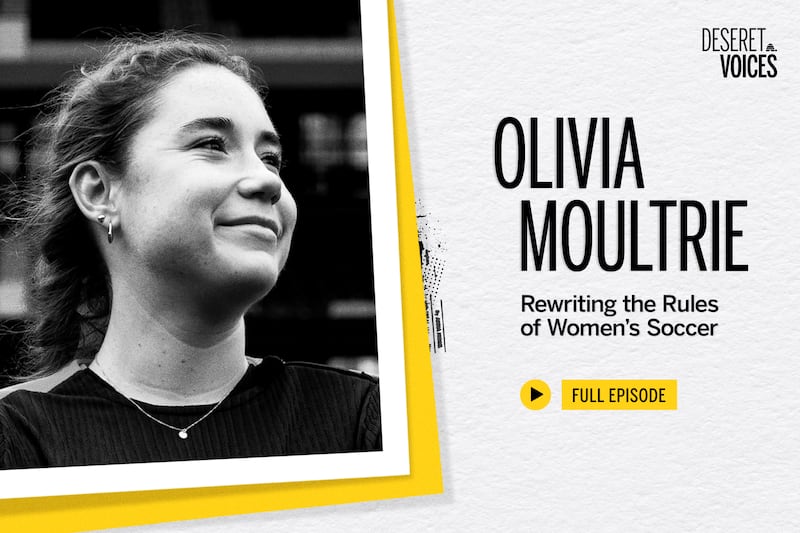


Olivia Moultrie’s competitive drive began at a young age. When she was 7, she had a goal to be the best soccer player in the world.
When she was 15, Moultrie won a legal battle to remove the National Women’s Soccer League’s age barrier. At the age of 18, she made her debut with the U.S. women’s national team.
On this episode of “Deseret Voices,” the Portland Thorns midfielder chats with Deseret News reporter Krysyan Edler about her soccer exploits and about the role faith plays in her life.
Subscribe to “Deseret Voices” on YouTube, Apple Podcasts or Spotify.
Note: Transcript edited by Steven Watkins.
McKay Coppins: Before she was old enough to drive, Olivia Moultrie was taking the National Women’s Soccer League to federal court to lift its age restriction. She won, and at 15, she didn’t just open the door for herself; she fundamentally rewrote the rules for every young woman who would follow in her footsteps.
Now, at 20 — she’s an established superstar of the Portland Thorns and an emerging centerpiece of the U.S. women’s national team.
This week on “Deseret Voices,” Deseret News reporter Krysyan Edler catches up with Olivia on her home pitch to find out who she is when the stadium lights go down and the ball isn’t at her feet.
Krysyan Edler: Well, thank you so much, Olivia. I really appreciate you taking the time. So at the age of 7, you wrote that note to your parents and said you wanted to be the best player in the world. Now you arguably, or maybe not even arguably, the best player in the NWSL this season. When most kids say a goal like that, it doesn’t happen. It’s a far-fetched dream. Why was that the case for you?
Olivia Moultrie: I think — definitely grew up in a family where having a goal or like having something that you want to do with your life, that’s kind of how my parents always operated. So knowing what we wanted, to go after. I think that was super important. I’ve always loved soccer. As soon as I started playing, I was like immediately very into it. My dad had me try basketball. I was like, “Nah, I’m good.” And so immediately just kind of went to one thing and sole focus on that one thing.
And I think as I would watch and just, like, see players and what they were accomplishing and playing at the highest level — and we’re always a sports family, so even just watching, like, the NBA and football, kind of like watching everything and just being like I want to do that. Like, I want to do something at the highest level. I want to compete where like people are supporting you and watching on you, like watching on TV. I thought that was the coolest thing. And then obviously, like I said, loved soccer. So it kind of just came from there.
I have a very strong, I would say, internal desire in whatever I’m doing, this internal competitiveness that I think is probably not natural for a lot of people. Like, whether it’s playing card games with my family, I’ve said that a bunch. It’s like it doesn’t matter what the activity is. I’m going in there to win. So I think just that mindset lending itself to something I loved in soccer. And then, yeah, just realizing I felt like I wanted to do something big within that and I wanted to chase a dream. And I still think when you say that at 7, I don’t know if you quite know what that entails. But now that I’m here, I definitely feel like I have a little bit of a sense of kind of what I hope to accomplish in this game. And yeah, being one of the best players in the world and competing for World Cups and championships with my club, like, that’s super important to me.
KE: So what card games are you playing at the Moultrie family game night?
OM: So we tried Monopoly one time, genuinely ended in a fight. Like, we — so that game is banned from the house. We love Cover Your Assets. Uno’s a great one, it’s classic. We like Rummikub as well, so that’s fun. But you got to catch us on a good night or, like, it literally is a bloodbath.
KE: You mentioned you love soccer. Why do you love soccer?
OM: I don’t know what — and it, like, I started playing soccer because my mom played college soccer, so we kind of tried both parents’ sports. And I don’t know, as soon as I just kind of got on the field, I just felt like that was the thing for me. I think now I can appreciate it obviously from a different lens. I think soccer is like, they call it the beautiful game, but genuinely it is. I think those moments when you’re on the field with your teammates and you guys just pull together a play that ends in a goal, and then especially with this crowd in this stadium, like, feeling that reaction, there is just something super, super special about that. And the feeling you get when that happens is just like, it’s truly unmatched. Like, I’ve never experienced anything like it. And I think there were just a lot of cool things about soccer that drew me to it. I think, yeah, there is something so cool about whatever you’re doing to be in a team sport and, like, win with your friends. There is something to be said about, like, that feeling of going to war together a little bit. And so, yeah, obviously there’s the individual accolades, but there is that kind of group aspect of things that makes it that much more exciting when you can win and come out on top.
KE: Definitely. You probably get asked about this stuff all the time, but so at 11 you commit to University of North Carolina, 13 you get the Nike deal, and then you’re in commercials, you’re training with the Thorns. Did it ever seem — at any point, did it ever seem crazy to you?
OM: For me, it was just like, that’s the only thing I’ve ever experienced. So to some extent, for me, I was like, I don’t know, this is just my life, right? This is my world. When I look back on some of the things, thinking about training with the Portland Thorns when I was 13, I think back to, look back at pictures and think back to just truly how small and little I was. And I’m like, “Dang, that was kind of crazy.” Obviously it made me who I am, so I don’t regret any of it. I think it truly built me into the player I am today. I don’t think I’m the same without those experiences. That’s all I knew at the time. And I don’t think there was that much thought going into it. It was very solely based on the fact that, OK, I have this dream that I want to accomplish. So what are the steps that I need to take to get there? And at the time that seemed like the best thing to do. So it was just like, OK, another thing. And I feel like I’m very much with the focus on the goal. I’m like, OK, what’s the next thing? What’s the next thing? So I’m not really stopping to think, like, “Is this crazy? Is this what …,” like, you know? So yeah, I can look back and be like, “That was a little wild.” But at the same time, everyone’s path is different. And so far it’s been pretty good and I’m pretty happy with where we’re at.
KE: Well, you said, yeah, it was normal. You, for your first day of training, you brought your own ball, right?
OM: I did.
KE: Yeah.
OM: I used to be that kid who brought their ball everywhere. I’d be dribbling through the mall with my ball. Like, that was just kind of a thing. Like, I just wanted to be connected with it all the time. And so yeah, it was, like, very natural for me to, like, my ball into practice, and I find that so funny, thinking back to my first day walking in like that, and everyone’s like, “Who is this kid with her ball in her backpack?”
KE: You want to be prepared, right?
OM: Exactly. I’m still that person in their bag. I’m like, anything you need — gum, toothpaste, floss, hairspray, hair tie — like, I have — I’m that person who has everything in their bag. So I feel like, yeah, it was pretty natural for me to come prepared.
KE: Let’s maybe jump up a few years to your lawsuit, changed the entire league. And you drove that, right? It wasn’t your parents. You wanted that, correct?
OM: Yeah. So at the time, basically, we had explored every avenue that was possible for me to be able to play. There was a thought that kind of the league was heading in the direction of getting the homegrown rule, which is what the MLS has, where you can sign your own academy products and then they can play for the first team. And also just this idea that in Europe, like, there is no age limit. That is a very kind of, like, U.S. sports, I guess, mindset or mentality, how things have always kind of worked here. And yeah, I’m just watching, like, the best players in the world over in Europe and just seeing what’s happening. And I’m like, “Well, I’m just — I’m ready for more now.” And so it was very much generated from the fact that I felt ready to play and help my team and influence winning and also wanted to do what I love at the highest level.
And so obviously lawsuit was not, like, the first thing we went to. And that came about through like my agent actually went and spoke at his alma mater at Duke. And the lawyer, the main lawyer that led everything, Len Simon, he was teaching there. And so that’s kind of how that connection happened. It was, like, pretty coincidental. We didn’t go seeking that, but obviously eternally grateful for, like, that team of lawyers who did that for us. And that was truly incredible. But they did it in the same way that we felt that it was just an injustice and they wanted to help. We offered to pay them and they were like, “No, like, we just, we want to help you.”
KE: Wow.
OM: And this is like, so, yeah, we at that point felt the support of kind of a lot. I mean, my teammates, like, showed up to court one of the days to just kind of show that support for me. So it was a pretty, once again, crazy moment to look back on. But yeah, just felt like something wasn’t right and felt like I had the power to help change it at the time. And so I’m happy that it’s done and it’s behind us. And obviously I feel like the league has moved in a really good direction since that. And I think it just opened up a realm of possibilities that I think for us to compete with the best teams in the world and just generating the best players in the world, right? That’s our goal for the U.S. to kind of be back on top, winning World Cups. I think that will be an important thing for us because I think just seeing how the men’s game has evolved, that is kind of the next step for the women’s game as well.
KE: Did you have a plan in case the judge didn’t rule in your favor?
OM: Honestly, I think once we got into court and kind of felt it, we were like, “We’re going to win.” I could tell she was aligning with us, but in the case that it hadn’t worked, I think honestly we would’ve moved to Europe. That was our plan before moving to Portland anyways, was to move to France, just because of kind of the age restriction and, like, felt that I could go play at an academy in Europe and kind of work my way up to the first team. That was really initially the plan. Then Portland came about — really hard opportunity to pass up at that point, obviously, being able to play with one of arguably the best women’s teams in the entire world. But I think that probably would have been the next step had it not happened. But I am forever glad that it happened here, and I love playing in Portland.
KE: Shortly after you sign your contract with the Thorns, two days after that, you get to play in your first game. What do you remember from that day in that moment?

OM: I remember beforehand my coach was like, “You probably won’t play, but like, always be ready.” I think he was trying to make sure I, like, didn’t feel some stress about it. But I watched and we had one of our midfielders go down with a cramp and I was kind of looking around at who was on the bench next to me and I was like, “I think I’m going to go in,” like, kind of looking positionally at who was there. And so that’s when it became really real. Like, yes, I had been preparing for this moment the whole time and I was like, “OK, yes,” like, “I want to play, I want to play.” But then when it actually is going to happen, I’m like, “Holy crap, I’m about to go in this game right now.” And I just remember being so excited, like you watch the clip and I’m, like, ready to run on the field. So there’s definitely this moment of, like, you want to be ready for everything and that’s kind of the expectation. But I definitely had a little bit of a kick-me moment of, “Holy crap, I’m about to make my professional debut at 15 years old.” Like, I just remember being really, really excited.
KE: Did you feel like there was a learning curve as the youngest player trailblazing?
OM: Hundred percent. I look back on it now, right, and it’s like you just see all the success and the things that went well. But it was hard. It was really hard. It was hard to come train with the team when I was 13. It was hard to — and at the end of the day, I wasn’t ready to play in a professional game when I was 13. You know, I’m going in, walking in full of confidence because I believe in myself and still did. I didn’t walk in, train with the team and be like, “Oh, I’m not ready for this.” I was like, “I’m ready right now.”
But I can look back now as a 20-year-old and be like, yes, I needed those moments. That actually did prepare me to then step on the field and be ready. And still, when I went on at 15, I obviously wasn’t ready to be the player I am now. So I think all of it’s been a learning curve, but in the best way possible. And I’ve got to learn the lessons so early that now I just have accumulated so much experience that I feel like just being able to really enjoy my career, having gone through so many hard things so much earlier. So now I get like so much time of, yeah, I’ve already been through that. Now I just get to kind of enjoy doing what I love and feeling like I’m in a place where I can play how I want to play and, yeah, help my team win championships, help my team win games. So, it was definitely hard, but a lot of really good experiences that built me up to the point that I am now.
KE: How did you get such strong self-confidence in yourself at such a young age?
OM: I think No. 1, like, got to shout out the parents. They just, I think, set up my whole family, just me and my sisters, for this mindset of like, you don’t accept failure. Like, messing up is just a way for you to learn and get better. And that doesn’t mean you’re ever going to be perfect or, like, if you don’t get to this certain point, then, like, you are a fit. Like there was nothing like that. It was just: Know what you can accomplish. And if you feel like you can get to something like we’re going to help you get there, we’re going to take whatever the steps are that are necessary for you to get better.
And my dad was really good at — we would talk about like putting yourself in uncomfortable situations to make them comfortable. So I think all of the things I did up until the point that I came to Portland, right, playing with boys, playing with people a ton, a lot of years older than me, like we would go — I remember when I trained with academies in Europe and we were walking through the streets of Munich one time and we saw these little boys playing just, like, on the street. They have courts, which is amazing, but they’re playing. And he’s like, “Why don’t you go ask them if you can play?” And as an 11-year-old, you’re looking at your dad like, “We don’t speak the same language. Like, I’m in a random city in Germany.” And he’s like, “Go ask them if you can play.” And so it kind of just instilled this, like, I will be willing to do the uncomfortable thing because it makes me better, because it gives me an experience that I might not have had otherwise. So I think it really is the way I was raised.
And we talk about obviously the more work you put in, right, the more confidence that theoretically you should have because you know that the work and the effort that you have done should prepare you for this moment. And I think this idea of, like, just doing a little bit more all the time, that was kind of just grew up like, “Can I stay after practice a little bit longer?” “Can I work on something a little bit more?” “Can I add those hours in?” And that’s just this cue in the back of my head of, like, these are all the things that I’ve tallied up. Like, I know what I’ve put in. I know the time and the work and the effort that I’ve put in, and that will yield the results that I want. And just being like a firm, firm believer in that. Obviously it has paid off and I still kind of use that mindset today.
I’m like, people are always trying to tell — I’m like, “I want more, I want more, I want more.” They’re like, “Relax, enjoy the moment.” Or like when I want to do extra shots, they’re like, “We need you to stay healthy, so I need you to stop now.” I’m like, I’m bad at that because I want more all the time. And I think, yeah, that kind of just lends itself to my personality and that competitive drive, I guess. And I think that kind of has made me who I am, but that definitely has instilled the confidence of, I know the time that I’ve put in, I know what I’m capable of, and yeah, I trust that.
KE: That’s amazing. I’m sure everybody could benefit from that same level. Do you feel like the Olivia Moultrie we’re seeing now this season — you kind of broke out, which is weird to say, you were doing amazing things before that, but last season you kind of broke out, right? It was one of your best. And then this season you’ve been amazing. Do you feel like the Olivia Moultrie we’re seeing now is the Olivia Moultrie we should see going forward, or is there still just scratching the surface?
OM: I like to say still scratching the surface. I absolutely am, like, happy with how things are going. Not to say that I’m like, “Oh, it’s just not good.” Like, so obviously I always want more. And I think, like I said, having so much time to do that, I feel like there is an ever-evolving process to like perfecting your craft or honing your craft. So do I think I can still get better? Absolutely. Do I still think I can score more, assist more, be more efficient in what I do? Hundred percent. Do I think I will be able to continue to do that with the experiences that I gain? Absolutely. With that being said, I feel like the style of play that people see from me now and just kind of what I am doing, that is how I want to play. And so I think the next steps for me, just as I go throughout my career, is how can I do that more and more efficiently, like consistent efficient. But yes, I do think what you’re seeing now is who I’ve been building towards for a while, just since I stepped foot on the field in Louisville back when I made my debut. So yeah.
KE: Well, I know I’m excited to see what’s ahead of you.
OM: Thank you.
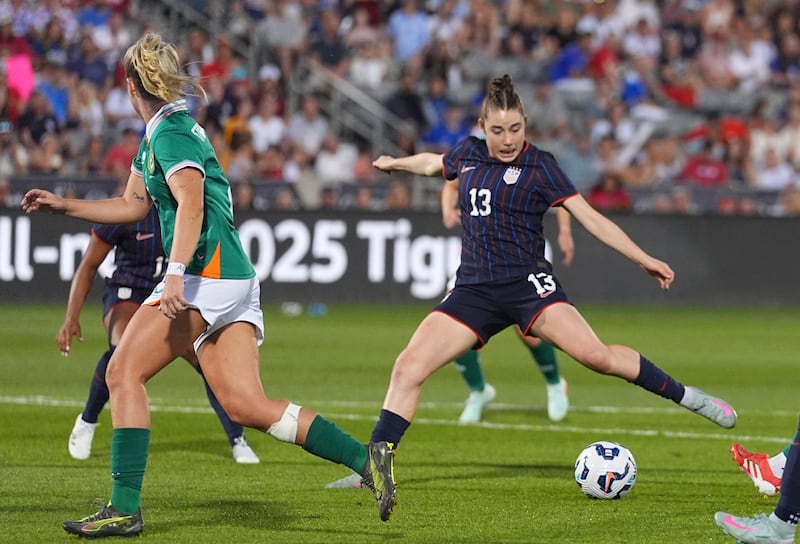
KE: I was wondering if we could talk now about your faith as a member of The Church of Jesus Christ of Latter-day Saints. What role does faith play in your life?
OM: Absolutely huge. I think, so my family, we’d always talk about like, what are our pillars? Faith, family, and then soccer would be third. So people see me every day and they’re like, “Soccer’s her No. 1. That’s what she …” — but the backbone of every single piece of that for me is God. And my family, my mom especially, has done a really, really good job of, like, keeping that the forefront in our homes and just making sure that is something that, like, we never forget about. Because truthfully, we believe that the things that we’ve been able to experience and, like, the situations I’ve been put in, like, that is blessed from God. And I think a lot of people talk about luck and things like that. And for me, I’m like, “No, I’m trying to do the right things as a Latter-day Saint.”
You know, I’m trying to do all the little things that we talk about, but also just keep that in the forefront of my mind. I’m not like, “Oh, if I don’t read my scriptures, I’m not going to play well.” But just knowing that that is something that I can always fall back on is my faith. And I think that is just, like I said, the backbone of who I am and how I’ve been raised. And obviously, I think being a good person is the most important thing, and that helps in life, period. But I definitely feel that this, like I said, the situations that I’ve been able to be put in, you know, my mom’s job lending itself to being able to move our family to Portland for me to chase my dreams. Like, I feel like there’s so many things you can look back on my life and be like, “Wow, that was incredible. I can’t believe that happened.” And for me, I’m looking at it like, yeah, that’s a blessing and trying to do the right things to take advantage of when I am placed in those opportunities. But that is 100% something that is, like, the most important thing to me.
KE: Maybe even like meeting that team of lawyers, right? You feel like coincidence, maybe —
OM: Exactly. I feel like coincidences are very much like, I mean, yeah, he’s pulling the strings up there. And I think, yeah, a lot of people can relate to that feeling. And obviously not to say that, like, we don’t make our own decisions or anything like that, but I do feel like, yeah, just trying to do the right things to be able to be put in situations that are benefiting you. And I definitely think I found myself in quite a few of those.
KE: I know in the past you’ve mentioned that you will pray before games. Is that something you still do?
OM: Yeah, right. Every time I — I mean, I pray a lot, honestly, and it’s nice to always be able to feel like I can just, like, take that moment to quiet my mind. But still, right before kickoff, always I like to just say a little like, stay healthy, do my best, help my team win the game, and like, let’s get after it.
KE: So can you take me to a moment where you’ve had to like lean on your faith?
OM: Yeah, I think there’s definitely been a couple. Going through the lawsuit initially. Like you said, it’s kind of what’s the backup plan if this doesn’t work? And I think a lot of it was just that leap of faith that we feel like this is the right thing, you know, prayed about it. What is the best step? We felt like the lawsuit was just kind of the last thing and that was the path forward. And so, yeah, just taking that leap of faith and feeling like, “OK, we felt this is right, so we’re going to go after it.” Obviously, it did turn out pretty good. Moving to Portland, that was a huge thing. Moved my entire family. My sisters, you know, left their sports teams, left their schools. My mom and dad had to change and pivot with their work and everything like that. And so, yeah, just big leaps of faith in my life.
And even, of course, when you come back from an injury or when you face something hard, absolutely are moments that I’m like, “It feels like things aren’t going right.” And then I have to kind of zoom out and look big picture and think about the things that I have experienced and know that like, I feel like I’ve been put here for a reason, and I want to take advantage of that. But yeah, it’s hard sometimes when you get into the nitty-gritty, but that’s always the thing that reminds me. I’m like, “Think of all the good that has happened. Think of all that has gone right. Think of all the things that feel like coincidences that are really just blessings.” And so when things are hard, I like to think about the big things that have happened. And yeah, like I said, I love what I do. I literally get to live my dream job every single day. And I don’t feel like that is a coincidence. Obviously, there’s hard work that goes into that, but I feel like, of course, my faith has played a big part in that.
KE: Have you ever felt like an outsider because of your faith in professional sports?
OM: Honestly, I’m sure everyone has had their own opinions. I think I — our team, especially now, is just like a really cool group of people. And so I have never felt any which way about or, like, feeling any kind of distance from them. I feel like just what has happened with our team recently is we have a lot of girls who like go to chapel before games. And obviously it changes because, you know, people are in and out of teams and things like that. But it’s kind of felt nice to have that community a little bit and just people who share some similarities and, you know, their feelings about that. But I, yeah, I’ve never had necessarily an out — like outward experience like that. I’ve had a couple other LDS members on the team with me before, Michele Vasconcelos, Olivia Wade-Katoa. So that’s been really cool because there is definitely this aspect of like, yeah, I believe in God, you may believe in God, but we may feel slightly different about different things. And, I think most of the time everyone’s pretty accepting of how you feel and your own personal experiences. But, it has been cool, felt a different connection when you have another member on your team because, yeah, sometimes we’re far and few between in just this small world, small part of the world. So, that has been cool.
KE: It’s great. How does your faith help you understand who Olivia Moultrie is without a ball at her feet?
OM: Yeah, I think for me, the biggest thing with my faith is I feel like part of it is it has put me in positions to share my faith. Like, what I do has put me in a position to, when I get asked about it, like, this is an opportunity for me to kind of spread how I feel and what I believe. And so I think that has been a vehicle for that, but that doesn’t necessarily mean that yeah, I’m not who I am without the soccer aspect of it. I think it has been a blessing, obviously, but I feel like at the end of the day, I’m a child of God, and that is what centers everything in my life, and that is what I believe in. So like we kind of touched on, being a person who is just a good person and is there for people and tries to do the right things. And if I have the opportunity to share it with more and more people, like, I am happy to do that, and I’m proud to say who I am and what I believe. But yeah, I definitely think this has been a vehicle for me to do that, and I’m obviously forever grateful for that. But it doesn’t take away from, like I said, kind of just the foundation of who I believe I am. And, yeah, always living that.
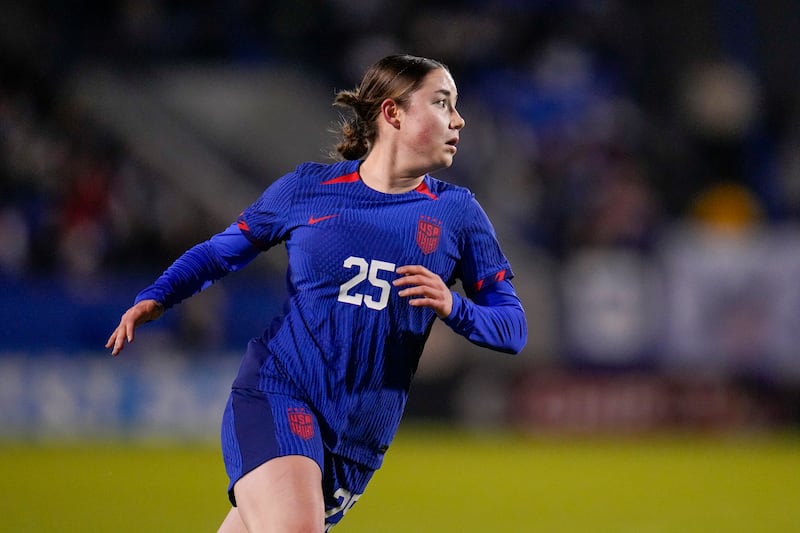
KE: Does knowing that you’re a daughter of God, does that help at all in the tough moments? Like, maybe it’s a loss, or you didn’t score, or you mentioned injuries. Has that been helpful?
OM: Yeah, 100%. Like I said, it kind of helps you zoom out and just think bigger picture. You’re like, yes, when I do this, this feels like the most important thing in the world to me, right? When I’m on the field on game day, like, nothing seems more important. And then you kind of take a step away and you step out and you’re like, “There is things that are so much bigger than me and what I’m doing right now.” And that is nice sometimes to just feel like a smaller piece of something so much bigger. And I think that is so cool. Even though when you’re here, it’s like, it is the big thing, and that’s fun too. But it’s nice to just know that there — yeah, like having my family and just being a part of that. I think the whole idea of that and just so many people who, yeah, do believe and are members, like, that is another community in and of itself that is just super cool to experience.
KE: Great. Let’s pivot back to soccer. You started your professional career earlier than any other NWSL player before you. I was curious, have you taken any steps to make sure that doesn’t, like, affect the length of your career, that you can still play as long as you want to play?
OM: Yeah, I think definitely the game has headed in a direction in terms of, like, sport science and injury prevention that there’s just so much more information nowadays. I definitely have been on the side of that where it feels annoying sometimes because the people who are working behind the scenes are thinking longevity and I’m thinking like, no, right now, right now, right now. Even coming back from my calf injury right now, like, having a minute restriction this weekend, I’m like, “Why?” And they’re like, “Because this benefits you in the long run. We’re not trying to, like, take steps back.” So I think, yes, absolutely. The people kind of behind the scenes. And then I work with a personal trainer who just, again, like, all the recovery I do outside of training and all the injury prevention. I think people are like, “Yeah, you go to work for a couple hours and you play soccer and then you go home and then you just sit around all day.” I’m like, no, no, no, no. As soon as I get home, it’s recovery, preparation, what else do I need to do to then show up the next day and be ready to go. So yeah, definitely trying to center my career on I want to do this as long as possible and I want to feel good doing it as long as possible. So yeah, super important to me to focus on all of those things.
KE: So your typical day is soccer, soccer, soccer. Do you have any time for — do you have any hobbies outside of soccer?
OM: I love to read.
KE: OK.
OM: That has in the last, like, I want to say maybe, three to four years has become super big for me. And we have a little reading community on the team, so it’s fun to talk about books. Sam Hiatt especially. Like, anytime I read a book and I’m like, “Sam, I need to tell you about this.” So I love to read. I love to hang out with my sisters, whether it’s card games, which is a little dangerous sometimes, or just, yeah, going and doing an activity with them. And I love cooking.
So those are a couple things that is nice to decompress and take away from on the field, all the emotions, everything like that. And I think having those things to, yeah, be someone else outside of who I am on the field makes coming back the next day even more exciting because it’s like I’m not defined by what happens in an hour and a half span on, you know, the turf at Providence Park. I’m defined by everything accumulated with that. So it’s nice to have those things that are also important to me and that I love.
KE: What do you like to cook?
OM: So the other day someone was asking me what my favorite food is, and I’m like, this is hard because what I like to do — Matt’s laughing because I tried to explain this to someone the other day — I basically just like to make bowls. And when people are like, “What does that mean?” I’m like, roasted veggies, like sweet potatoes, rice, whatever it is, cook a protein, make a sauce. But it’s like just putting together things and making like pretty bowls. But I saw this TikTok video and they were like, “What’s your favorite food group?” And the TikTok said, “bowl.” Just bowl. But now I feel like that’s how I describe the way I eat because I just like to put things together to make like a cohesive bowl. But I don’t know how else — I don’t know if that makes sense, but yeah.
KE: Hey, you like what you like.
OM: Exactly. Thank you.
KE: Yeah. Back to soccer again. Sorry for taking us off track. How have you seen yourself grow from that first season to the player you are now?
OM: I mean, night and day, honestly. Like, as a 15-year-old being on the bench, and I did, obviously, start some games when the opportunities came and trying to take advantage of that, but just wanting more, wanting more, wanting more. It’s not like I played every minute of every game, and it’s like I’d be sitting there and I’m like this the whole time. I’m like, “OK, I’m ready, I’m ready.” So now being able to, obviously, be a huge part of what goes on in every game, I just feel — it feels so natural now. I feel like when you first start playing, you’re, like, trying to be ready for every moment.
And now I’m like, I’ve experienced almost everything there is to experience, especially in the NWSL. I think I have experienced probably everything, any moment that you’re going to come across. And so now it just — yeah, I don’t have to think that much before. I just kind of step in and do my thing. And I’m just so comfortable in who I am and what my role is and feeling out, just moving off people’s movements, reading teammates. Everything has just become easier. I feel like it just processes faster in my brain. Like, the game has slowed down for me a lot. And that is a nice feeling. Obviously before when you’re, like, out there, you’re, like, trying to go as fast as possible. So that has been nice. And I feel like, yeah, that lends itself to experience. And then kind of just growing in maturity as I play more and more, but definitely allows the game to be more enjoyable.
KE: You feel like you’ve got the part of it of, “I know how to be a pro” now?
OM: Yeah.
KE: You’ve got that down?
OM: I feel like, yeah. I’m never gonna say I’m perfect at anything. I feel like I can always be better, but I definitely feel a big difference to when I started.
KE: So you want to be the best player. What do you think you need to accomplish for you to feel like you’ve satisfied that goal?
OM: I feel like it is obviously that’s a very subjective thing. I mean, of course, there’s like the personal accolades of, like, having an MVP season or, like, winning a Ballon d’Or or, you know, winning a championship MVP. I feel like those are things that obviously tangibly in that moment you were the best player in that moment or in that season. And not to say I wouldn’t love to win those things, I would. And I would like to put myself in positions to do so. I think there is also this sense of kind of when I walk away from the game, can it be where, you know, you talk to people who watch soccer all the time, who studied the league, who watched and who felt it and who were there. And they can be like, “Olivia Moultrie is the best player that I have ever seen.” Or that “she is the best player I have ever been able to play with.” And that might be for different things or different people, but I want to be able to just walk away with it being like, “That was one of the most exciting players I got to see. And I’m going to be, like, sad when she retires.”
Just kind of leaving a mark on the game where I can walk away and know, like, I put out the best version of myself. I think there’s that too, that personal satisfaction of by the time I’m however old and I retire and I walk away, it’s like, “Did I have years where I feel like I hit the peak of my game, that I was literally as good as I could have been?” And yeah, I feel like you can go back and watch a lot of players, even if it was for shorter periods of time. You can be like, at that time, like, “I’ve never seen anything like that.” Obviously, I’d like mine to be accumulated over a longer period of time, but I’m just hoping to kind of leave my mark on — “I loved watching Olivia Moultrie play and she was a really special player and she helped her team win and be successful.”
So yeah, I feel like I just said a lot. I feel like there’s a lot of ways to kind of mark that. But at the end of the day, that’s what I’m hoping for is to walk away. And when people get asked about it, it’s like those are the type of things that are being said.
KE: Well, I think you’re getting there. When it was announced you’re available again, I saw somebody on X said, “Olivia Moultrie’s back. Hallelujah.”
OM: Love that. I’m glad people feel that way.
KE: So let’s talk about the national team real quick. Your first call-up was 2023 October, and it was to the Utah camp where you were born. You didn’t get to play then. But can you take me to that moment where you found out you had finally been called up?
OM: Yeah. So I was in the living room with my parents. It’s like 9 p.m. at this point. I’m like, “OK, let me check my email real fast before I go to sleep.” And so they’re talking, having a conversation. I pull out my phone, I’m looking at my emails and I’m like, and I read it like three or four times to make sure I’m not like, am I psyching myself out? Like, I’m — you like, you have been confirming your call up to the U.S. women’s national team. And I just kind of sat there for a second and then my mom was like, “Olivia, are you OK?” And I was like, “I just got called on the national team.” And then I just started, I was like, “I just got called on the national team.” So I was freaking out. I was like, “Oh my gosh, it just happened.”
Like, this thing that you dream of since you’re literally 7 years old happening. And it was just an email that I checked on, like, a random Wednesday at 9 p.m. So it was really, really cool. But I vividly remember just sitting in the room with my mom and dad. And then my dad was like, “OK, this is amazing. But like, we knew this was coming.” And I’m like, “Just enjoy the moment, geez Louise.” He’s good at keeping things back on track, but I’m like, “Let me just soak this in for a second.” But yeah, it was really, really cool.
KE: And then it was the next camp you did get to play, right? What was that like?
OM: Once again, there was that, like, giddy feeling of, “Oh my gosh, I’m about to go in.” Like, this is another just little kid dream that I’m about to get to experience. And I feel like with me having done everything at such a young age, people were probably like, “Yeah, OK, like whatever, you know.” It’s just like she probably felt like she was gonna do this, and, like, I think I try to keep like a cool, calm, collected exterior. I feel like I’m like that most of the time, but I don’t think people realized on the inside I was like, “This is so freaking cool.” Like, “I am so excited about this moment right now.” Yeah, I think I was trying to just make sure I was ready to go play, obviously, but when I kind of look back on how I was feeling, I definitely felt — I was a little kid, but I felt like a little kid. I was like, “This is a dream. This is genuinely a dream come true. And I’m just so grateful for the opportunity to do this.”
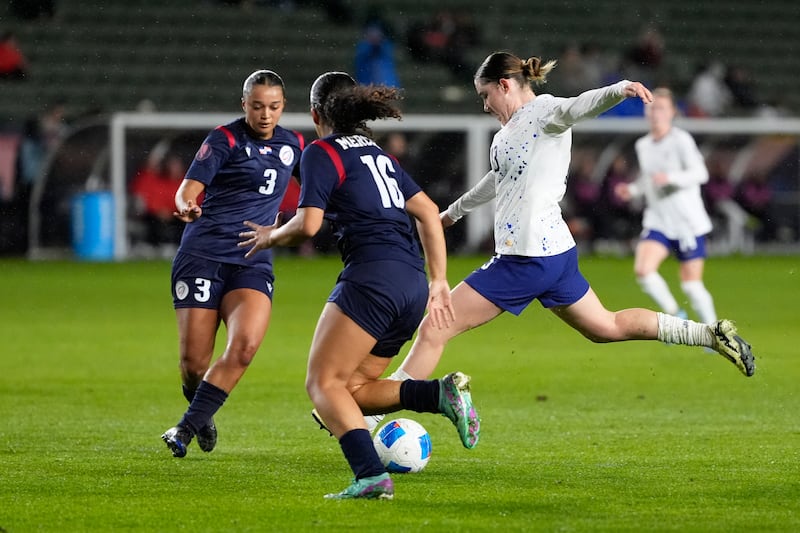
KE: Your first start came a few months later and you didn’t just start, you score twice. Did that surprise you at all that all that happened on your first start?
OM: It definitely was a lot. I was like, “Heck yeah.” Like, found out I was starting the night before, didn’t even really know. So I was like, “Dad, I’m going to start.” And then he’s like, “OK, I have to be there.” So he was actually in the stands with my aunt. And just, yeah, so cool. It just happened so fast. I mean, once you get in the game and you’re playing, it’s like, “I’ve scored before. It’s not like that’s new.” But then, yeah, you get done with the game, you’re like, “Holy crap, I just started my first national team game. I scored twice.” Like, once again, this is just a dream come true. Like, this is the most incredible feeling. So yeah, in the moment I was like, “OK, it’s just happening. It’s just happening so fast.” And now I’m like, “Dang, that was really cool.”
KE: That’s amazing. Well, in a couple days you’re headed to Brazil with the national team again. Where do you feel like you fit in with this national team? And maybe even the future, where do you feel like you fit in?
OM: Yeah, I mean, I absolutely, going back to kind of like that self-confidence, that self-assurance, I believe that in any situation that I am put in with this team, like, I can help us go win a game. Whether it be in whatever role I’m asked to play, I feel like I can influence winning and that yeah, I have qualities that absolutely can help our team be successful. So I feel like wherever that falls, I don’t know exactly what that’ll look like, but I feel ready for whatever is asked of me to be able to go do that successfully, to create goals, to be dangerous, to help us win.
I feel like, obviously, I want to be in Brazil in 2027, and what really lends itself to that is taking care of business. Of course, when I’m at camp learning, you know, grasping as much information as possible, but doing what I got to do with the Thorns, staying healthy, obviously, and yeah, just continuing to take it step by step. But I do absolutely feel like the role that I have with the Thorns here now, kind of being, I guess, a leader in just in terms of helping us win games and goals and assists and being that, like, dangerous attacking midfielder. I do believe that I can be that for the national team.
And every time I’m there and just trying to like chip away at it a little bit more, just like how I went from, you know, 15 till now with the Thorns, I’m trying to do that exact same thing with the national team. So it’s kind of like going back to that a little bit. But yeah, I have really enjoyed all my experiences there and I just can’t wait to keep accumulating kind of the experience just like I did in the league.
KE: You’re just on “Welcome to the Party” podcast with Julie Foudy, Abby Wambach, Billie Jean King. Abby said something kind of similar to what you just said, that she believes that you could score every game for the national team. What was that like to hear from someone like Abby Wambach?
OM: Yeah, I mean, I’m sitting in my room doing this podcast that Monday, 10:30 a.m., and Abby Wambach’s like, basically telling me what she thinks I can accomplish. And I’m like, “Wow, this is so cool.” I feel like since I did all of this so young, players like that, to me, a lot of it was like, that’s just my competition right now. There wasn’t as much time for me to be watching these players and be like, “Oh my gosh, I hope I’m doing what …” — it’s like I was there. I was on the field with Tobin (Heath). I was on the field with Lindsey Horan. I was on the field with Becky Sauerbrunn. I was just — they were my teammates, the people I was competing with to win. And they were also the people I was competing with every single day.
So I guess my point in saying that is there wasn’t as much time to like — I never really looked up to like, I wasn’t like, “Oh my gosh, this is my idol” or anything like that. But then you kind of have these moments where it’s like, Abby Wambach had an incredible career and I respect and admire what she did so much. So then to be on the podcast with her and have a moment like that, I’m like, “Whoa, this is really cool.” I felt the same way when I met Mia Hamm for the first time. I was like, yeah, Mia’s been — but then I met her and I was like, “Whoa, this is actually awesome.” And so yeah, you kind of have those feelings when you’re actually in them, you’re like, “This is pretty sick.”
And it’s like you want to really live the moment and feel it instead of just like I said, I’m kind of a next step, next step, next step. Like, it’s always cool and it’s like I’m climbing up the ladder basically of where I want to be. But then you have these moments where somebody like that who has been so successful says something like that to you and you’re like, “Oh my gosh, thank you so much.” I think that’s what I said on the podcast. I was like, “First of all, thank you so much.” Like, to have players who have experienced it at the highest level say something like that to you, you’re like, obviously, that’s a confidence builder as well. So it was really, really cool.
KE: Yeah, I can’t imagine what that would have been like. I did love that your face kind of went, like, blank for a second.
OM: Yeah, you could tell I was like, “Whoa!”
KE: Wrapping it up real quick, at your sixth grade graduation, you gave a speech based on a Muhammad Ali quote about the impossible. And like, nothing’s impossible. Your whole career has been about defying the impossible. What would you tell that 11-year-old version of yourself about her future?
OM: That’s so funny you bring that up. Actually, I was just talking to my parents about this because my sister was giving me crap. She’s about to graduate from high school, obviously, and she got to — she gets to do the whole ceremony, and I never really did that, right? I got through everything online. I was like, “OK, cool, I’m done.” But we were talking about it, and my mom was like, “Well, she got to speak at her sixth grade graduation. So she got to experience that.”
And so we watched the speech actually, and I was watching myself talk about it. And at the time, I’m just thinking about like, “I want to present this speech like a boss. I want everyone to think this is awesome.” But I really listened to the words and I’m like, this is crazy because I think I did believe what I was saying then, but it didn’t hit me in the same way that it hit me now watching it and just being like, no, actually, like you said, my entire career has been faced with situations that people probably thought were kind of impossible or just very unlikely. And it’s like, no, I’m gonna do it. I’m gonna do it because I know what I’m capable of. I trust in God and I believe in myself to be able to, like, overcome this thing. And I think that has set me up for who I am. I think that’s a really good picture of what my mindset is.
But yeah, I feel like it’s really cool to look back and just realize what has happened because like I said, when you’re in the moment, you’re just like, next, next, next. But then you go watch your sixth grade self talk about that speech and then think about what’s happened now. And, yeah, just know like, obviously, been so blessed, but to be able to overcome those things, that’s made me such a stronger person. And I think it’s cool how it shaped me into really who I am as a person and as a player now.
KE: You basically manifested everything in that speech.
OM: Pretty much, honestly.
KE: And that was before North Carolina, right? Or was it after?
OM: Oh, I don’t know. How old are you when you graduate sixth grade? Does anybody know?
KE: Eleven?
OM: Yeah. So it might have been like right in and around that time.
KE: Yeah.
OM: So crazy.
KE: So what’s the next impossible that Olivia Moultrie is chasing right now?
OM: I don’t know if anyone puts impossible in front of anything Olivia Moultrie is going to do anymore. They’re probably like, “Why would I put that there? She’ll just go after it extra hard.” So yeah.
KE: Well, thank you so much for your time, Liv.
OM: Thank you so much. That was great.