



As the United States marks the monumental milestone of its 250th anniversary, the air is thick with pageantry, fireworks and the familiar cadence of national pride. We look back to 1776, a moment when a group of flawed yet visionary individuals put pen to paper and articulated a radical concept: that all people are created equal, endowed with unalienable rights to life, liberty, and the pursuit of happiness. Our founding documents remain the bedrock of our republic, a North Star that has guided us through periods of civil war, economic collapse and social upheaval.
Yet, as we celebrate this semiquincentennial, we confront a troubling paradox. In recent years, our public square has become dominated by a loud, exclusionary brand of nationalism. We hear choruses of “USA!” and “America First” chanted not as an invitation, but as a triumphal boast. We are bombarded with exultations about our immense wealth, our technological supremacy, the smartness of our people and the unmatched power of our military.
Simultaneously, a dark undercurrent has resurfaced in our political discourse. Some leaders have adopted demeaning, derogatory and dangerous language to describe other nations, races and immigrants. When American exceptionalism transforms from a quiet commitment to higher ideals into an arrogant assertion of supremacy, it ceases to be a strength, becoming instead a force that erodes and erases the very essence of who we are.
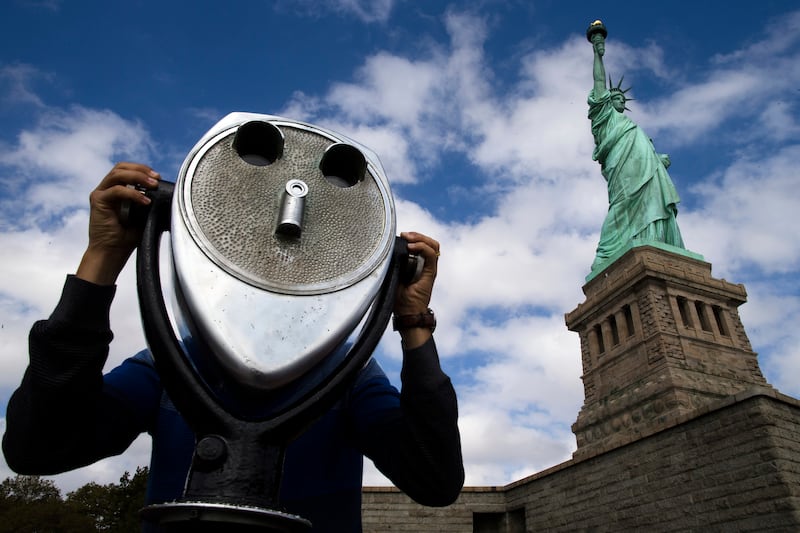
To understand what we risk losing, we need only look to the base of the Statue of Liberty. Emma Lazarus’s immortal poem, “The New Colossus,” reminds us that our true power has never been found in a closed heart or fist, but in an open heart and hand:
“Give me your tired, your poor, Your huddled masses yearning to breathe free, The wretched refuse of your teeming shore. Send these, the homeless, tempest-tossed to me, I lift my lamp beside the golden door!”
If America is to have an enduring, positive influence on the world over the next 250 years, it will not be because of the size of our gross domestic product or the reach of our arsenal. It will be because we chose to live up to the promise of our founding documents by keeping the lamp lit beside the golden door.
Lazarus’s words offer a sanctuary to those fleeing oppression, danger, and poverty. Today, many who seek shelter and refuge at our borders are the modern-day “tempest-tossed.”
Bragging about our greatness denies and degrades this legacy of welcoming that has been at the core of our nation from the beginning. If we wish to remain a nation both worth and worthy of celebrating, our focus must shift away from pride and arrogance and toward humility. True patriotism demands that we strive to invite strangers and foreigners into a culture of exceptionality — citizens who are exceptionally grateful, kind, forgiving and gracious. It asks us to be great in patience, generosity, service, magnanimity and love.
In his 1950 Nobel Prize acceptance speech, the great American novelist William Faulkner spoke of these virtues as “eternal verities,” as ”the old verities and truths of the heart, the old universal truths lacking which any story is ephemeral and doomed — love and honor and pity and pride and compassion and sacrifice.”
These universal truths are not the property of any single culture or political party. They are central to all the world’s great religious and philosophical traditions. The United States is great today precisely because, over the last two and a half centuries, people have arrived here from Christian, Jewish, Muslim, Hindu, Buddhist and secular traditions alike, each bringing and blending their rich histories and cultures. Each group has woven its own thread into the American fabric, contributing to the only greatness truly worth celebrating: our capacity for collective empathy, cooperation, accomplishment and progress.
Faulkner believed that by living by these virtues, humanity would not merely endure but also prevail.
If America is to have an enduring, positive influence on the world over the next 250 years, it will not be because of the size of our gross domestic product or the reach of our arsenal. It will be because we chose to live up to the promise of our founding documents by keeping the lamp lit beside the golden door. Let us celebrate our 250th birthday throughout this year, not with the hollow roar of self-aggrandizement and congratulation, but with the quiet dignity of a people dedicated to compassion, humility, and justice for all.